JEE Main 2027 Registration: When Will NTA Announce Registration Dates? Apply at jeemain.nta.nic.in - Jagranjosh.com
Everything you need to know about the JEE Main exam. Understand the eligibility, exam pattern, syllabus, application process, and top colleges for 2025-2026.
15 min read
Think of the biggest cricket tournament. There are league stages, knockouts, semi-finals, and then the grand final. For aspiring engineers in India, the journey to a top college is a lot like that. And the first, most crucial knockout match that everyone has to play is the JEE Main exam.
It’s the exam that opens the first set of doors. It's the test that decides whether you get a shot at the finals. Run by the National Testing Agency (NTA), this single exam determines your entry into prestigious institutions like NITs and IIITs. More importantly, it acts as the screening test for JEE Advanced, the only gateway to the legendary IITs.
Feeling the pressure? Don't worry. This guide is your coach, your strategy board, and your rulebook all in one. We'll break down everything about the JEE Main exam, from what it is to how you can conquer it. Let's get started.
Understanding the JEE Main Exam: More Than Just a Test
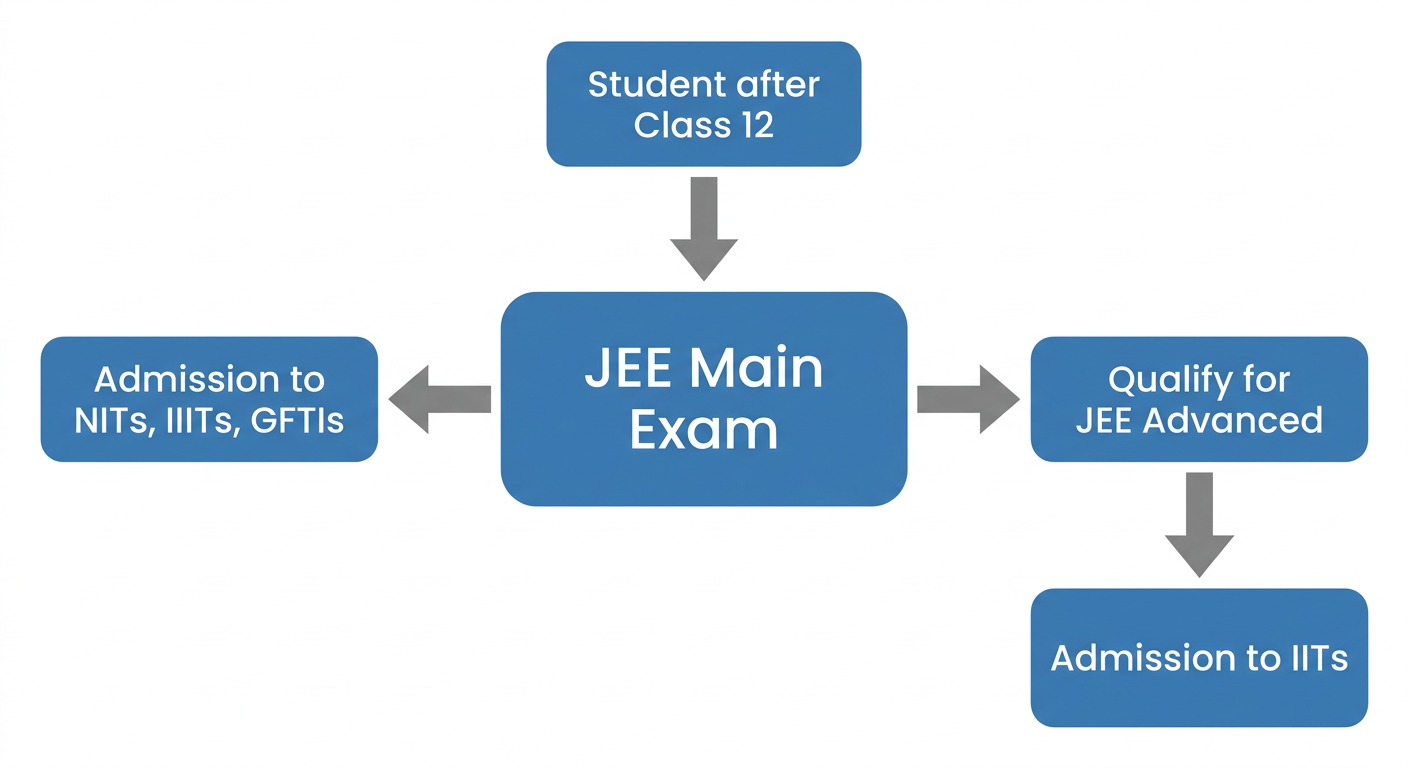
First things first, the JEE Main isn't just one exam among many. It is the single largest undergraduate engineering entrance examination in India, and perhaps the world. Millions of students appear for it every year, all chasing a limited number of seats in top government-funded technical institutes.
But its role is twofold, and understanding this is critical:
-
Direct Admission: Your All India Rank (AIR) in JEE Main is the key to getting a seat in National Institutes of Technology (NITs), Indian Institutes of Information Technology (IIITs), and other Centrally Funded Technical Institutions (GFTIs).
-
Qualifying for JEE Advanced: To even be eligible to write the JEE Advanced exam for admission into the Indian Institutes of Technology (IITs), you must first clear a specific cutoff in JEE Main. Only the top 2.5 lakh (approximately) candidates are invited to take the next step.
To give students a better chance, the NTA usually conducts the exam in two sessions, typically in January and April. You can attempt both, and your best score of the two is considered for your final rank. This is a huge advantage, as it gives you a second chance to improve your performance.
Who Can Take JEE Main? Eligibility Criteria Explained
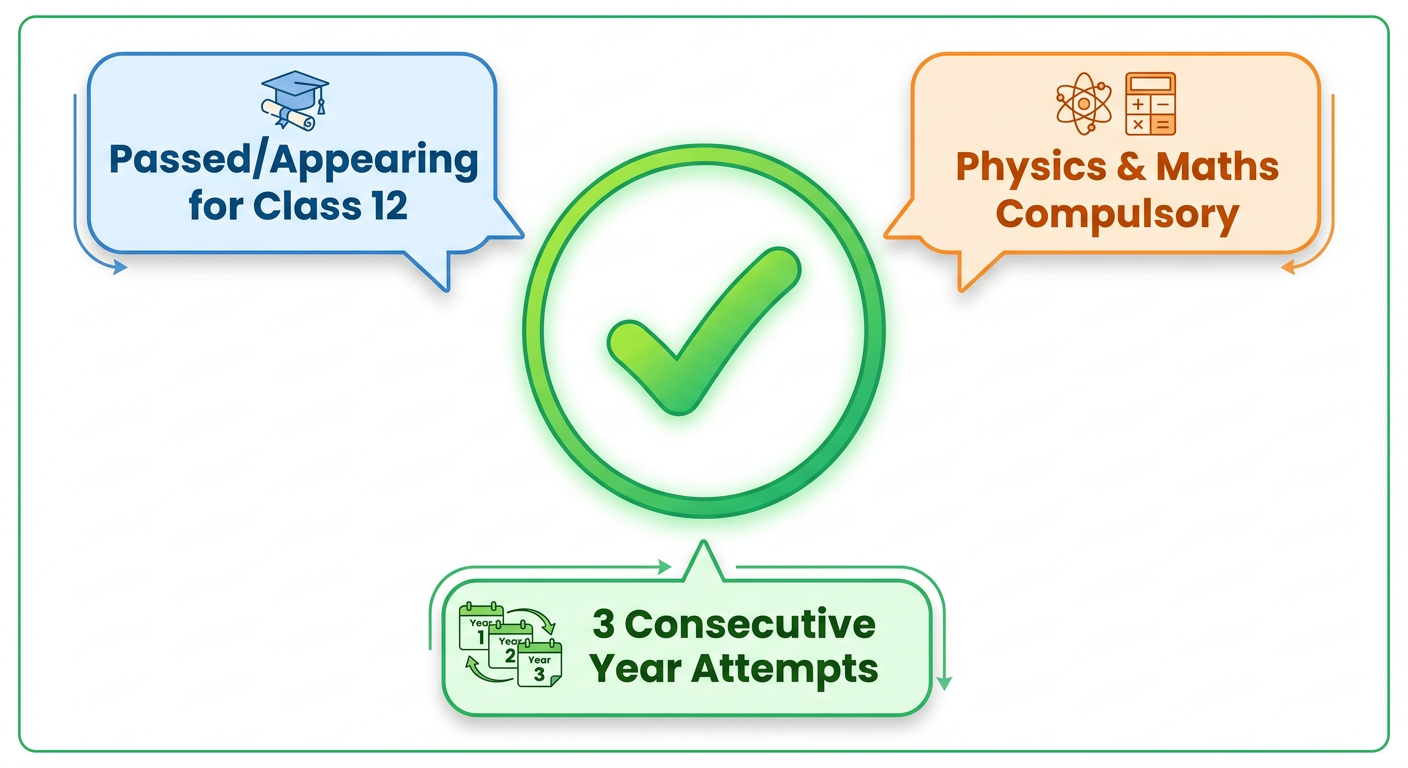
Before you start dreaming about your rank, you need to make sure you can actually take the exam. The JEE Main eligibility criteria set by the NTA are strict, so pay close attention. It's not just about your marks; it's also about your academic history and the number of times you've tried.
Let’s break down the rules into simple, easy-to-understand points. Make sure you tick every box before you start filling out the application form.
Academic Qualifications: The Class 12 Rule
This is the most fundamental requirement. You must have passed your Class 12 (or equivalent) examination. Students who are appearing for their Class 12 board exams in the current academic year are also eligible to apply.
For the B.E./B.Tech paper, you must have passed your qualifying exam with Physics and Mathematics as compulsory subjects. Alongside these, you need one subject from Chemistry, Biotechnology, Biology, or a Technical Vocational subject. This subject combination is non-negotiable.
Age Limit: Is There One?
Here’s some good news: there is no official age limit to appear for JEE Main. However, there's a catch. Your eligibility is tied to the year you passed your Class 12 exam.
Generally, you can attempt the exam in the year you pass your Class 12 boards and for the next two consecutive years. For example, to be eligible for JEE Main 2025, a student must have passed their Class 12 exam in 2023, 2024, or be appearing for it in 2025. This indirectly limits the age, but it's not a fixed number.
Number of Attempts: How Many Shots Do You Get?
As mentioned above, you get three consecutive years to take the exam. Since the exam happens twice a year (two sessions), this means a student can technically attempt the JEE Main exam a maximum of six times.
This policy gives you multiple opportunities to secure your best possible score. But remember, the three years are consecutive. If you skip a year, you lose those attempts. So, plan your attempts wisely.
Cracking the Code: The JEE Main Exam Pattern
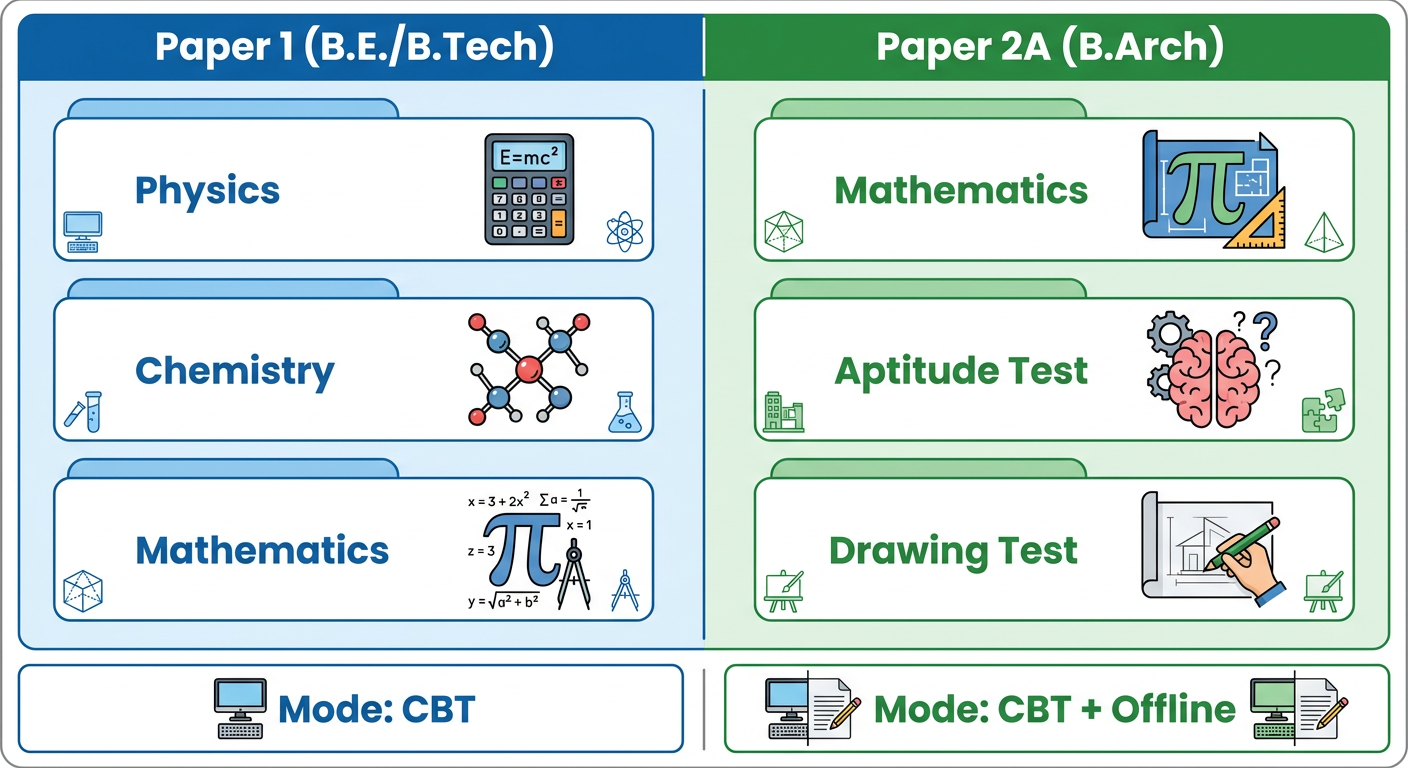
Knowing the rules of the game is half the battle won. The JEE Main exam pattern tells you exactly what to expect on exam day: the subjects, the types of questions, the marking scheme, and the duration. Understanding this structure is crucial for building an effective preparation strategy.
The exam is primarily conducted in a Computer Based Test (CBT) mode. It's divided into different papers based on the course you're targeting.
Paper 1 (B.E./B.Tech): The Main Event
This is the paper that the vast majority of students appear for. It's your ticket to an engineering degree at the NITs and IIITs.
- Subjects: Physics, Chemistry, and Mathematics.
- Question Type: Each subject has two sections. Section A consists of 20 Multiple Choice Questions (MCQs). Section B has 10 Numerical Answer Type (NAT) questions, out of which you must attempt any 5.
- Marking Scheme: For MCQs, you get +4 for a correct answer and -1 for an incorrect one. For NAT questions, you get +4 for a correct answer, and there is no negative marking for incorrect answers.
- Total Marks: 300 (100 for each subject).
- Duration: 3 hours.
Paper 2A (B.Arch) and Paper 2B (B.Plan): For a Different Path
If your interests lie in architecture or urban planning, JEE Main has specialized papers for you. The structure is different from Paper 1.
- Paper 2A (B.Arch): This paper tests your aptitude for architecture. It consists of three parts: Mathematics (CBT), Aptitude Test (CBT), and a Drawing Test (offline, on a drawing sheet). The drawing test is what makes this unique.
- Paper 2B (B.Plan): For those interested in planning, this paper is fully computer-based. It includes Mathematics, an Aptitude Test, and Planning-Based Questions.
Make sure you choose the correct paper during registration. Most students appearing for engineering will only select Paper 1.
The Battlefield Map: JEE Main Syllabus Overview
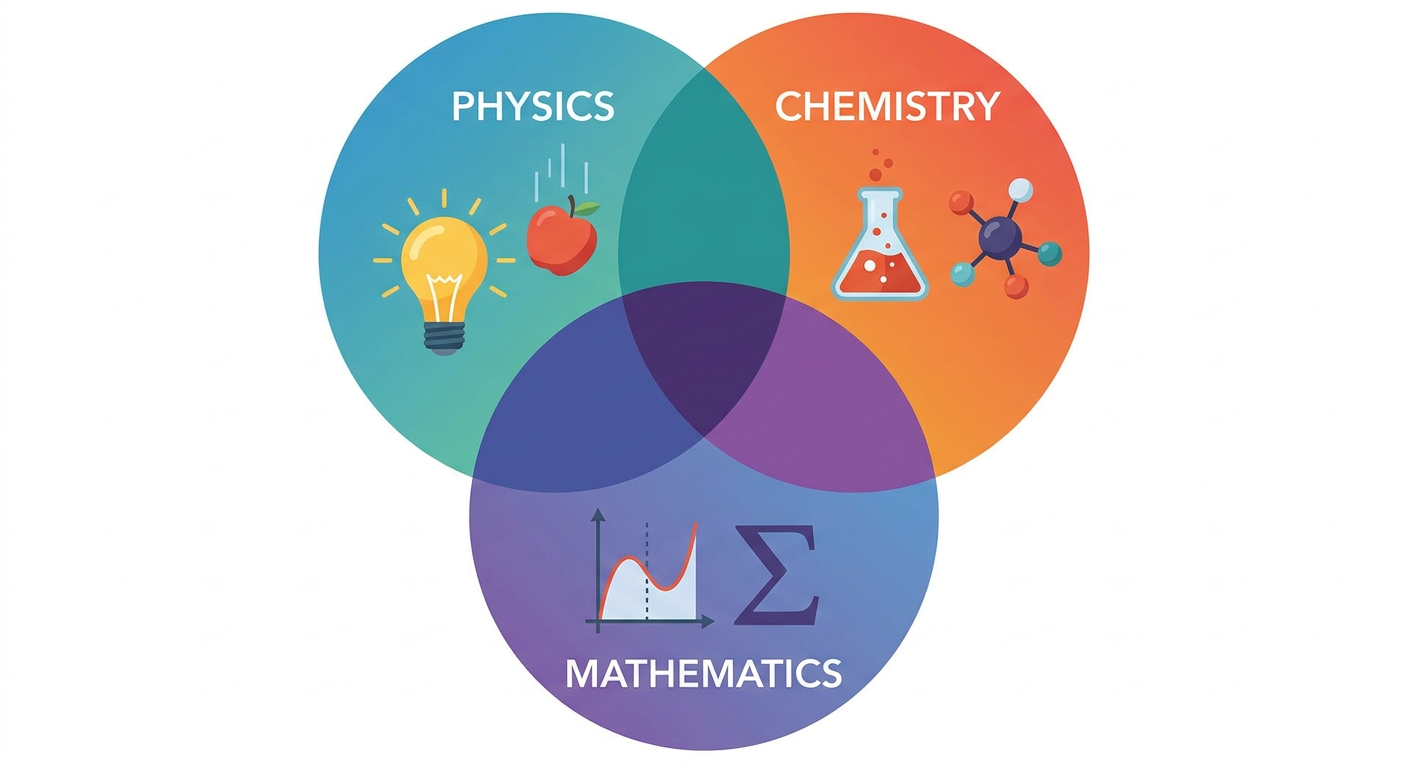
The JEE Main syllabus is the official curriculum you need to study. It is vast and covers topics from both Class 11 and Class 12 CBSE boards. However, don't assume it's identical. The NTA sometimes modifies the syllabus, so always refer to the official document for the year you are appearing.
Covering the entire syllabus is a marathon, not a sprint. You need a systematic plan to tackle all three subjects effectively.
- Physics: The syllabus covers a wide range from Mechanics, Electrodynamics, and Optics to Modern Physics and Thermodynamics. Strong conceptual understanding and problem-solving skills are key.
- Chemistry: This is often the most scoring subject if prepared well. It's divided into Physical, Organic, and Inorganic Chemistry. NCERT is considered the bible for Chemistry, especially for Inorganic.
- Mathematics: This section tests your analytical and problem-solving abilities. Topics include Algebra, Trigonometry, Calculus, Coordinate Geometry, and Vectors. It often requires the most practice.
While the list of topics is long, a smart strategy involves focusing on high-weightage chapters. You can find a detailed breakdown of the complete JEE syllabus on our resources page. Always download the latest official syllabus from the NTA website before starting your prep.
Your First Step: How to Apply for JEE Main
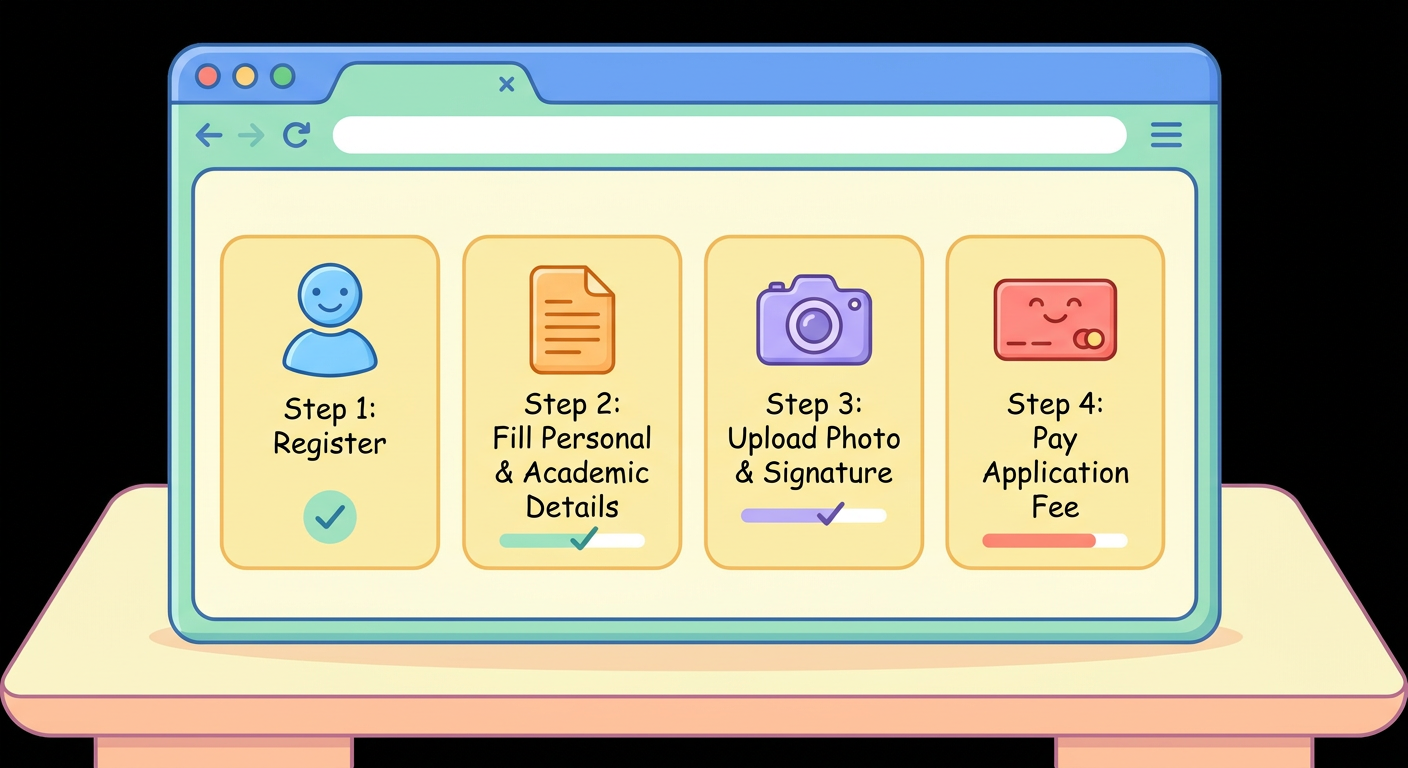
Once you've confirmed your eligibility and understood the exam, the next step is the application process. You can only apply for JEE Main through the official NTA website. The process is entirely online and requires careful attention to detail. A small mistake can cause big problems later.
Here is a simple, step-by-step guide to filling out your application form without any hassle. The application window usually opens a few weeks before the exam session.
-
Registration: Visit the official JEE Main website, which is currently https://jeemain.nta.nic.in/. You'll need to create an account using a valid email address and mobile number. A unique Application Number will be generated.
-
Fill the Form: Log in with your Application Number and password. Fill in all required details: personal information, academic qualifications, and choice of exam cities. Be very careful while entering your name, parents' names, and date of birth.
-
Upload Documents: You will need to upload scanned copies of your recent passport-sized photograph, signature, and category certificate (if applicable). Make sure they are in the specified format (JPG/JPEG) and size.
-
Pay the Fee: The application is incomplete without fee payment. You can pay online using a debit card, credit card, net banking, or UPI. The fee varies by category, gender, and exam center location (in India or abroad).
-
Confirmation Page: After successful payment, a confirmation page will be generated. Download and save this page. It is proof that your application has been submitted successfully. It's a good idea to print a few copies for your records.
Understanding the Application Fees
The application fee for JEE Main is subject to change each year. As a reference, the fees for a single paper are structured differently for various categories. For instance, for male candidates in the General category, the fee is higher than for female candidates or those in reserved categories like SC/ST/PwD. Always check the official information bulletin for the exact fee structure for your session.
The Final Countdown: Admit Card and Exam Day
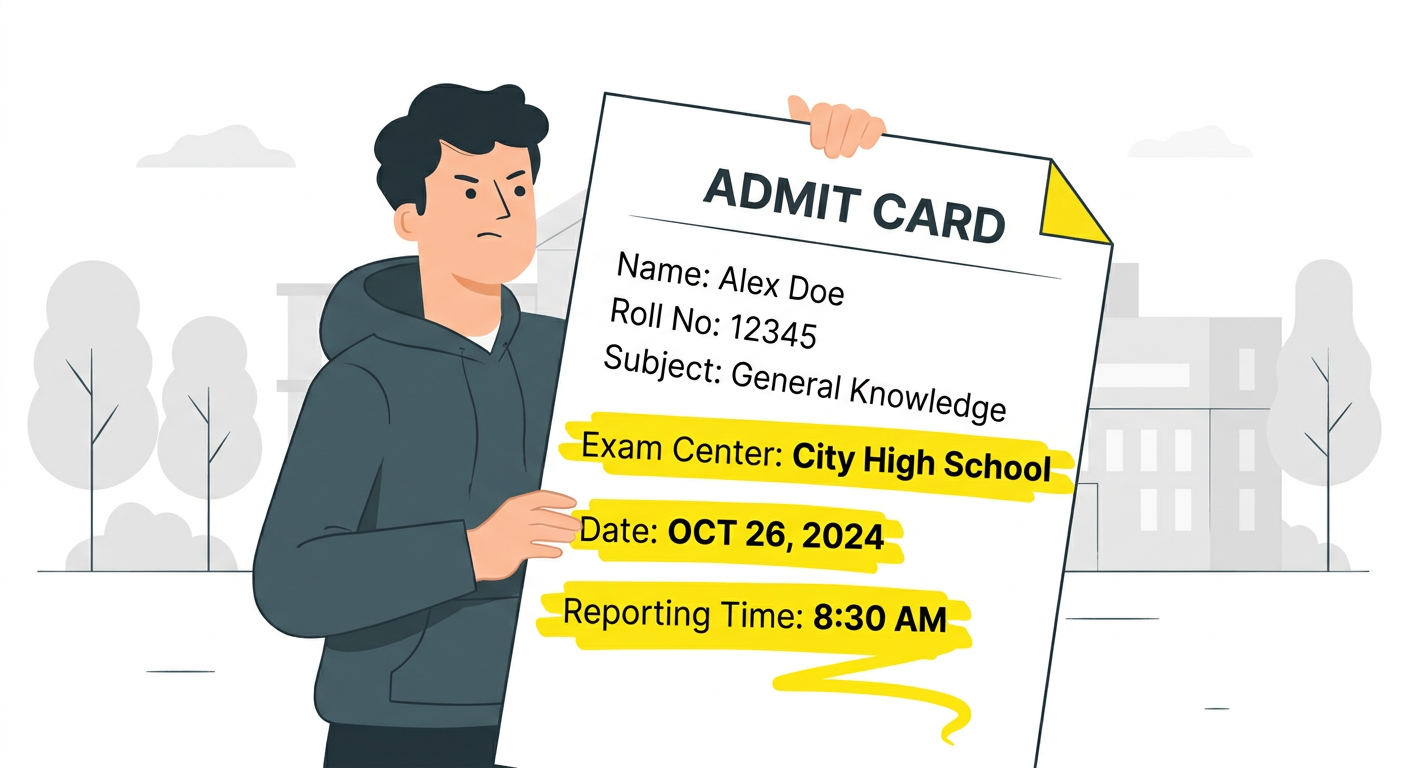
A few days before the exam, the NTA releases the JEE Main Admit Card. This is the most important document for exam day. Without a printed copy of the admit card, you will not be allowed to enter the examination hall. It contains crucial details like your exam date, time slot, and the exact address of your exam center.
How to Download Your Admit Card
The process is simple and online. You just need to log in to the official NTA website using your application number and date of birth. Once you're logged in, you can view and download your admit card.
It's extremely important to check all the details on the admit card for any errors. Your name, photo, signature, and paper should be correct. In case of any discrepancy, contact the NTA helpline immediately. Don't forget to take multiple printouts.
Important Exam Day Guidelines
Panic on exam day can ruin months of hard work. Knowing the rules beforehand helps you stay calm and focused.
- What to Carry: You must carry a printed copy of your admit card, a valid original photo ID (like an Aadhar card or school ID), and a recent passport-sized photograph to paste on the attendance sheet.
- What Not to Carry: Electronic devices like mobile phones, smartwatches, calculators, and even geometry boxes are strictly prohibited. The center will provide a pen and rough sheets for calculations.
- Be on Time: Reach the exam center well before the reporting time mentioned on your admit card. The gates usually close 30 minutes before the exam starts, and latecomers are not permitted.
The Scorecard: From Marks to All India Rank (AIR)
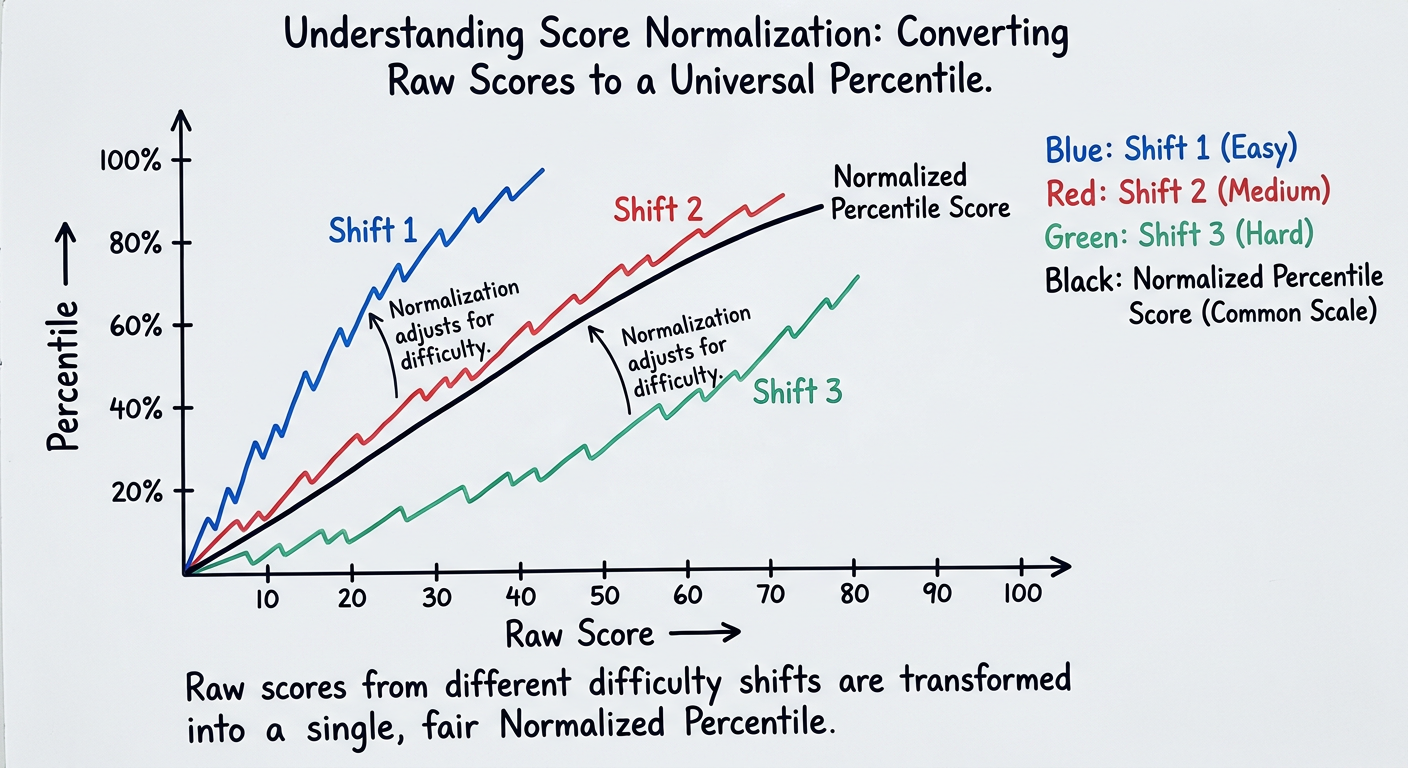
After the exam, the next big event is the result. But the process isn't as simple as just totaling your marks. Since JEE Main is conducted in multiple shifts and sessions, the difficulty level of the question paper can vary. To ensure fairness, the NTA uses a process called normalization.
Your raw score (the marks you actually got) is converted into a percentile score. A percentile score indicates the percentage of candidates who scored equal to or below you in that session. For example, if you get a 99 percentile, it means you scored better than 99% of the students who took the exam in your session.
This normalization ensures that no student is at a disadvantage just because they got a tougher paper. Your final All India Rank (AIR) is determined based on the best of your percentile scores from the January and April sessions. You can use a JEE rank predictor tool to get an idea of your potential rank based on your expected score.
Beyond JEE Main: What Are Your Options?
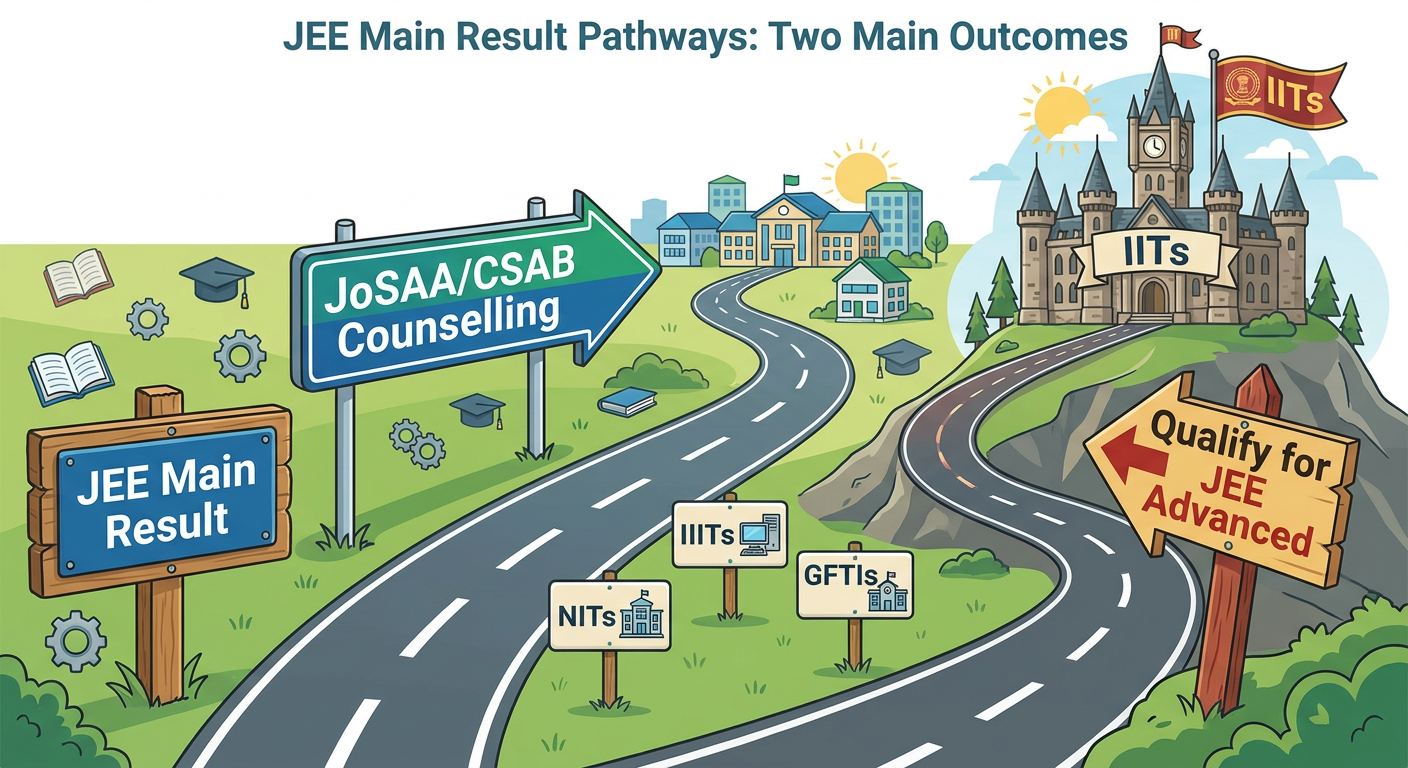
Once your final JEE Main AIR is declared, the journey splits into two primary paths. Your rank will determine which path you can take and which colleges you are likely to get into. This is where all your hard work starts to pay off.
The IIT Dream: Qualifying for JEE Advanced
If you are among the top ~2,50,000 candidates in JEE Main, congratulations! You have earned the eligibility to sit for JEE Advanced. This is the final and toughest hurdle for getting into one of the 23 prestigious IITs.
Remember, a good rank in JEE Main does not guarantee an IIT seat. It only gives you the ticket to write the exam. The preparation for Advanced is more intense and requires a deeper understanding of concepts. You can find more information on the official JEE Advanced website.
NITs, IIITs, and GFTIs: The JoSAA/CSAB Counselling
For everyone who has a JEE Main rank, the next step is the centralized counseling process conducted by the Joint Seat Allocation Authority (JoSAA). This is where seats in all the NITs, IIITs, and other GFTIs are allocated based on your AIR and the choices you fill.
It's a complex process involving multiple rounds of seat allocation. You need to be very careful while filling your choices of colleges and branches. After the JoSAA rounds are over, a special round of counseling (CSAB) is often held to fill any remaining vacant seats.
Your Game Plan: Simple Tips for JEE Main Preparation
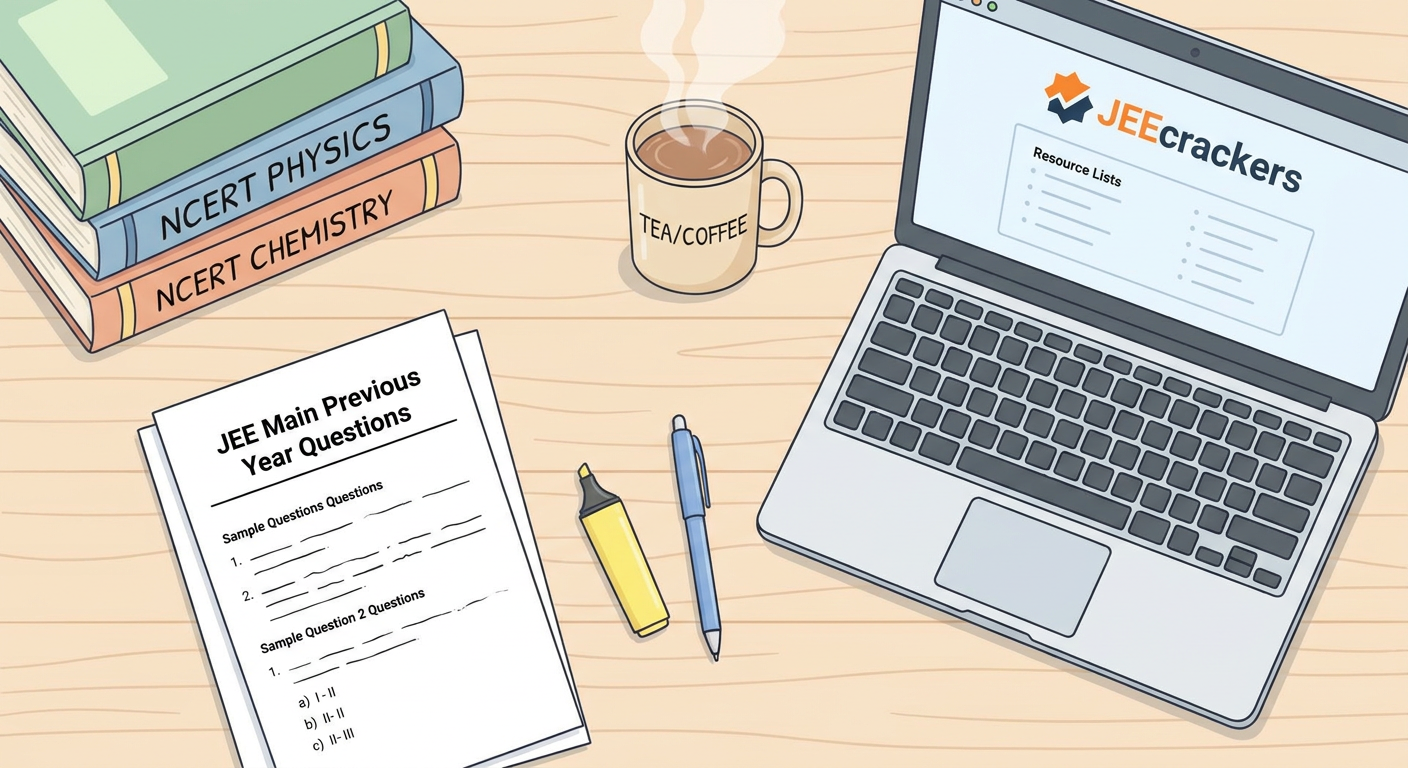
Preparation for an exam like JEE Main is a marathon. You need consistency, a smart strategy, and the right resources.
-
Start with the Basics: Before jumping to complex reference books, master your Class 11 and 12 NCERT textbooks. They build a strong foundation, especially for Chemistry.
-
Practice is Everything: Solve as many problems as you can. The most important resource here is the collection of previous year questions. This helps you understand the exam pattern and the type of questions asked.
-
Take Mock Tests: Regularly taking mock tests in a simulated exam environment is non-negotiable. It helps you manage your time, identify your weak areas, and build exam temperament.
-
Focus on Concepts: Don't just memorize formulas. Understand the underlying concepts. JEE Main often tests your application of concepts, not just your memory.
-
Stay Consistent and Healthy: Create a realistic study schedule and stick to it. Don't forget to take breaks, eat healthy food, and get enough sleep. A healthy mind resides in a healthy body.
-
Find a Community: Preparing for JEE can feel lonely. Joining student community groups can provide motivation, help in doubt-solving, and offer moral support from peers who are in the same boat.
FAQs
How many times can I attempt JEE Main?
You can attempt the JEE Main exam for three consecutive years starting from the year you pass your Class 12 board exams. Since the exam is held twice a year, this translates to a maximum of six attempts in total.
Is there negative marking in JEE Main?
Yes, there is negative marking for Multiple Choice Questions (MCQs). You get +4 for a correct answer and a penalty of -1 for an incorrect answer. However, for Numerical Answer Type (NAT) questions, there is no negative marking.
What is the 75% criteria for JEE Main?
To be eligible for admission into NITs, IIITs, and GFTIs, a candidate usually needs to have secured at least 75% marks in their Class 12 board exam (65% for SC/ST candidates) or be in the top 20 percentile of their board. Note that this criterion has been relaxed in some previous years, so always check the latest JoSAA business rules.
Can I get into an IIT with only my JEE Main score?
No. The JEE Main score is only for admission to NITs, IIITs, and GFTIs. To get into an IIT, you must first qualify for JEE Advanced by clearing the JEE Main cutoff and then secure a rank in the JEE Advanced exam.
Is the JEE Main syllabus the same as the CBSE syllabus?
The JEE Main syllabus is largely based on the CBSE syllabus for Class 11 and 12. However, there can be minor differences, and sometimes topics are removed or added by the NTA. It's crucial to refer to the official JEE Main syllabus released by NTA for the specific year.
Which session of JEE Main is easier, January or April?
No session is officially easier than the other. The difficulty level of the papers varies across different shifts and sessions. The NTA uses a normalization process based on percentiles to ensure that all students are judged on a fair and common scale, regardless of which paper they attempted.