CBSE Special Examination 2026 date sheet released at cbse.gov.in: Check schedule for West Asia candidates - The Times of India
Your complete guide to acing the CBSE board exam. Understand the exam pattern, syllabus, marking scheme, and find the best preparation strategies for Class 10 and 12.
18 min read
Your Ultimate Guide to the CBSE Board Exam
Remember that scene from 3 Idiots where Virus tells his students, "Life is a race. If you don't run fast, you will be like a broken anda"? For millions of students across India, the CBSE board exam often feels like the starting line of that very race. It’s a milestone that brings a mix of excitement, anxiety, and a whole lot of parental expectations.
But here’s the truth: it’s not just a race. It’s a marathon that you can win with the right training and strategy. This isn't just another exam; it's a foundation for your future academic and professional life, especially if you're aiming for competitive exams like JEE or NEET.
The pressure is real, we get it. But navigating the vast ocean of the CBSE curriculum doesn't have to be overwhelming. This guide is your compass. We will break down everything you need to know, from understanding the structure to crafting the perfect preparation strategy. Let's turn that pressure into performance.
What Exactly is the CBSE Board Exam?
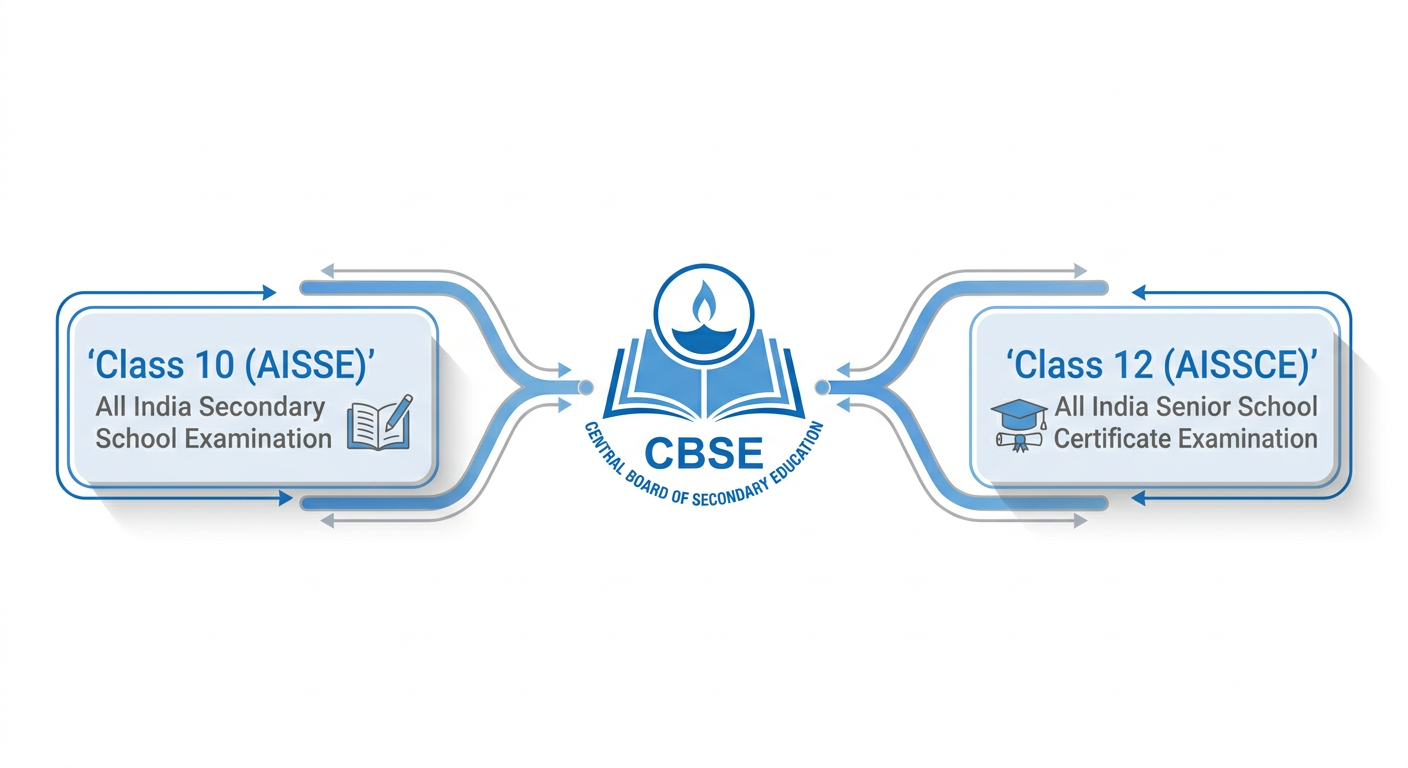
Before you can conquer the CBSE board exam, you need to understand what it truly is. CBSE stands for the Central Board of Secondary Education. Think of it as the national-level board of education for public and private schools in India, managed and controlled by the Government of India. It’s one of the most popular and widely recognized school boards in the country.
What makes CBSE different from state boards or ICSE? CBSE focuses on a curriculum that is more geared towards preparing students for national-level competitive entrance examinations like JEE (for Engineering) and NEET (for Medical). The syllabus is more compact and science-oriented, which gives students a solid base for these tough exams. NCERT (National Council of Educational Research and Training) textbooks, which are prescribed by CBSE, form the core of these competitive tests.
The Board conducts two major examinations at the end of the school year: the Class 10 exams, known as the All India Secondary School Examination (AISSE), and the Class 12 exams, known as the All India Senior School Certificate Examination (AISSCE). These aren't just school finals; they are nationally recognized assessments that determine your next steps in education.
Understanding the Class 10 Board Exam (AISSE)
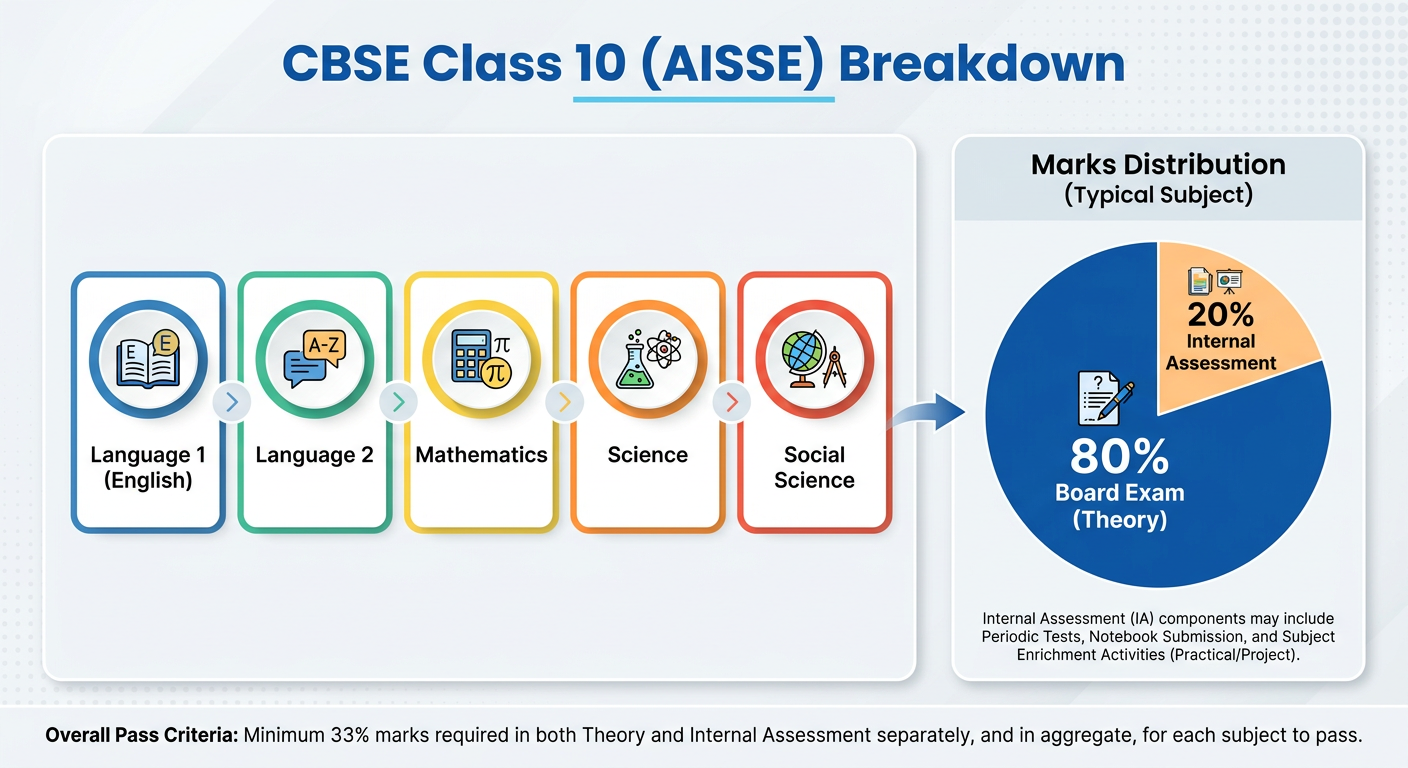
The Class 10 exam, or AISSE, is the first major academic hurdle for a student in the Indian education system. It’s the first time you appear for a standardized, national-level examination, and it can feel like a pretty big deal. It is!
This exam is designed to assess your overall understanding of the concepts you've learned over the past few years. The structure typically involves five compulsory subjects: two languages (often English and Hindi/a regional language), Mathematics, Science, and Social Science. Additionally, students can opt for an additional skill-based subject.
Why does this exam matter so much? Your performance in the CBSE Class 10 exam is crucial because it directly influences your choice of stream in Class 11 and 12. Good scores open up more options, allowing you to choose between Science, Commerce, or Arts based on your interest and aptitude, not just your marks. It sets the academic trajectory for the next two critical years of your life.
Cracking the Class 12 Board Exam (AISSCE)
If Class 10 is the semi-final, the Class 12 exam, or AISSCE, is the grand finale of your school life. This is the big one. The scores from this exam are a key factor in gaining admission to universities and colleges across India. For many, it's the culmination of 14 years of schooling.
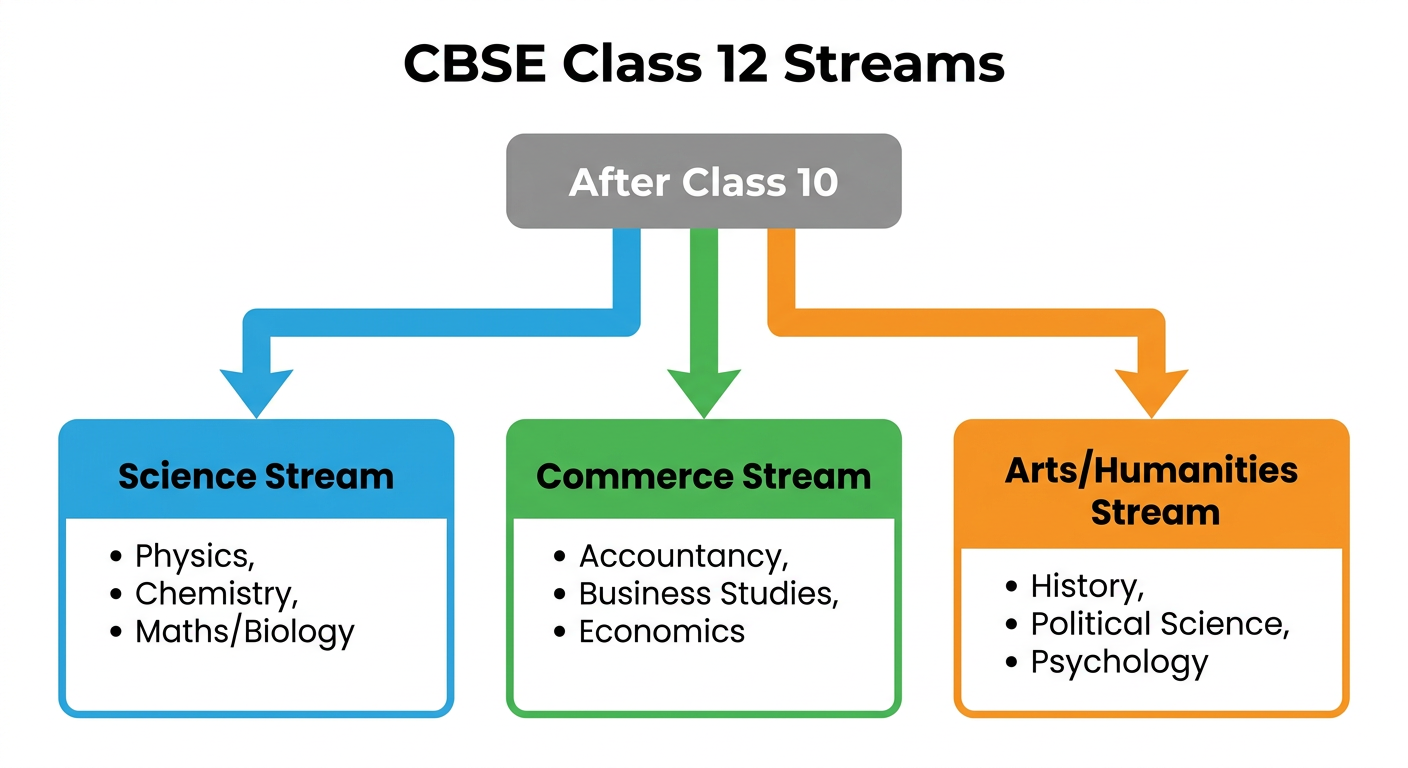
The AISSCE is stream-specific. Based on your Class 10 results and interests, you would have chosen one of three main streams. Each stream is a distinct pathway with a specific set of subjects designed to prepare you for higher education in that field.
The Science Stream: Gateway to JEE and NEET
This is often the most sought-after stream, primarily because it keeps the doors open for two of the most prestigious career paths in India: Engineering (JEE) and Medicine (NEET). Students in this stream study Physics and Chemistry as compulsory subjects.
The main choice here is between Mathematics (PCM), which leads to engineering, and Biology (PCB), which leads to medical fields. Some students opt for both (PCMB) to keep their options wide open. The curriculum is rigorous and concept-heavy, demanding consistent effort and a strong problem-solving ability. Success here is not just about the board exam; it's about building a foundation for competitive exams that follow.
The Commerce Stream: For Future Business Leaders
The Commerce stream is the ideal choice for students interested in business, finance, and economics. The core subjects include Accountancy, Business Studies, and Economics, along with English and often Mathematics or a vocational subject.
This stream lays the groundwork for careers like Chartered Accountancy (CA), Company Secretary (CS), and for degrees like B.Com, BBA, and MBA. It requires a knack for numbers, a logical mind, and a keen interest in how the world of business and finance works. It's a practical, career-oriented path with immense potential.
The Arts/Humanities Stream: A World of Possibilities
Often misunderstood as the 'easy' option, the Arts or Humanities stream is anything but. It is a diverse and intellectually stimulating field that deals with subjects like History, Political Science, Geography, Psychology, Sociology, and Economics. This stream is for the curious minds who want to understand human society, culture, and the world around them.
Graduates from this stream pursue a wide range of careers in civil services (IAS, IPS), law, journalism, academia, design, and much more. It requires strong analytical and critical thinking skills, along with the ability to read, write, and articulate complex ideas effectively. The career paths are vast and rewarding for those with a passion for these subjects.
Decoding the CBSE Exam Pattern and Marking Scheme
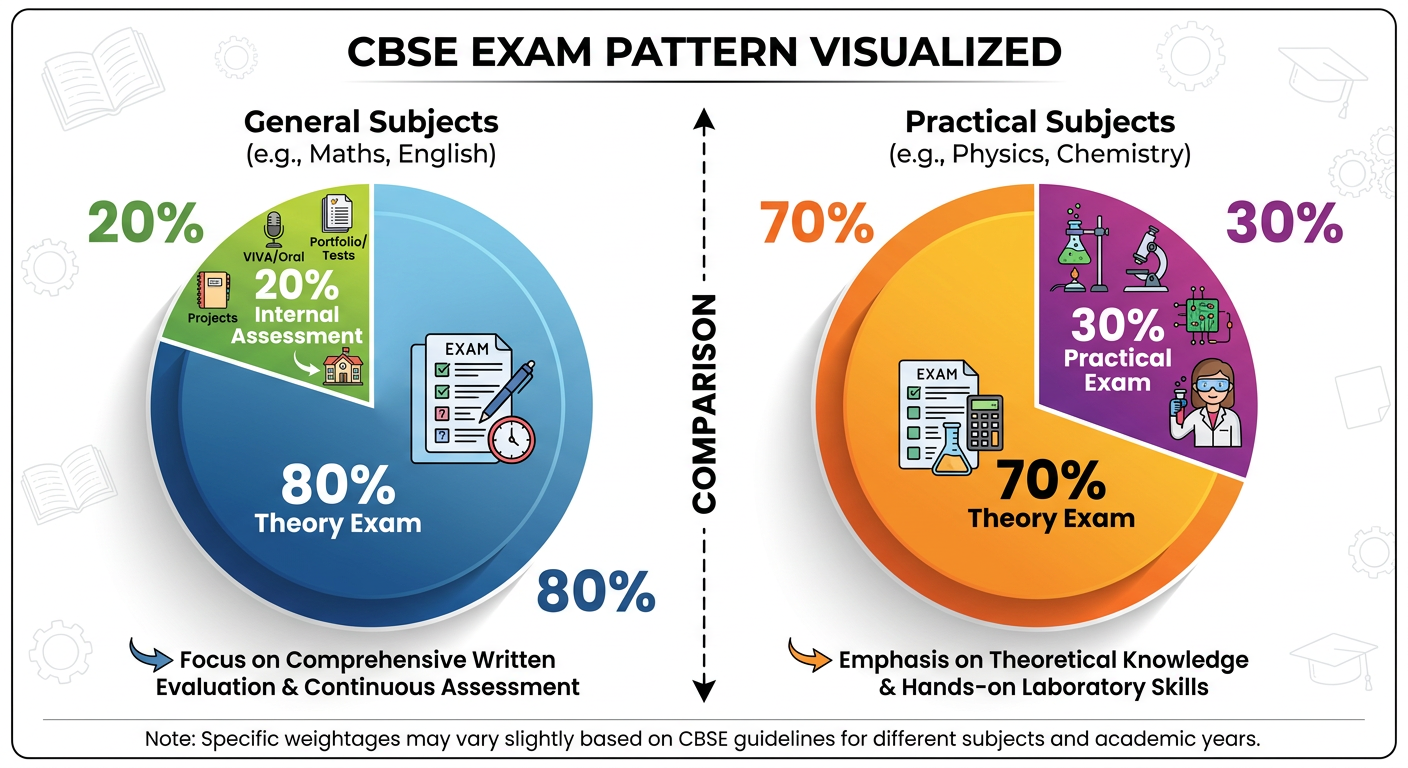
To score well, you must first understand the rules of the game. The CBSE exam pattern isn't just about writing long answers anymore. The Board has evolved its approach to test real understanding over rote memorization.
At its core, the evaluation for most subjects is a combination of a final theory examination and internal assessment or practical exams conducted by the school. Typically, the theory paper accounts for 80 marks, while the remaining 20 marks come from internal assessments. For science subjects with a practical component like Physics and Chemistry, this split is 70 marks for theory and 30 for practicals.
Theory Papers: The Main Battleground
This is where you'll spend three hours demonstrating your knowledge. In recent years, CBSE has made a significant shift towards competency-based questions. This means you can expect a mix of question types:
- Objective Type: Multiple Choice Questions (MCQs), Fill in the Blanks, etc.
- Source-Based/Case-Based: A paragraph or data set is given, followed by questions based on it.
- Assertion-Reasoning: These test your conceptual clarity to the core.
- Short Answer & Long Answer: The traditional descriptive questions that test your ability to explain concepts in detail.
This variety means you can't just memorize definitions. You need to understand the 'why' and 'how' behind every topic. Your ability to apply concepts to new situations is what is being tested.
Practical Exams and Internal Assessments
Those 20 or 30 marks from practicals and internal assessments are your low-hanging fruit. Do not neglect them! They are a golden opportunity to boost your overall percentage. This component usually includes:
- Practical Work: Performing experiments in the lab for science subjects.
- Project Work: Researching and creating a project on a given topic.
- Viva Voce: An oral examination where the external examiner asks you questions.
- Periodic Tests: Marks from your regular school tests are also included.
Consistent performance in school throughout the year is key to scoring full marks here. Take your lab work, projects, and unit tests seriously. They are a significant and relatively easy part of your final CBSE marking scheme.
Mastering the CBSE Syllabus: Your Exam Blueprint
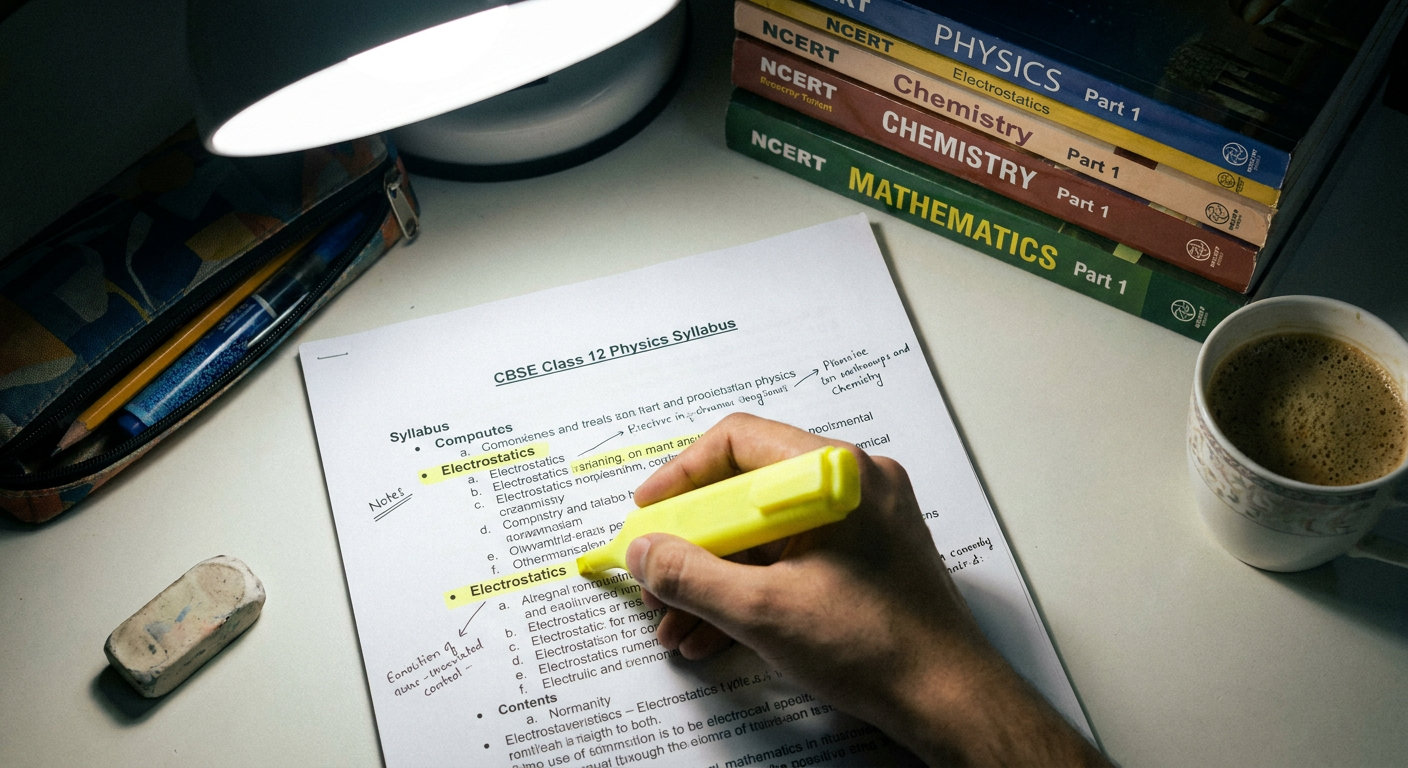
Imagine trying to build a house without a blueprint. That’s what preparing for the board exam without thoroughly understanding the syllabus is like. The official CBSE syllabus is the single most important document for your preparation. It tells you exactly what to study and what not to study.
You can always find the latest, most authentic version of the syllabus on the official CBSE website. We highly recommend downloading it and keeping a printed copy on your study table. Refer to it before you start any new chapter. Mark the topics that have been deleted or added for the current academic year.
The entire CBSE curriculum is based on the NCERT textbooks. These books should be your primary resource. They cover every topic mentioned in the syllabus in the required depth. For students also preparing for competitive exams, understanding the overlap is crucial. You can find a detailed analysis on our JEE/NEET syllabus breakdown page to plan your studies effectively.
How to Effectively Cover the Syllabus
Seeing the entire syllabus at once can be intimidating. The trick is to break it down. Start by dividing the chapters among the months you have left for preparation. Then, create weekly goals and finally, daily targets. This makes the mountain feel like a series of small, climbable hills.
Pay attention to the chapter-wise weightage provided by CBSE in its sample papers. While you should study everything, it’s smart to allocate more time to high-weightage topics. Create a checklist for each subject based on the syllabus. Tick off topics as you complete them. This not only keeps you organized but also gives you a sense of accomplishment and motivation.
The Ultimate Preparation Strategy for CBSE Board Aspirants
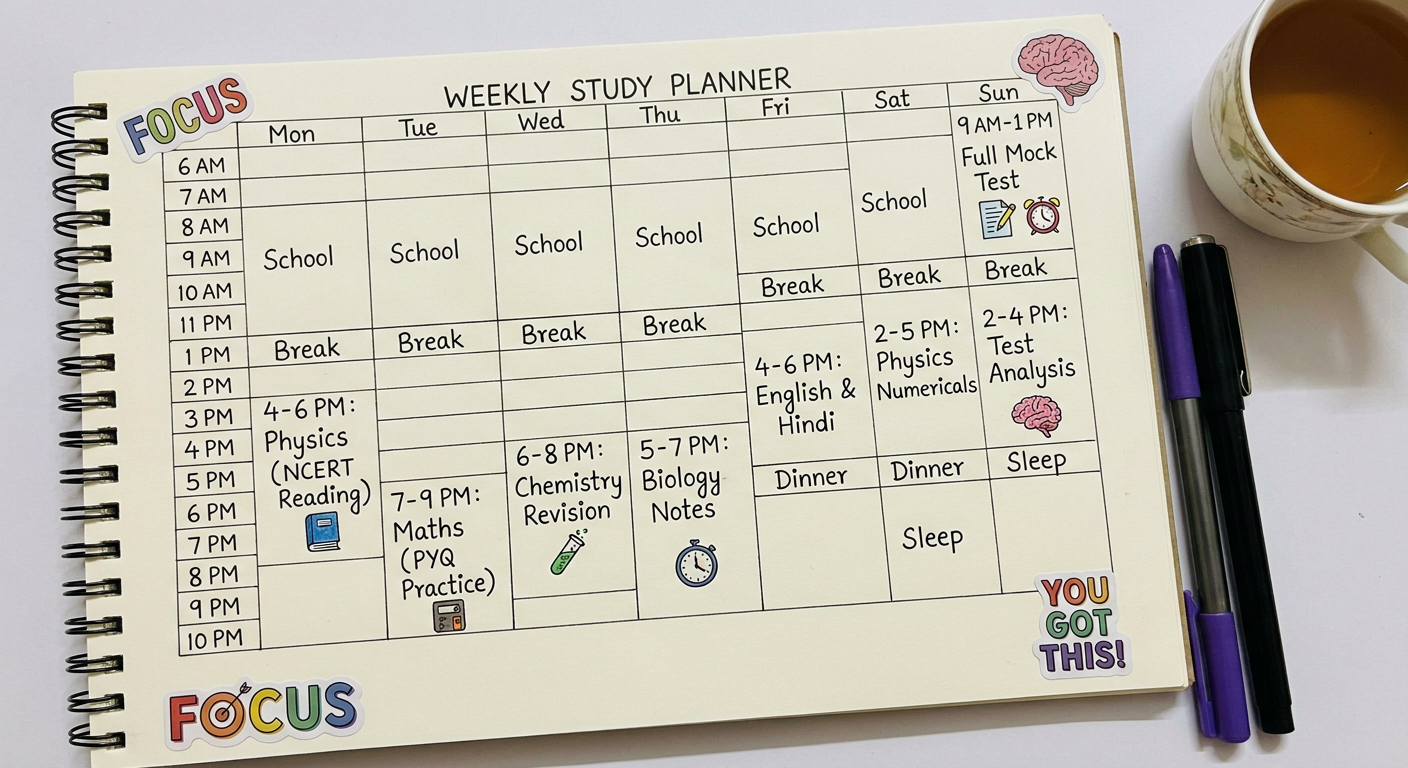
Knowing the syllabus and pattern is one thing; conquering it is another. A well-thought-out strategy is what separates the toppers from the rest. It’s not about studying 16 hours a day; it’s about studying smart for a few focused hours.
Your strategy should be personalized to your strengths and weaknesses. However, there are some universal principles that every successful student follows. Let's break down the components of an effective preparation plan.
Building a Rock-Solid Foundation with NCERT
We cannot stress this enough: NCERT books are the bible for the CBSE board exam. A significant portion of the question paper, often more than 80-90%, is derived directly from the concepts, examples, and exercises in these books. Before you touch any other reference book, make sure you have mastered your NCERTs.
How do you master them? Don't just read them like a novel. Read actively, with a pencil in hand. Underline key definitions, formulas, and important lines. Solve every single in-text question, example, and back-of-the-chapter exercise. For subjects like Chemistry, even the information in the boxes and tables is important. Treat every line as a potential question.
The Role of Reference Books: Use Them Wisely
Once you are thorough with the NCERT, you can move on to reference books. But be careful not to get lost in a sea of them. Buying ten different books for one subject is a recipe for confusion and anxiety. Choose one or at most two standard reference books per subject.
When should you use them? Use reference books for two main purposes: to understand a concept you found difficult in the NCERT in more detail, or for extra practice. Books like R.D. Sharma for Mathematics or H.C. Verma for Physics are excellent for building problem-solving skills, but they should supplement, not replace, your NCERT preparation.
The Power of Previous Year Questions (PYQs)
If NCERT is your textbook, then PYQs are your secret weapon. Solving questions from past years is the single best way to understand the exam's DNA. It tells you what kind of questions are asked, which topics are the examiners' favorites, and what the difficulty level is.
Aim to solve at least the last 5-7 years' worth of papers. Don't just read the questions; solve them in an exam-like environment. Time yourself and then evaluate your answers. This practice will improve your speed, accuracy, and time management skills. You can find a vast repository of exam papers on our previous year questions hub to get started.
Creating a Realistic and Effective Timetable
A timetable brings discipline to your preparation. But a timetable that is too ambitious is destined to fail. Be realistic. Factor in your school hours, coaching classes, and most importantly, breaks.
Try the Pomodoro Technique: study for a focused 45-50 minute session, then take a short 10-minute break. This keeps your mind fresh and improves retention. Allocate specific subjects to specific days, mixing a difficult subject with an easier one to maintain balance. Ensure you have enough time for sleep. A tired brain cannot learn effectively. Your timetable is your personal guide; tweak it until it works perfectly for you.
Balancing CBSE Board Exam Prep with JEE/NEET
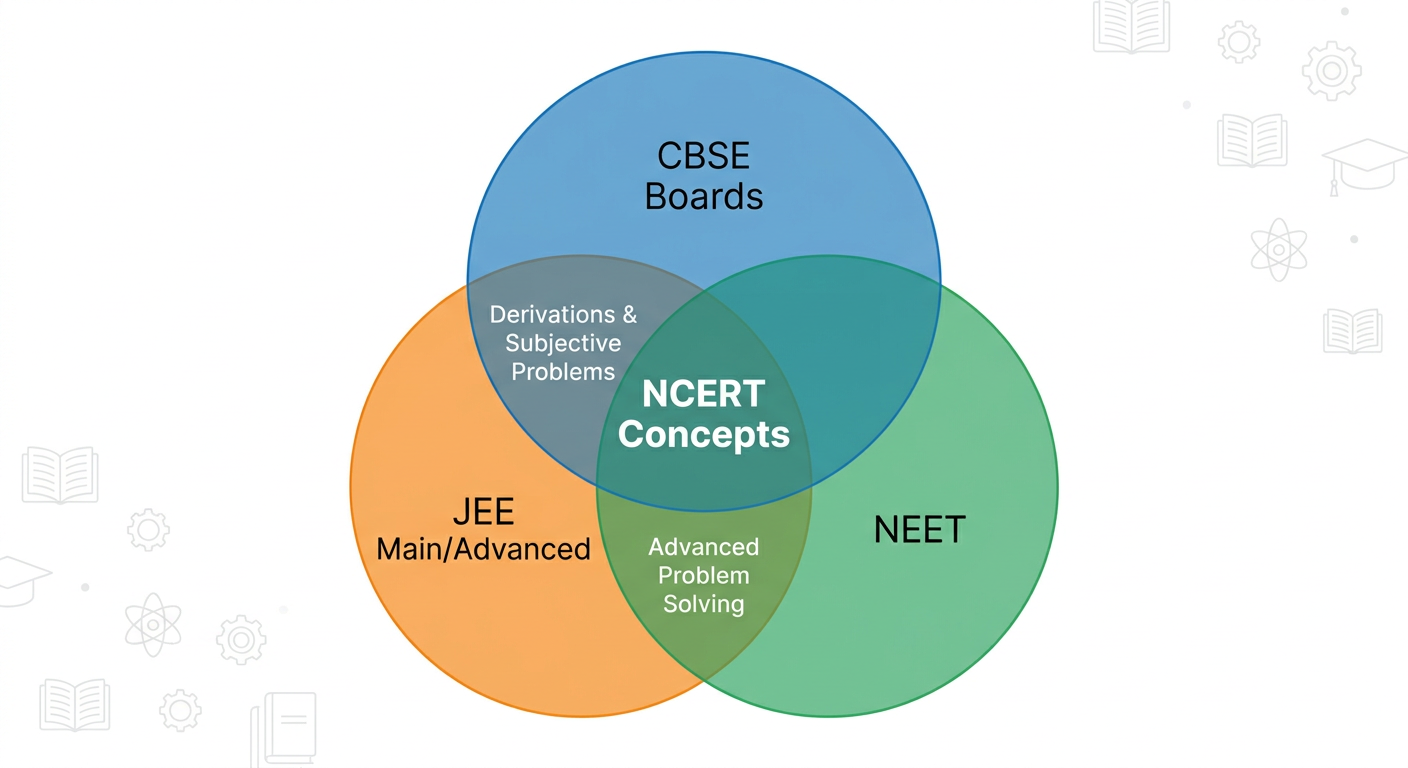
For science students, this is the million-dollar question: how to manage both boards and competitive exams? It can seem like you’re preparing for two completely different battles. The good news is, the core syllabus is largely the same. The difference lies in the approach.
The CBSE board exam tests the depth of your knowledge and your ability to present it clearly. JEE and NEET, on the other hand, test the application of that knowledge with speed and accuracy. The key is to integrate the preparation, not separate it. Your board preparation builds the conceptual foundation required for competitive exams.
A Unified Study Plan
Adopt a two-stage approach for every chapter.
Stage 1: Board Level Mastery. Start by studying the chapter thoroughly from your NCERT textbook. Solve all its exercises. Practice writing descriptive answers for the important derivations and theoretical questions. This solidifies your understanding.
Stage 2: Competitive Level Application. Once you are confident with the chapter's concepts, move on to solving objective questions (MCQs) from a good coaching module or reference book. This will train your brain to apply concepts quickly and accurately.
Design your weekly schedule to accommodate both. You could dedicate weekdays to Stage 1 preparation and reserve weekends for Stage 2 problem-solving and mock tests. Alternate between giving a full-length board pattern mock test one weekend and a JEE/NEET mock test the next. This integrated approach ensures you are prepared for both fronts without getting overwhelmed.
The Art of Writing Answers in the CBSE Exam
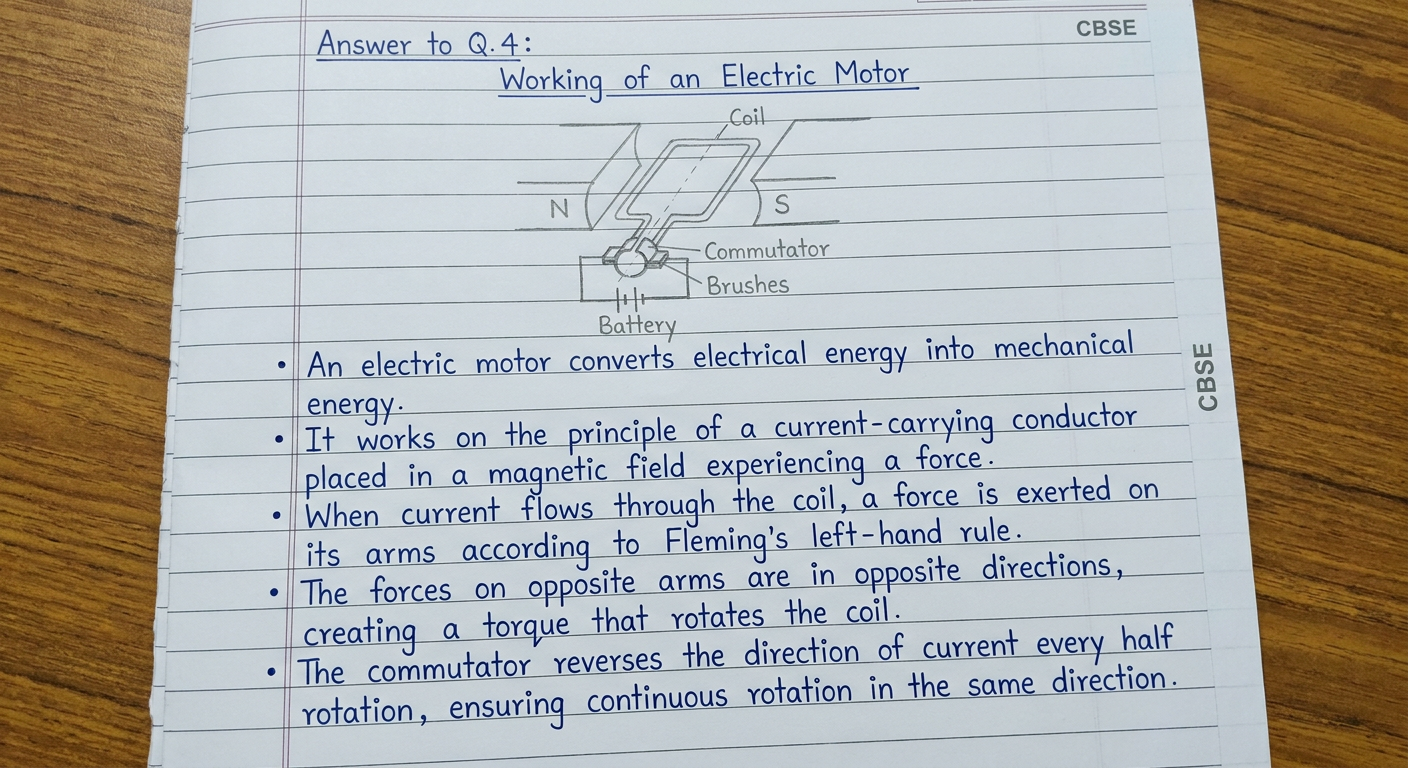
In the CBSE board exam, what you know is only half the battle. How you present what you know is the other half. A well-presented answer sheet can fetch you those crucial extra marks. The examiner has to check hundreds of copies a day; make their job easier, and they will reward you.
Pay attention to your handwriting. It doesn't need to be calligraphic, but it must be neat and legible. Use a blue or black pen and leave proper spacing between words and lines. Draw neat, well-labelled diagrams with a pencil wherever necessary. Underline important headings and keywords to draw the examiner's attention.
Structuring Your Answers for Maximum Marks
Never write long, dense paragraphs. Break down your answers. For long-answer questions, start with a brief introduction, then use bullet points or numbered lists to explain the main content, and end with a concise conclusion.
For questions asking for differences, always use a tabular format. In subjects like Physics and Chemistry, write down the formula you are using before substituting the values. Mention the units in your final answer. These small things reflect a clear understanding and create a very positive impression on the examiner.
Time Management During the Exam
That three-hour window is precious. The 15 minutes of reading time you get at the beginning is a game-changer if used wisely. Don't just read the paper; strategize. Identify the questions you are most confident about and decide the order in which you will attempt the sections.
Allocate time for each section based on its marks. For instance, if a section is worth 20 marks out of 80, it should ideally not take more than a quarter of your total time (around 45 minutes). Keep a watch on your wrist and stick to your time allocation. Don't get emotionally attached to a question you can't solve. Leave it, move on, and come back to it at the end if you have time.
Understanding the CBSE Grading System and Result
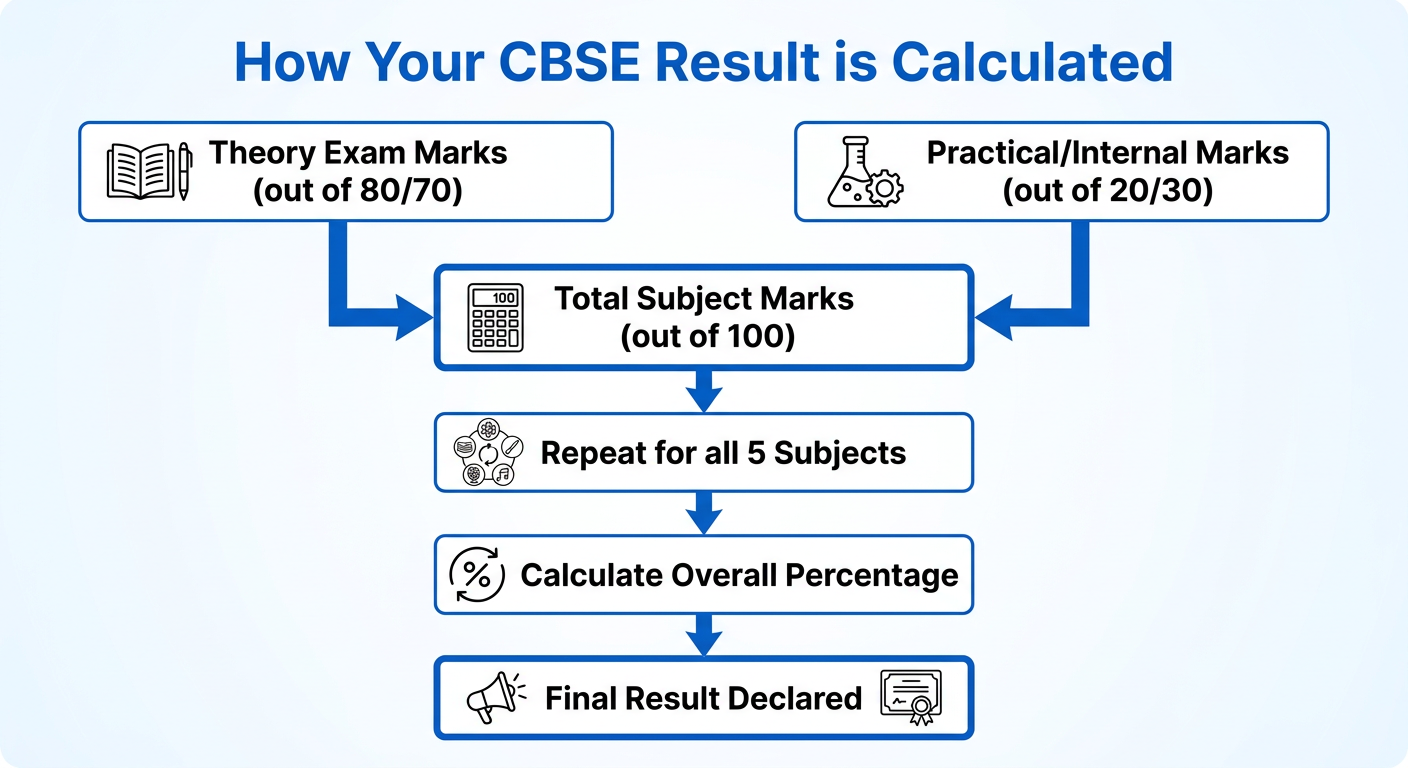
The day the CBSE result is declared is one of the most anticipated days for a student. The board has moved away from the old Cumulative Grade Points Average (CGPA) system for Class 10 and now awards marks and percentages, just like in Class 12.
Your final marksheet will show your marks in both theory and practical/internal assessment for each subject, along with the total marks and the overall percentage. To pass, a student must secure a minimum of 33% marks in each subject (both theory and practical taken together) as well as 33% in the aggregate.
In the unfortunate event that a student fails to meet the passing criteria in one or two subjects, they have the option to appear for the 'Compartment' examination. This gives them a second chance to clear the subject in the same year. If a student fails in more than two subjects, they may have to repeat the year, which is termed 'Essential Repeat'. You can always check your results and related circulars on the official portal at https://www.cbse.gov.in/.
Life After the CBSE Board Exam: What's Next?

The end of the board exams marks the beginning of a new chapter. It's a time of transition, filled with choices about your future. So, what happens after the results are out?
For many, the immediate focus shifts to college admissions. Your Class 12 scores are a critical component for admission into many top universities in India, like the University of Delhi, where cut-offs are often based on board percentages. At the same time, the entrance exam season is in full swing. This is the time to give your final push for JEE, NEET, CUET, CLAT, or other competitive exams you have been preparing for.
It's also a great time to explore your interests beyond academics. It's a period of self-discovery where you can think about what you are passionate about and what career path you truly want to follow. Remember, your board exam result is an important milestone, but it does not define your entire life or your potential for success. After your competitive exams, you can use tools like a JEE rank predictor to get an idea of your potential college options and plan ahead.
FAQs
Is the CBSE board exam very difficult?
The difficulty of the CBSE board exam is subjective, but it is generally considered to be a well-balanced exam. The questions are primarily based on the NCERT curriculum and test your understanding of concepts rather than just rote learning. With consistent preparation and a smart strategy, it is very manageable to score well.
Are NCERT books enough for the CBSE board exam?
For the most part, yes. NCERT books are the foundation and are sufficient to score above 90% if studied thoroughly. However, for subjects like Mathematics and Physics, practicing from a reference book can help build stronger problem-solving skills. They should be used as a supplement after mastering NCERT.
How many hours should I study for CBSE boards?
There is no magic number. The focus should be on the quality of study, not the quantity of hours. A consistent 4-6 hours of focused, distraction-free self-study every day is generally more effective than cramming for 12 hours straight. It's about consistency and smart work.
What is the passing criteria for the CBSE Class 12 board exam?
A student needs to secure a minimum of 33% marks in each of the five main subjects to pass. This includes marks from both theory and practical/internal assessment combined. Additionally, the student must also have a 33% aggregate score overall.
Can I reappear for a subject if I fail?
Yes. If a student fails in one subject, they can appear for the Compartment Exam, which is usually held in July. If they fail in two subjects, they can also appear for the Compartment Exam for both. This allows them to save their academic year.
How does CBSE handle question paper leaks or errors?
CBSE has a strict policy against paper leaks and malpractice. In the rare event of a confirmed leak, the board may decide to cancel and reconduct the examination. For errors in a question paper, the board often has a policy to award full marks to all students for that particular question to ensure no one is at a disadvantage.