NEET PG Counselling 2026: Major Changes in MCC Counselling Process - Careers360
Get the complete guide to the NEET PG Counselling 2026 process. Understand the expected changes, key dates, and how the MCC counselling process works for securing your MD/MS seat.
8 min read
Remember the final seasons of House M.D.? After all the brilliant diagnoses and saving lives, the real drama was often about navigating the hospital's complex system. For aspiring doctors in India, that feeling is all too real. Clearing the tough NEET exam is a massive victory, but it's only half the story. The next level of the game is counselling, and it's a world of its own.
Welcome to the ultimate boss battle: NEET PG Counselling. This is the process that decides your future specialisation and the hospital where you'll earn your MD or MS degree. Especially looking ahead to 2026, with so many changes on the horizon, being prepared is your best medicine. This guide will break down everything you need to know about the upcoming NEET PG Counselling 2026, from the key players to the step-by-step process.
What Exactly is NEET PG Counselling?
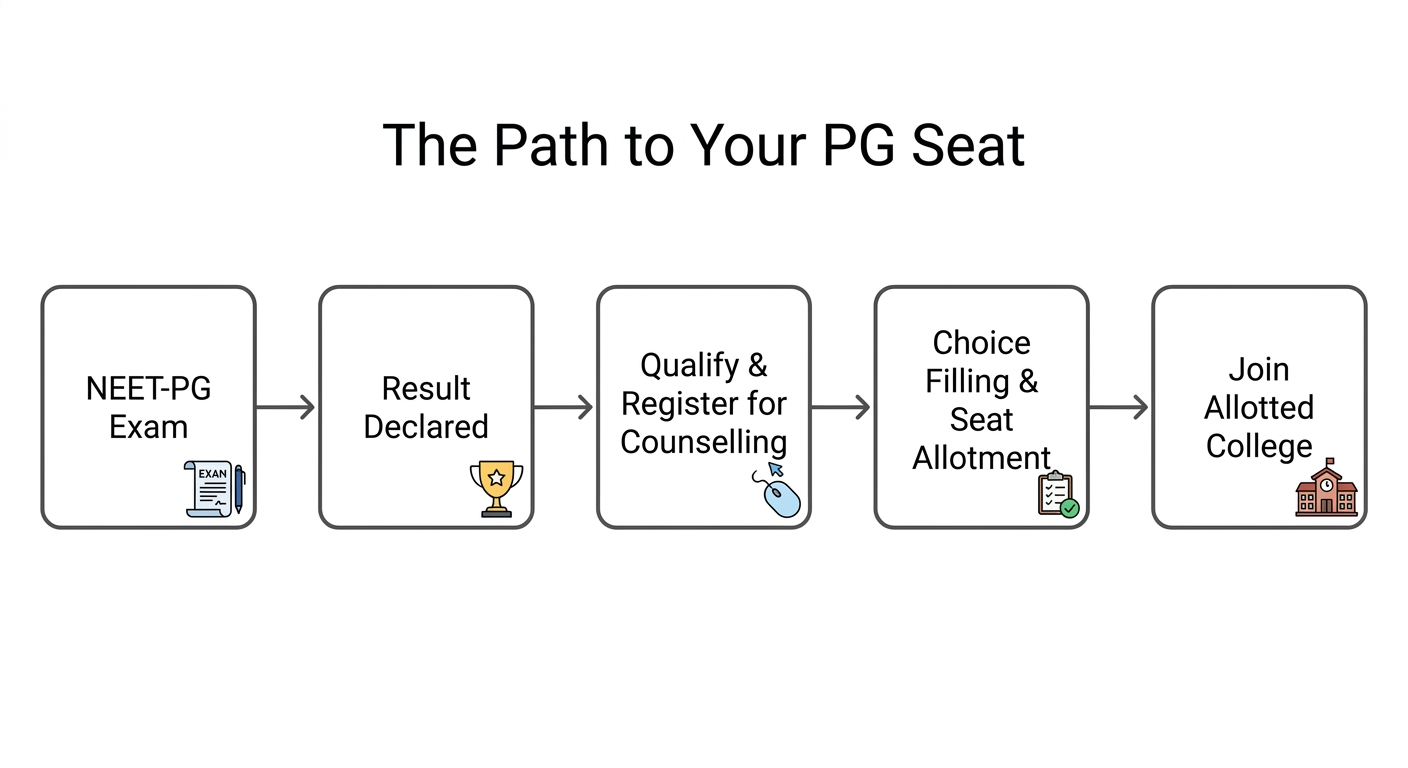 So, you've cracked the NEET-PG exam. What now? The short answer is NEET PG Counselling. Think of it as a highly organised, large-scale matchmaking process. It’s the system that matches your rank with your preferred medical college and specialisation (like surgery, paediatrics, or dermatology).
This entire procedure is designed to fill the 50% All India Quota (AIQ) seats in government medical colleges, along with seats in Central and Deemed Universities across the country. Without going through this counselling, your hard-earned rank is just a number. It's this process that turns your rank into an admission letter. The competition is intense, so understanding every step is crucial for success.
Who Runs the Show? The Medical Counselling Committee (MCC)
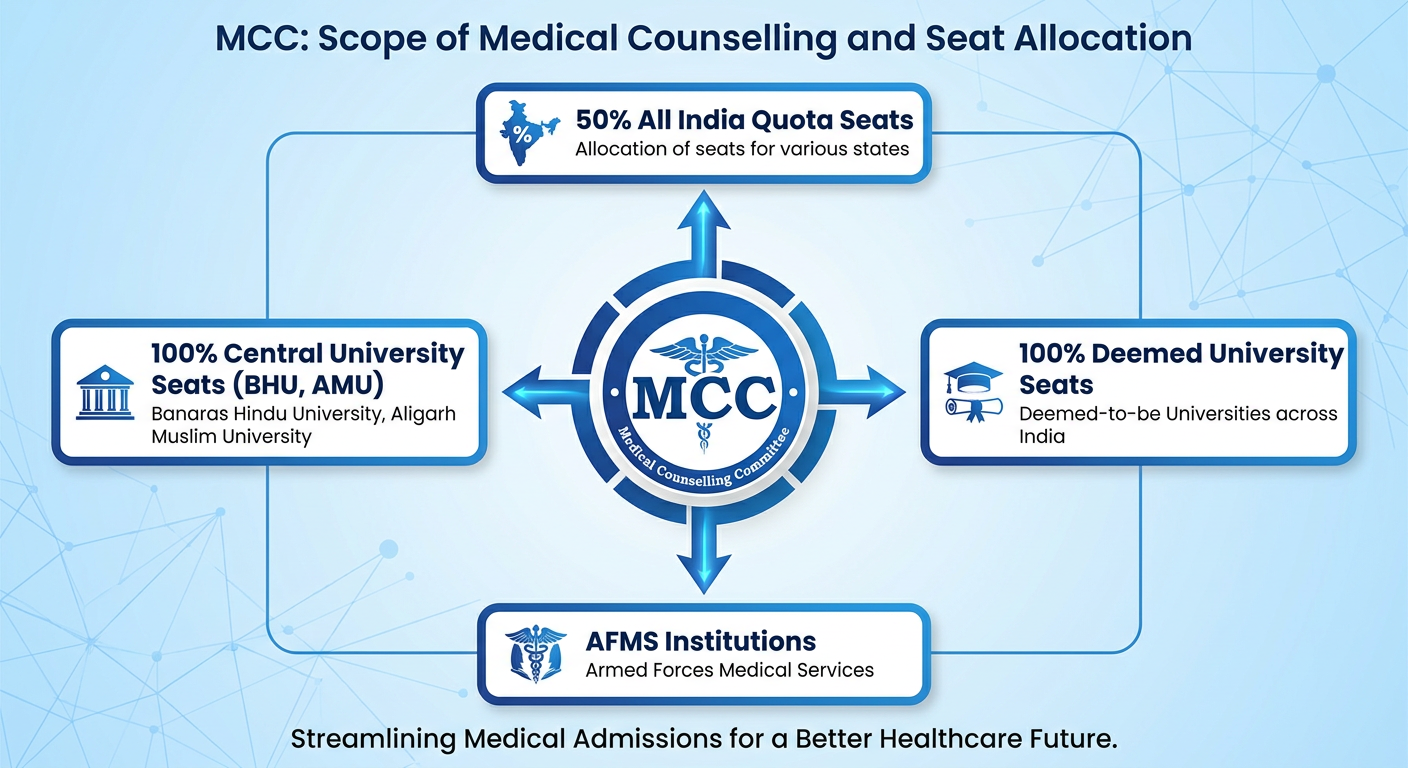 The main authority controlling this entire process is the Medical Counselling Committee (MCC). The MCC is part of the Directorate General of Health Services (DGHS) and reports to the Ministry of Health & Family Welfare. It's their job to conduct the counselling fairly and transparently.
The MCC's primary role is managing seat allotment for:
- 50% All India Quota (AIQ) seats for PG courses.
- 100% of seats in Deemed Universities.
- 100% of seats in Central Universities (like BHU, AMU).
- Seats at Armed Forces Medical Services (AFMS) institutions.
What about the other 50% of seats in state government colleges? Those are filled through separate State Quota counselling, conducted by the respective state medical authorities. For official information on exam dates and regulations that govern all this, it's always wise to check the official NEET NTA website.
Big Changes Expected in the MCC Counselling Process for 2026
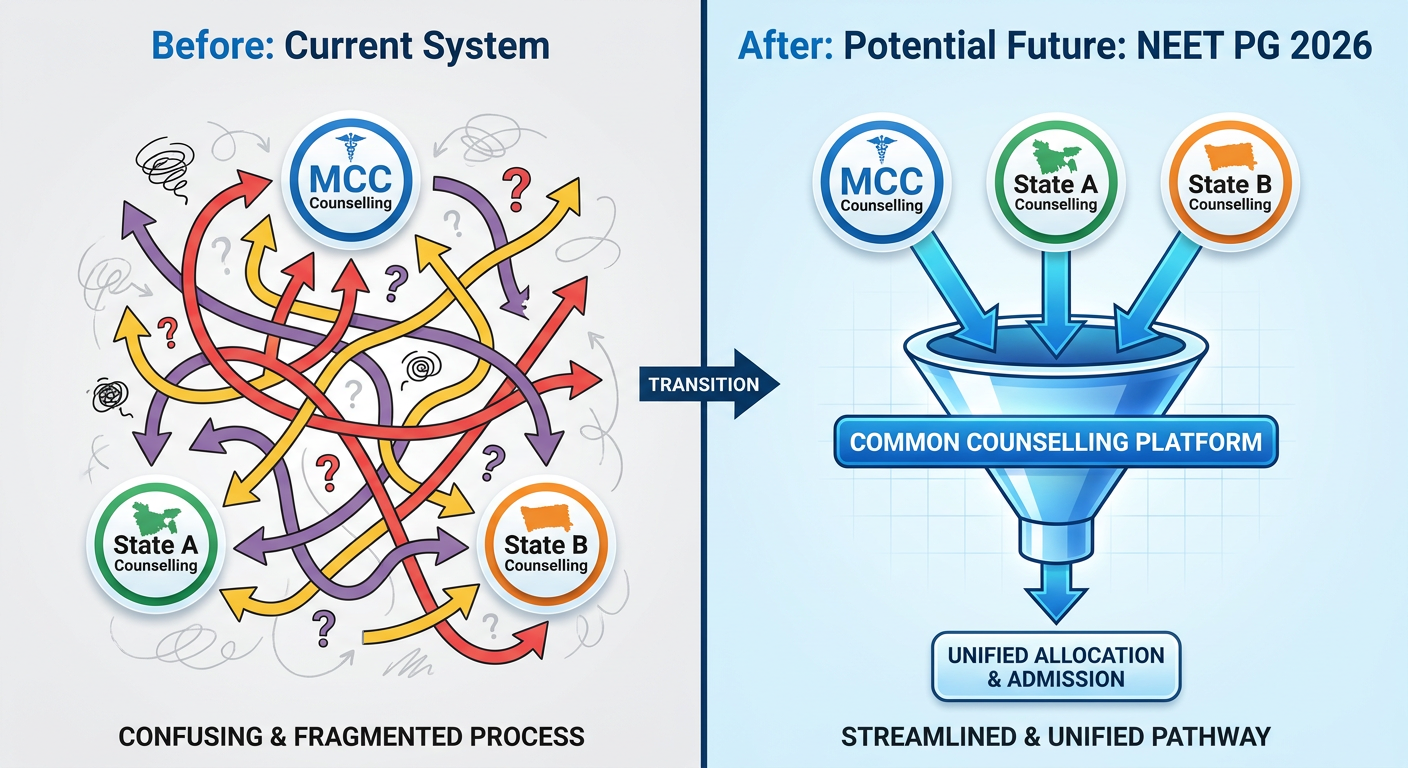 Looking ahead to NEET PG 2026, the world of medical admissions is buzzing with potential changes. While nothing is set in stone until an official notification is released, here are some of the most talked-about developments you should keep an eye on. Please remember, this is based on trends and expert analysis.
The Possibility of Common Counselling
For years, students have had to juggle multiple counselling portals: one for the MCC's AIQ and separate ones for each state. This is confusing, expensive, and stressful. There is a strong push for a unified "Common Counselling" system. This would mean one platform, one registration, and one set of choices for both All India and State Quota seats. This would be a game-changer, simplifying the entire MCC counselling process.
The NExT Factor: Will it Replace NEET-PG?
The biggest question mark for NEET PG 2026 is the National Exit Test (NExT). The original plan was for NExT to be a single exam serving three purposes: a final year MBBS exam, a licentiate exam to practice medicine, and the entrance exam for PG admissions, replacing NEET-PG.
While its implementation has been postponed, it's still on the government's agenda. If NExT is in place by 2026, the entire concept of a separate NEET-PG exam will change, which will naturally impact the counselling that follows. Students currently preparing can find updated info on the overall NEET syllabus and patterns to stay ahead.
More Online, Less Hassle
We can also expect a continued push towards digitisation. This could mean fully online document verification, reducing the need to travel to nodal centres. This trend, accelerated by recent events, aims to make the process more efficient and accessible for students from all parts of the country.
Your Step-by-Step Guide to the MCC Counselling Process
 Even with potential changes, the core steps of the MCC counselling process are likely to remain similar. Here's a breakdown of what you can expect to do.
Step 1: Registration and Fee Payment
Once the MCC announces the counselling schedule, the first step is to register on their official portal. You'll need your NEET-PG roll number, application number, and other personal details. This is followed by paying a registration fee (non-refundable) and a security deposit (refundable). The security deposit amount varies depending on whether you're applying for government colleges or Deemed Universities.
Step 2: Choice Filling and Locking
This is the most critical step. You'll be presented with a list of all available colleges and courses. Based on your rank and preference, you need to create a prioritised list of choices. You can add as many choices as you want. It's vital to "lock" your choices before the deadline. If you don't, the system will automatically lock your last saved choices. Many students check previous year questions and cutoff data to create a realistic choice list.
Step 3: Seat Allotment Process
The MCC's software then processes the choices filled by thousands of students. It allocates seats based on two main factors: your NEET-PG rank and the order of your choices. The results are then published for each round of counselling (Round 1, Round 2, Mop-up Round, etc.).
Step 4: Reporting to the College
If you are allotted a seat and you are happy with it, you must download your allotment letter and report to the assigned college within the given timeframe. You will need to bring all your original documents for verification and complete the admission formalities.
Pro Tips for a Smooth Counselling Experience
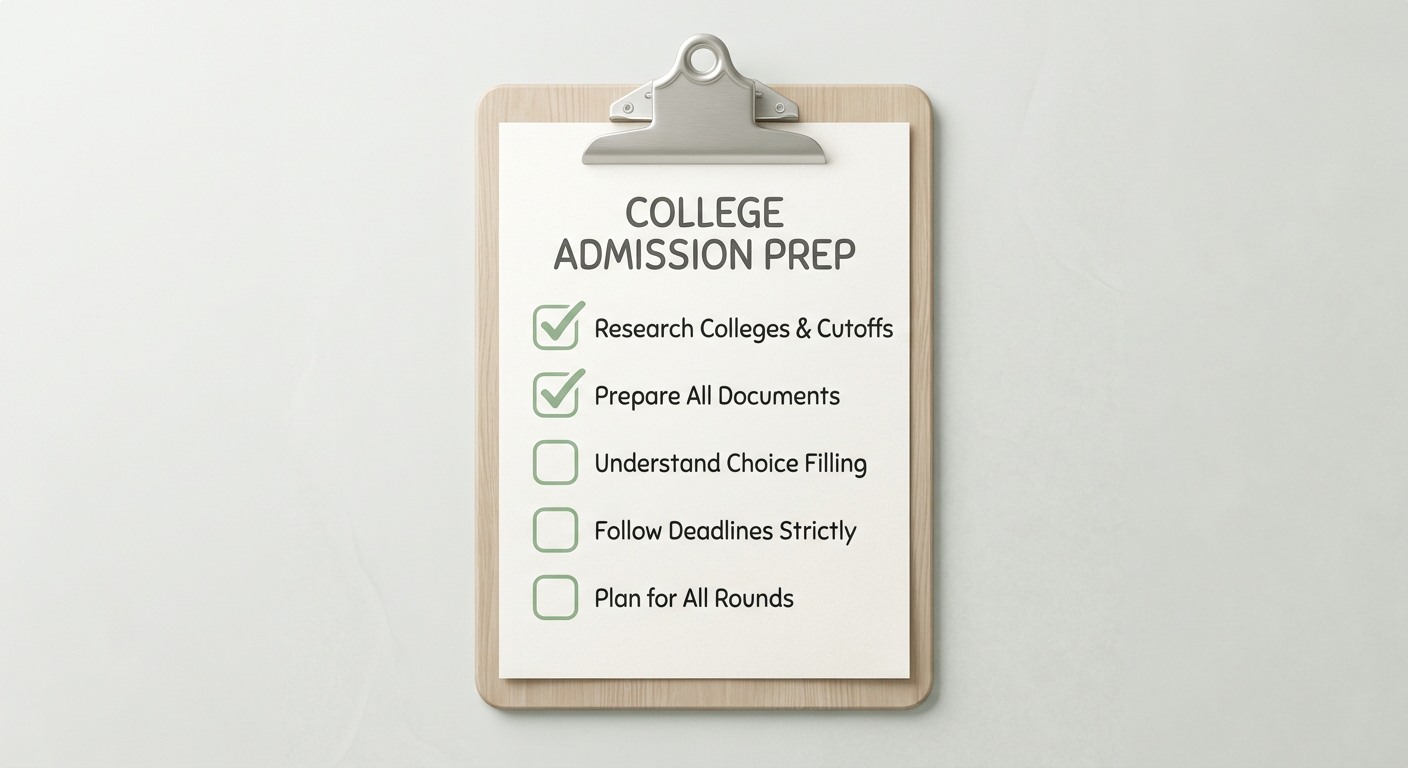 Navigating the counselling maze can be stressful, but with the right strategy, you can make it smoother.
- Do Your Homework: Don't wait until the last minute. Start researching colleges, specialisations, and their previous year cutoffs long before the counselling begins.
- Document Ready: Make a folder with all the required documents, both original and photocopies. This includes your rank card, admit card, academic certificates, ID proofs, and category certificates.
- Be Realistic, But Aim High: Fill in your dream choices first, followed by more realistic options where you have a good chance. Don't limit your choices too much.
- Talk to Seniors and Peers: Doubts are normal. Connect with seniors or join student groups to clear your doubts about colleges and branches. Our own student communities can be a great place to start.
- Never Miss a Deadline: Mark all the important dates for registration, choice locking, and reporting on a calendar. Missing a deadline can cost you a precious seat.
FAQs
What is the difference between AIQ and State Quota counselling?
The All India Quota (AIQ) counselling is conducted by the MCC for 50% of seats in all government medical colleges and 100% of seats in Central/Deemed universities across India. State Quota counselling is conducted by individual state authorities for the remaining 85% of seats (for UG) and 50% of seats (for PG) in their respective state's government colleges, typically for domiciled candidates.
Can I participate in both MCC and State counselling?
Yes, absolutely. Eligible candidates can and should register for both the MCC's AIQ counselling and their respective state's counselling to maximise their chances of securing a seat.
What happens if I don't get a seat in Round 1?
If you don't get a seat in Round 1, you are automatically eligible to participate in Round 2. You might even be able to revise your choices. If you are allotted a seat but don't like it, you can opt for an upgrade in the next round (rules for this can vary, so read the information bulletin carefully).
Is the security deposit for NEET PG counselling refundable?
Yes, the security deposit is refundable. If you are not allotted any seat throughout the counselling process, it will be returned to your account after counselling concludes. However, if you are allotted a seat and you don't join, you may forfeit the deposit.
Will NExT definitely replace NEET-PG by 2026?
This is a major point of discussion. The Health Ministry has put the implementation of NExT on hold and is reconsidering its structure. While it might be implemented by 2026, it is not yet confirmed. Students should keep following official announcements from the NMC and Health Ministry.
What are the main documents required for NEET PG counselling?
Key documents usually include the NEET-PG admit card and rank letter, MBBS degree certificate/provisional certificate, internship completion certificate, permanent/provisional registration certificate from MCI/SMC, and identity proof (like Aadhaar card or passport). Category certificates (SC/ST/OBC/EWS) are also required if applicable.