Kerala NEET UG 2026 round 3 allotment result OUT at cee.kerala.gov.in : Check PDF, Reporting Deadline - Education Times
Everything you need to know about the NEET exam 2025. Get detailed information on the exam pattern, syllabus, eligibility, preparation tips, and cut-offs.
13 min read
Ever watched a medical show and imagined yourself in that white coat, stethoscope around your neck, making life-or-death decisions? For millions of Indian students, that dream begins with a single, monumental challenge: the NEET exam. It’s the one-and-only gateway to medical colleges across the country.
This isn't just another test. It’s a test of your knowledge, your discipline, and your determination over two long years. The pressure is immense, the competition is fierce, and the path can seem confusing. Where do you even begin?
Don't worry. We've got your back. This guide is your complete roadmap to understanding and conquering the NEET exam. We'll break down everything from the exam pattern and syllabus to eligibility rules and topper-approved preparation strategies. Let's start your journey to that white coat, right here, right now.
What is the NEET Exam? The Gateway to Your Medical Dream

First things first, let's clear up the basics. The NEET exam, or the National Eligibility cum Entrance Test (Undergraduate), is the single largest medical entrance examination in India. Think of it as the final boss you must defeat to enter the world of medicine in this country.
Conducted by the National Testing Agency (NTA), this one exam determines your admission into MBBS, BDS, and various AYUSH courses (like BAMS, BHMS, BUMS) in both government and private medical colleges across India. Gone are the days of appearing for dozens of different state-level PMTs or college-specific tests. NEET has unified them all, creating a level playing field for every aspiring doctor.
So, if your goal is to study medicine, dentistry, or alternative medicine systems in India, mastering the NEET exam is non-negotiable. It is the only key that unlocks the door to your dream college.
Understanding the NEET Exam Pattern 2025
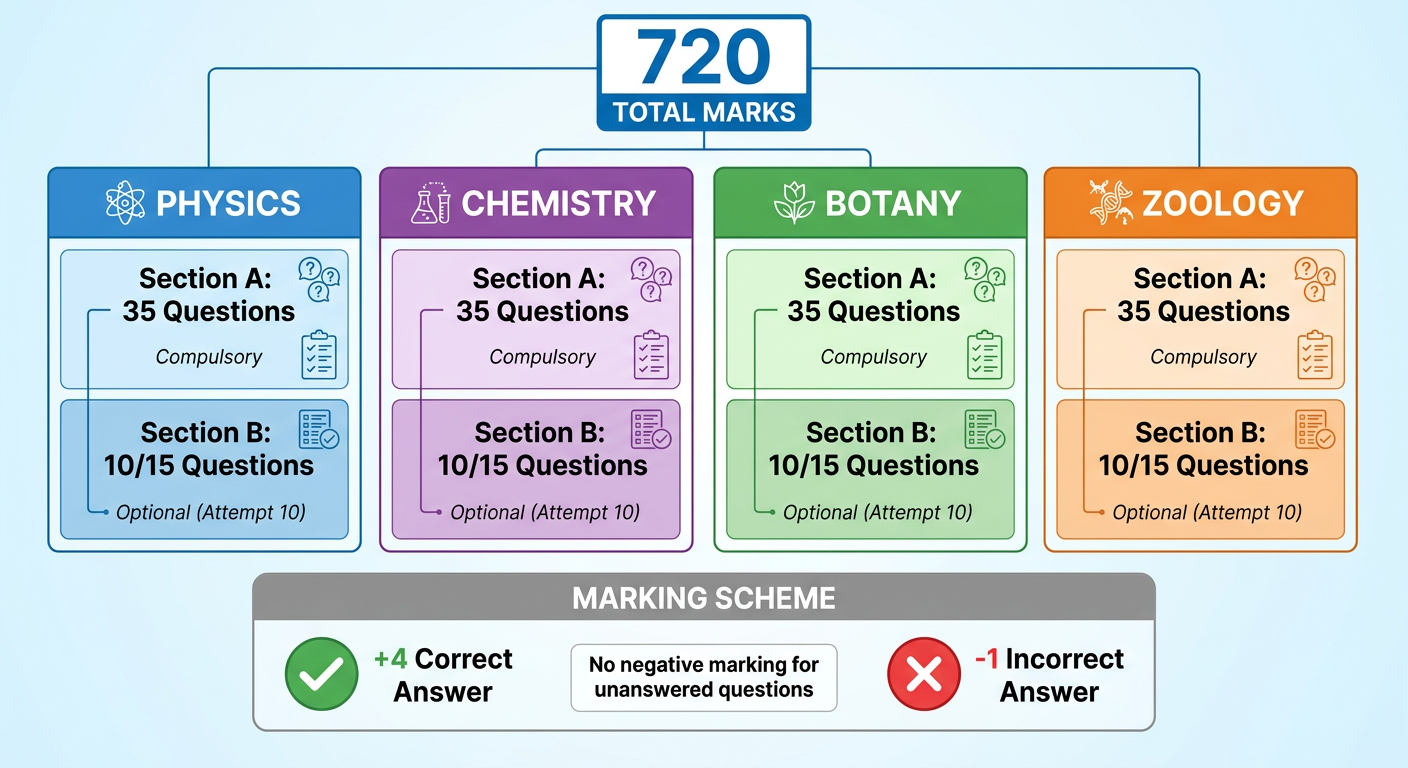
To win any battle, you must first understand the battlefield. The NEET exam pattern is your battlefield map. Knowing it inside out gives you a huge strategic advantage. It tells you where to focus, how to manage your time, and how the scoring works. The NTA has maintained a consistent pattern over the last few years, and here’s what you need to know.
Subject-wise Breakdown and Marking Scheme
The NEET exam is a test of your command over three core subjects from your Class 11 and 12 curriculum: Physics, Chemistry, and Biology (which is further divided into Botany and Zoology).
The paper is structured into two sections for each subject:
- Section A: Contains 35 compulsory questions.
- Section B: Contains 15 questions, out of which you must attempt any 10. This element of choice is crucial and needs a smart strategy.
Here’s the marking scheme. It's simple but unforgiving.
- Correct Answer: You get +4 marks.
- Incorrect Answer: You get a penalty of -1 mark. This is negative marking, and it can sink your rank if you guess blindly.
- Unattempted Question: You get 0 marks. No gain, no loss.
The total marks for the exam are 720 (180 questions x 4 marks). Every single mark counts in the race for a top rank.
Exam Mode, Duration, and Languages
Unlike many computer-based engineering exams, the NEET exam is a classic pen-and-paper test. You will be given a question booklet and an OMR (Optical Mark Recognition) sheet to mark your answers. This means good OMR filling practice is essential to avoid costly mistakes.
The total duration of the exam is 3 hours and 20 minutes (200 minutes). You have 200 minutes to attempt 180 questions. This breaks down to just over a minute per question, which includes reading, understanding, solving, and marking it on the OMR sheet. Time management is everything.
To cater to India's diverse student population, the exam is conducted in 13 languages: English, Hindi, Assamese, Bengali, Gujarati, Kannada, Malayalam, Marathi, Odia, Punjabi, Tamil, Telugu, and Urdu. You can choose your preferred language during the application process.
NEET Eligibility: Are You Ready to Apply?
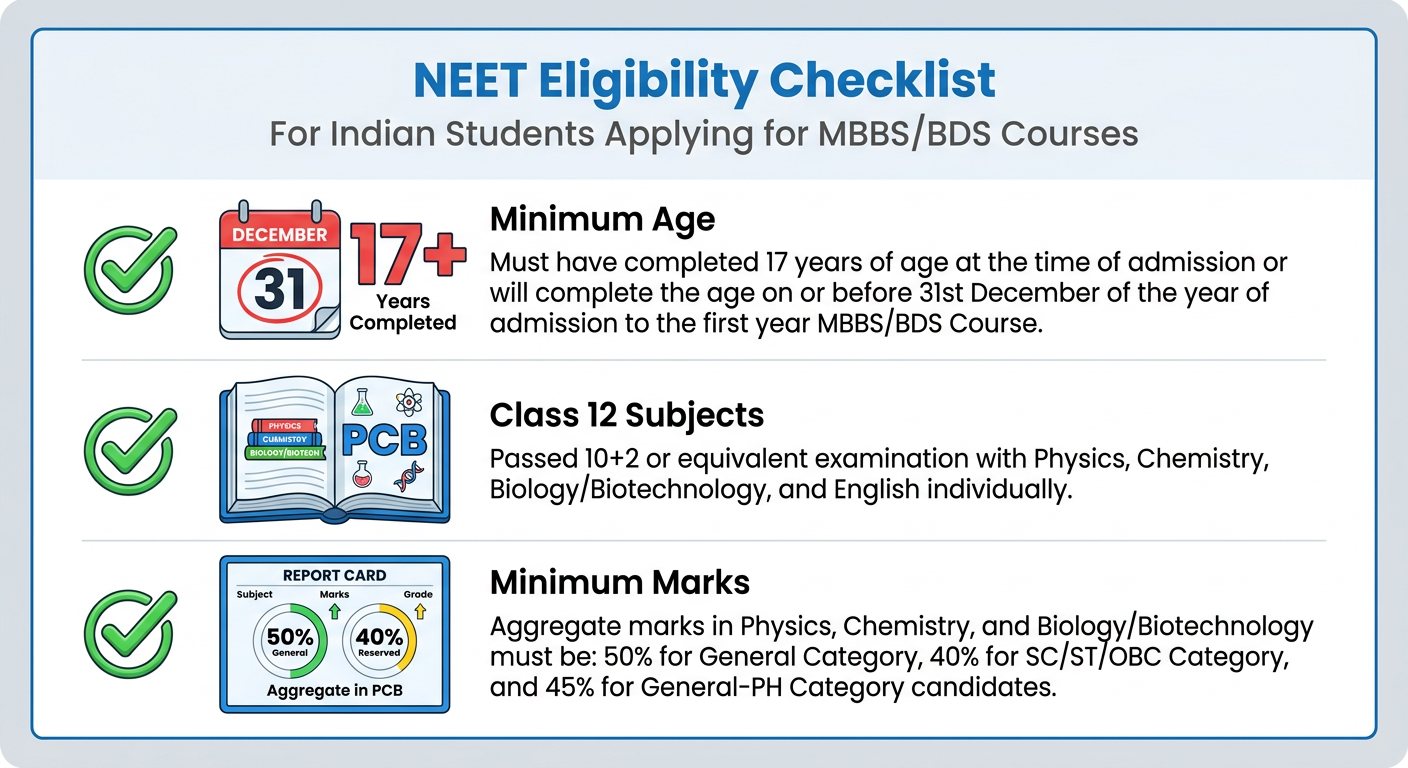
Before you dive headfirst into preparation, you must confirm that you meet the NEET eligibility criteria. Imagine preparing for two years only to find out you can't even appear for the exam! The NTA lays down clear guidelines, which are divided into a few key areas.
Age Limit and Nationality
There's a minimum age but no maximum. This is a big relief for many aspirants.
- Minimum Age: You must be at least 17 years old as of December 31st of the year you are taking admission.
- Upper Age Limit: There is currently no upper age limit for appearing in the NEET exam. This allows droppers and individuals from other fields to pursue their medical dream.
- Nationality: You must be an Indian Citizen, a Non-Resident Indian (NRI), an Overseas Citizen of India (OCI), a Person of Indian Origin (PIO), or a Foreign National.
Academic Qualifications (Class 12 Marks and Subjects)
Your academic background in high school is the foundation for your eligibility. You must meet these specific requirements:
- Qualifying Exam: You must have passed the Class 12 or an equivalent examination from a recognized board.
- Appearing Candidates: Students who are appearing for their Class 12 board exams in the year of the NEET exam are also eligible to apply.
- Core Subjects: You must have taken Physics, Chemistry, and Biology/Biotechnology as your core subjects in Class 12. English is also a mandatory subject.
- Minimum Percentage: This is where it gets specific for different categories.
- General/EWS Category: A minimum of 50% marks taken together in Physics, Chemistry, and Biology (PCB).
- OBC/SC/ST Category: A minimum of 40% marks in PCB.
- Persons with Disabilities (PwD): A minimum of 45% marks for General-PwD and 40% for reserved-PwD candidates in PCB.
Always double-check the latest information bulletin on the official NTA NEET website to ensure you meet all conditions.
Cracking the NEET Syllabus: What to Study?
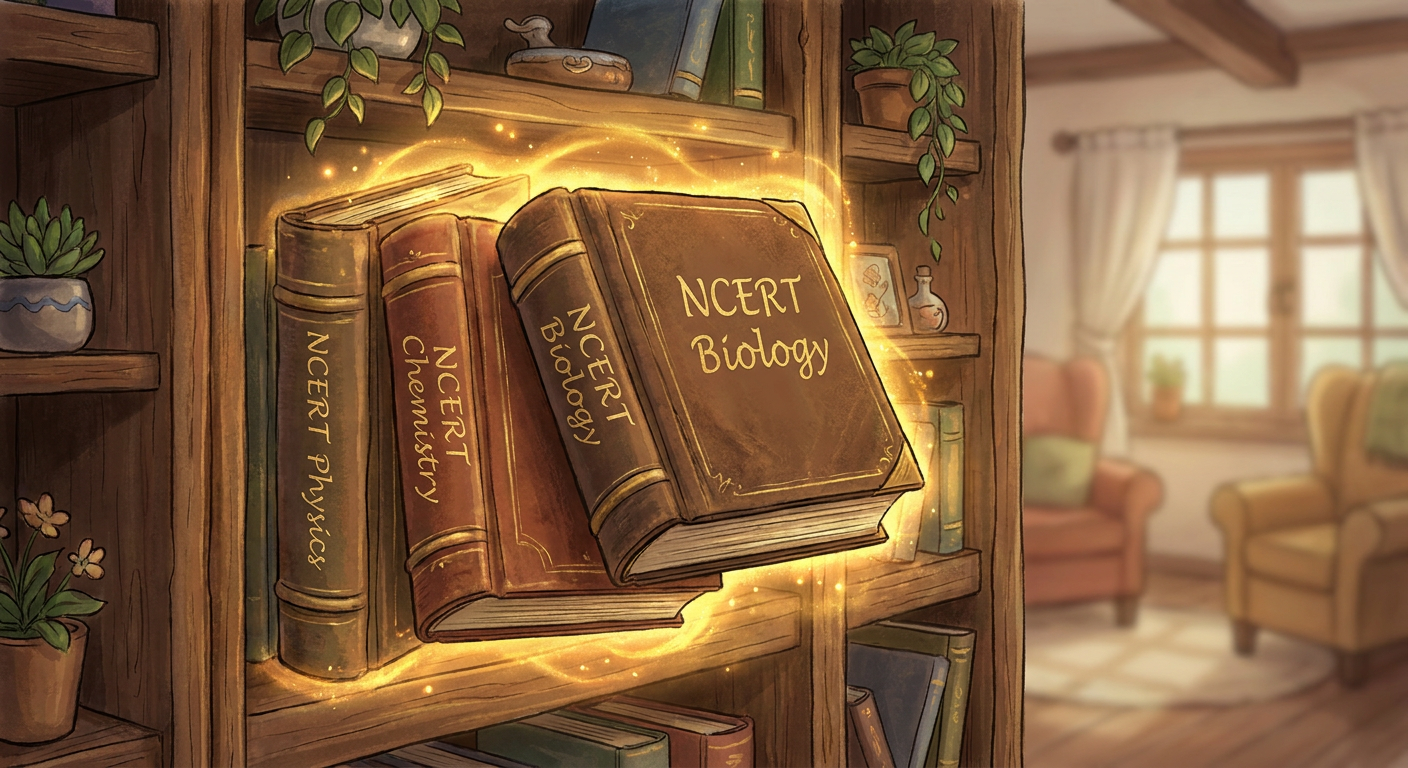
The NEET syllabus is vast, covering the entire curriculum of Class 11 and 12. But there's a golden rule every topper swears by: NCERT is your Bible. The entire question paper is designed around the concepts given in the NCERT textbooks. Master them, and you've already won half the battle.
However, just reading NCERT isn't enough. You need to understand the concepts deeply and practice applying them to solve problems. Let’s look at the highlights for each subject. For a chapter-by-chapter breakdown, you should check out the detailed JEE/NEET syllabus we've compiled.
Physics Syllabus Highlights
Often considered the toughest subject by NEET aspirants, Physics requires strong conceptual understanding and problem-solving skills. High-weightage areas include:
- Mechanics: Covers everything from Kinematics and Laws of Motion to Rotational Motion and Gravitation. This forms the base for all of physics.
- Electrodynamics: Includes Electrostatics, Current Electricity, and Magnetic Effects of Current. These chapters are formula-heavy but very scoring.
- Modern Physics: Topics like Dual Nature of Matter, Atoms, and Nuclei are relatively easier and can fetch you quick marks.
- Optics: Ray Optics and Wave Optics are crucial and have significant weightage.
Chemistry Syllabus Highlights
Chemistry in NEET is a balanced mix of theory, concepts, and numericals. It’s often the most scoring subject if prepared well.
- Physical Chemistry: Focus on chapters like Equilibrium, Thermodynamics, and Chemical Kinetics. These are numerical-intensive.
- Organic Chemistry: General Organic Chemistry (GOC) is the soul of this section. Master it, and chapters like Hydrocarbons, Aldehydes, and Alcohols become much easier.
- Inorganic Chemistry: This section is heavily based on NCERT. Chemical Bonding, p-Block Elements, and d- & f-Block Elements are must-do chapters. Rote learning of reactions and properties is key here.
Biology Syllabus Highlights
With 360 out of 720 marks, Biology holds the key to a high score. It's divided into Botany and Zoology.
- Human Physiology: This is the most important unit in the entire NEET syllabus. It’s fascinating and carries immense weightage.
- Genetics and Evolution: A conceptual and slightly tricky unit, but very high-scoring once you grasp the principles.
- Diversity in Living World & Structural Organisation: These are memory-based chapters. Regular revision using flashcards and notes is crucial.
- Plant Physiology & Cell Biology: These units form the foundation of Botany and are frequently tested.
The NEET Application Form and Process
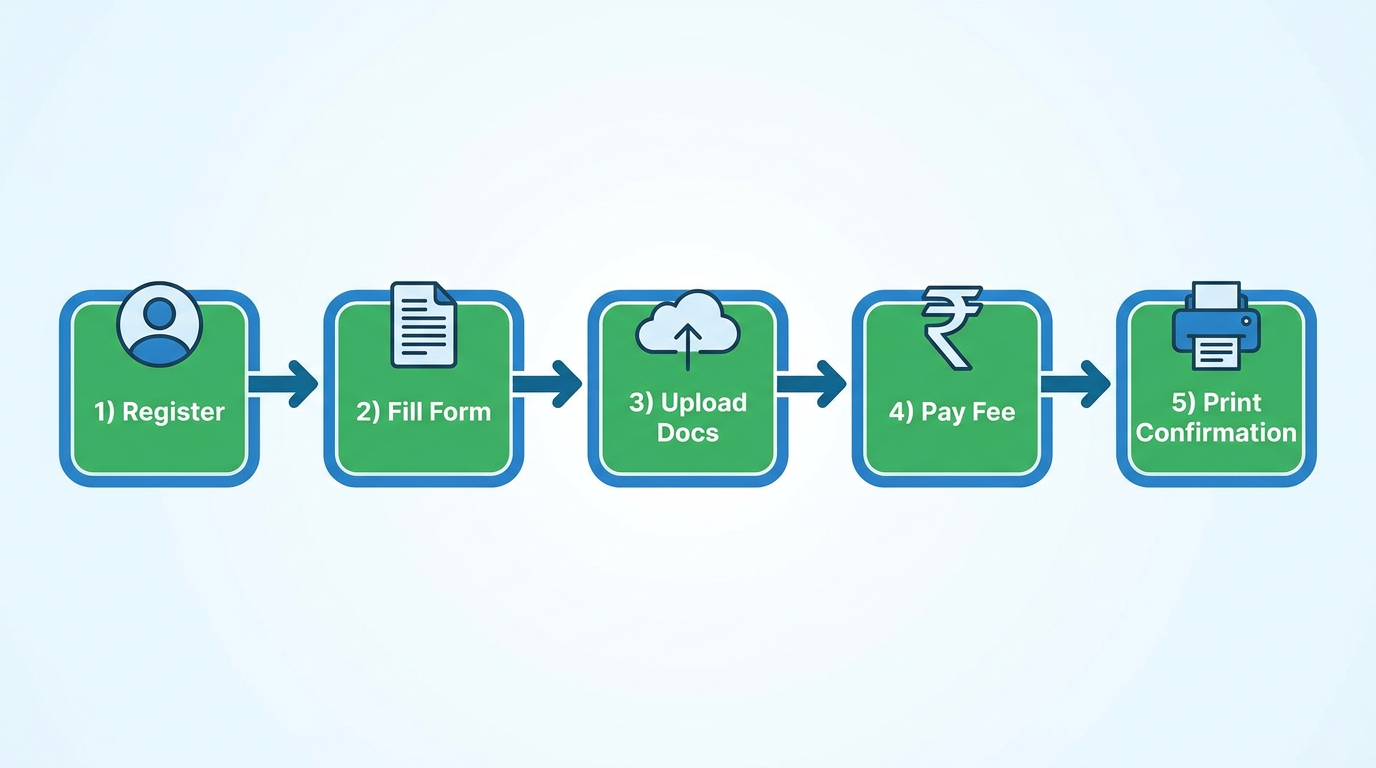
The NEET application process is entirely online and usually opens for about a month. It’s a critical step where you can’t afford to make mistakes. A single error in your name, date of birth, or category can lead to disqualification. Always refer to the official NTA NEET website, which you can find here: https://neet.nta.nic.in/.
The process can be broken down into a few simple steps:
- Registration: You start by providing basic details like your name, parents' names, mobile number, and email ID to generate login credentials.
- Filling the Application Form: Log in and fill out your personal, academic, and contact details with extreme care. This is where you'll choose your exam city preferences and medium of the question paper.
- Uploading Documents: You will need to upload scanned copies of your recent photograph, signature, and thumb impressions. Make sure they are in the specified format and size.
- Paying the Application Fee: The fee has to be paid online via debit card, credit card, net banking, or UPI. The application is incomplete without fee payment.
- Printing the Confirmation Page: After successful payment, a confirmation page is generated. Download and print multiple copies of this page for future reference. It's the proof that you have successfully submitted your NEET application form.
Remember to use a valid and active mobile number and email address, as the NTA will use these for all future communications, including sending your admit card and results.
Strategic NEET Preparation Tips from Toppers
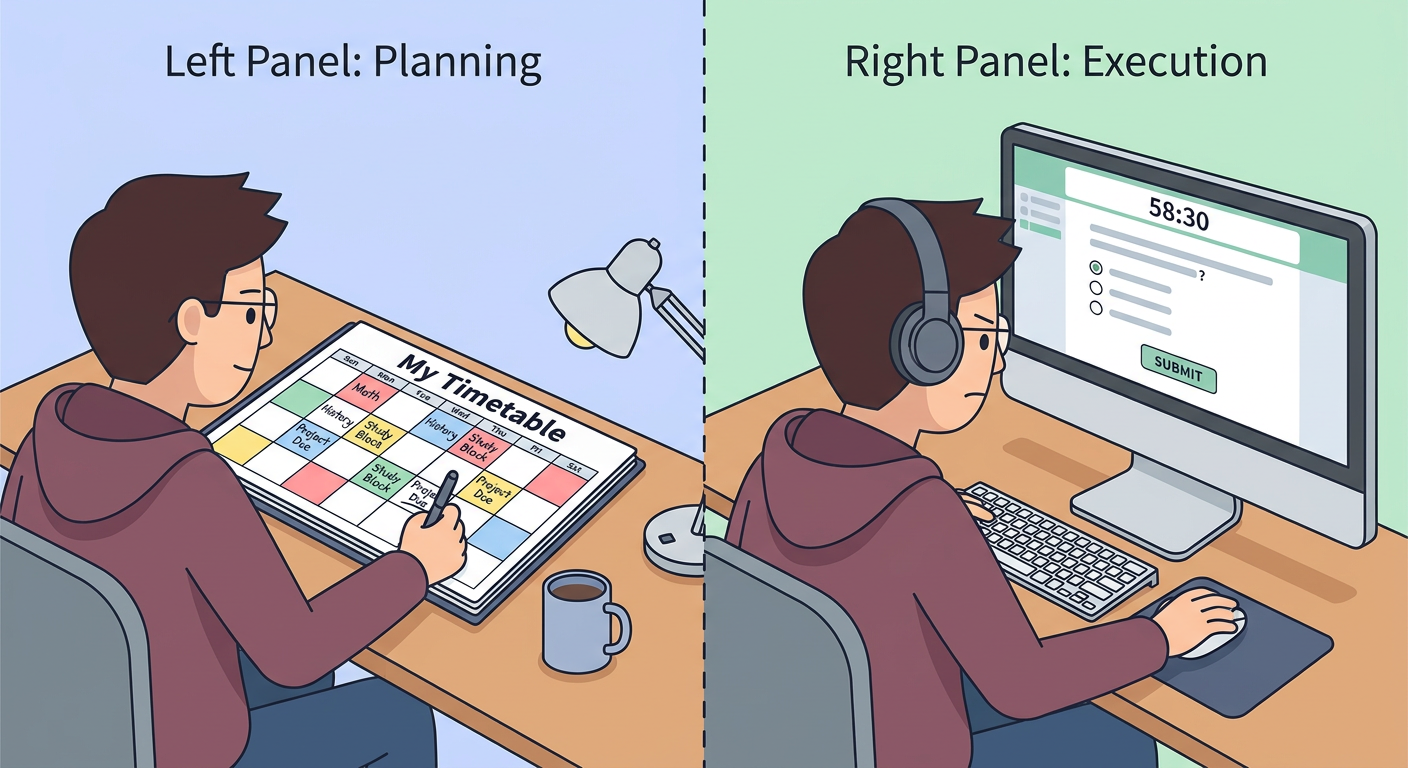
Knowing the syllabus and pattern is one thing; executing a plan to master it is another. Cracking the NEET exam requires consistent effort, smart work, and a solid strategy. Here are some battle-tested tips that have helped countless students achieve their dreams.
Creating a Realistic Timetable
You can't climb a mountain without a map. A timetable is your map for NEET preparation. It should be realistic and tailored to your strengths and weaknesses. Don't just copy someone else's schedule.
Allocate dedicated slots for each subject daily. A good approach is to study two or three subjects per day to keep things fresh. Make sure your schedule includes time for learning new concepts, practicing problems, revising old topics, and, most importantly, taking breaks. A burned-out mind can't learn effectively.
The Power of Mock Tests and PYQs
If NCERT is your Bible, then mock tests and Previous Year Questions (PYQs) are your prayer books. You cannot crack NEET without them.
Mock tests simulate the real exam environment, helping you manage time, handle pressure, and identify your weak areas. Aim to take at least one full-length mock test every week in the final months of your preparation. After every test, spend more time analyzing your mistakes than you spent taking the test. This analysis is where the real learning happens.
Solving previous year questions helps you understand the exam's pattern, the type of questions asked, and the weightage of different topics. It's the most reliable source to gauge the difficulty level of the actual NEET exam.
Revision is the Key to Retention
The NEET syllabus is so vast that you are bound to forget what you studied months ago. The only weapon against this is consistent revision. Your revision strategy should be active, not passive.
Create short notes or formula sheets for every chapter. These are invaluable for quick revisions. Use techniques like mind maps to connect concepts visually. Before going to sleep, spend 15-20 minutes quickly going through the notes of what you studied that day. This simple habit can boost your retention dramatically. The final month before the exam should be dedicated almost entirely to revision and mock tests.
Understanding NEET Cut Off and Counselling Process
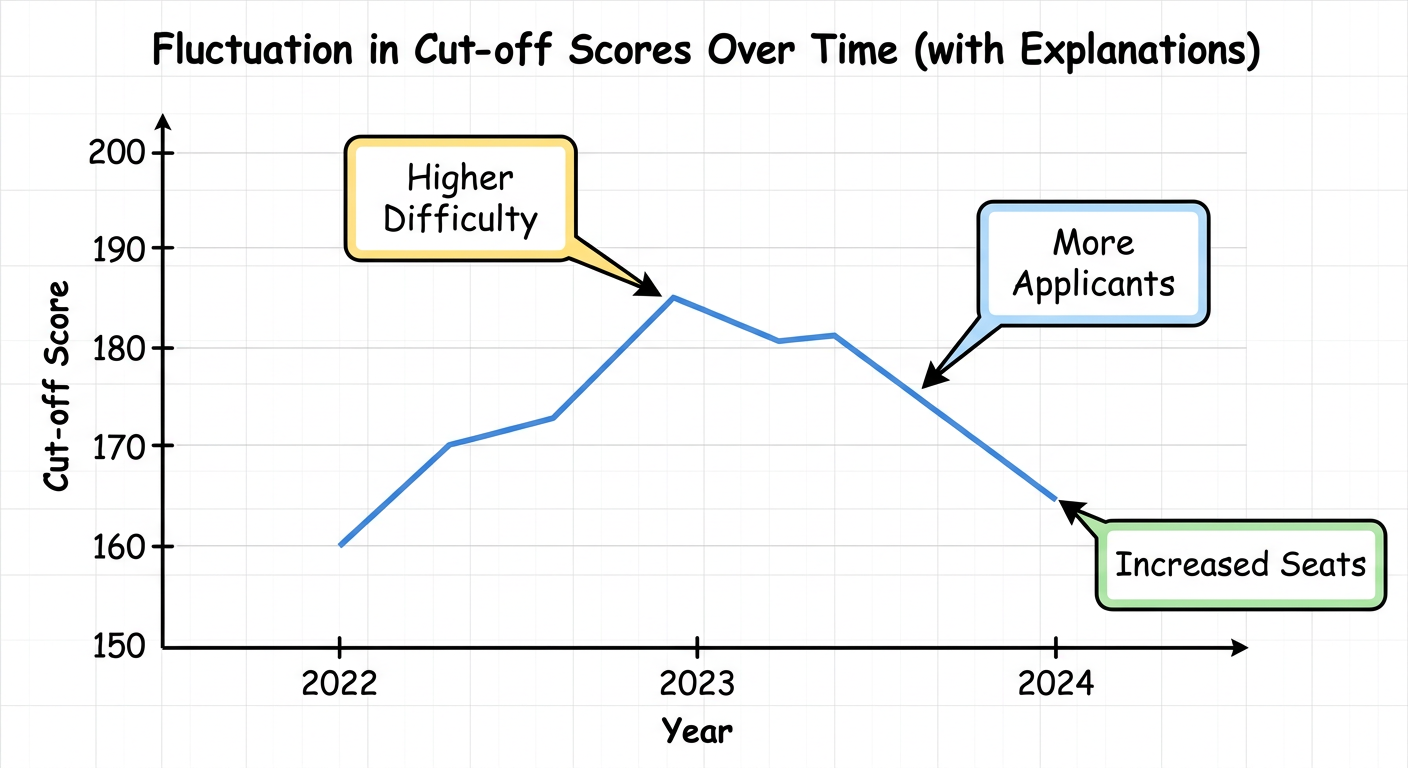
Scoring well in the NEET exam is the first step. The next, equally important steps are clearing the cut-off and navigating the counselling process to secure a seat. It's crucial to understand these terms.
There are two types of cut-offs:
- Qualifying Cut-off: This is the minimum percentile you must score to be considered 'qualified' for the counselling process. The NTA sets this each year (e.g., 50th percentile for General, 40th for SC/ST/OBC).
- Admission Cut-off: This is the last rank or score at which a student gets admission into a particular college for a specific course. This is the 'real' cut-off you are competing for, and it varies for every college and every category.
The NEET cut off depends on several factors like the difficulty level of the exam paper, the number of students who appeared, and the total number of medical seats available. Therefore, it changes every year.
After the results are out, the counselling process begins. It's conducted for two main quotas:
- All India Quota (AIQ): 15% of seats in all government medical colleges are reserved for students from any state in India.
- State Quota: The remaining 85% of seats are reserved for students who have the domicile of that particular state.
Counselling is a complex process involving choice filling and seat allotment based on your rank and preferences. It's important to stay updated and make informed choices. While we offer a JEE rank predictor tool, the principle of understanding your probable rank to make smart college choices is just as critical for NEET aspirants.
FAQs
How many times can I attempt the NEET exam?
There is no limit on the number of attempts for the NEET exam, as long as you fulfill the eligibility criteria, including the minimum age requirement.
Is NCERT enough to crack NEET?
NCERT textbooks are the foundation and absolutely essential for cracking NEET, especially for Biology and Inorganic Chemistry. However, for Physics and Physical Chemistry, it's highly recommended to supplement NCERT with a good MCQ practice book to develop strong problem-solving skills.
What is a good score in NEET for a government medical college?
A score above 620 out of 720 is generally considered safe for securing a seat in a government medical college through the All India Quota for a general category student. However, this cut-off varies significantly each year and for different states.
Can I crack NEET in one year?
Yes, it is definitely possible to crack the NEET exam with one year of dedicated and strategic preparation. Many students, including droppers, do it every year. It requires a focused timetable, consistent hard work, and smart study techniques.
What is the dress code for the NEET exam?
The NTA specifies a strict dress code to prevent cheating. Candidates are advised to wear light clothes with half sleeves. Big buttons, brooches, or any badges are not allowed. Only simple slippers or sandals are permitted; shoes are not allowed.
Is there negative marking in NEET?
Yes, there is negative marking in the NEET exam. You are awarded 4 marks for every correct answer, and 1 mark is deducted for every incorrect answer. No marks are deducted for unattempted questions.