CBSE Date Sheet 2027 Live Updates: Class 10, 12 date sheet to be released shortly, private exam forms out; check latest updates - The Times of India
Get your complete strategy for the CBSE board exam, from understanding the pattern and syllabus to last-minute revision tips and managing exam stress.
8 min read
Master the CBSE Board Exam: Your Ultimate Guide
Remember the final level of your favorite video game? The one you prepared for the whole time, learning every move and strategy? For a student in India, the CBSE board exam is that final boss battle. It’s the culmination of years of hard work. Every year, the buzz starts with one question: "When is the date sheet coming?" While waiting for that official announcement feels tense, true champions don’t wait for the battle date to start training. They build their strength day by day.
This guide is your training manual. Forget the rumors and the panic. We will focus on a rock-solid strategy to conquer the CBSE board exam, whether you're in Class 10 or Class 12. Let's build a plan that makes you feel confident and ready, long before you even download that date sheet PDF. Your preparation starts now.
Understanding the CBSE Board Exam: More Than Just Dates
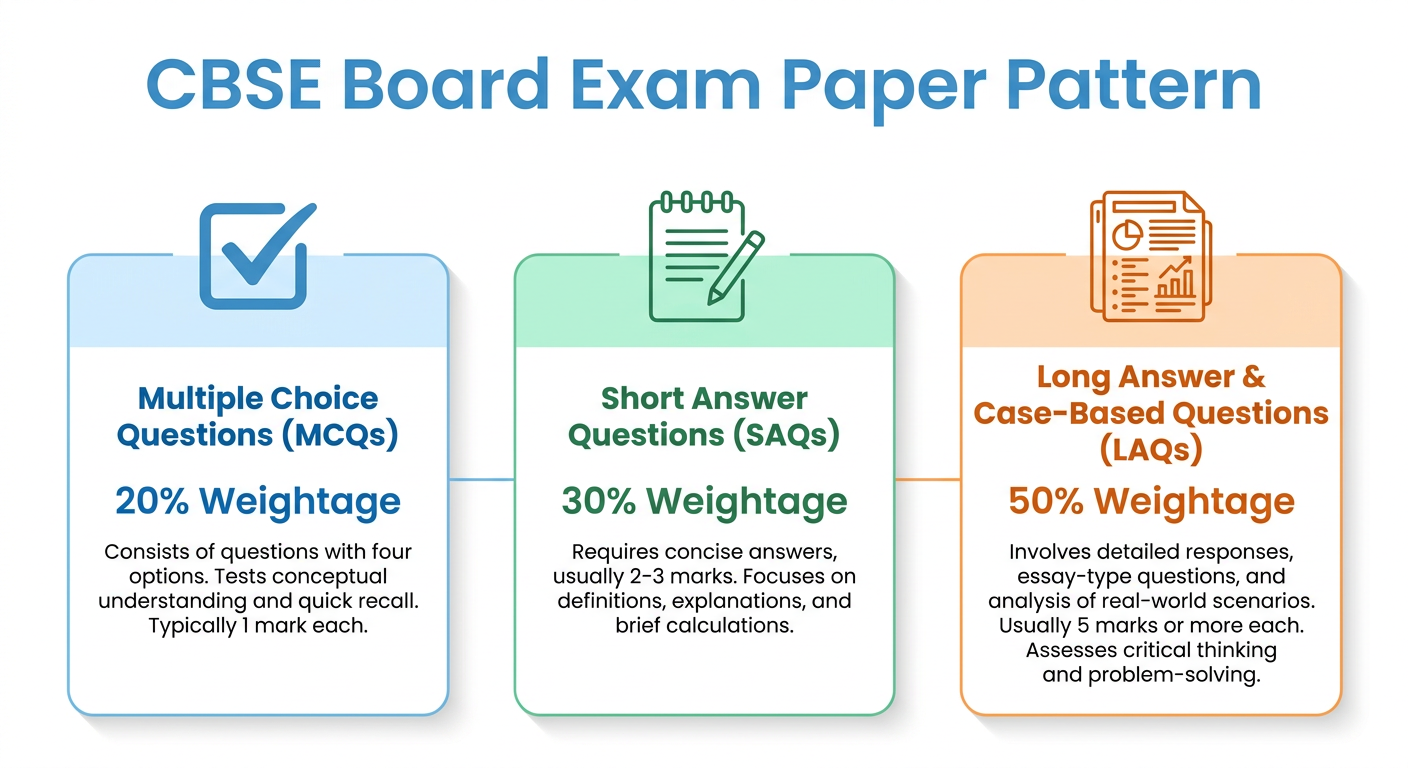
Many students focus only on the exam dates. Big mistake. The first step to acing the CBSE board exam is to understand the structure of the question paper itself. Knowing the rules of the game is half the battle won. CBSE has been evolving, moving towards competency-based questions that test your real understanding, not just your memory.
First, go straight to the source. The official CBSE website is your single source of truth for the curriculum. Download the latest JEE/NEET syllabus and the marking scheme for each of your subjects. Pay close attention to the chapter-wise weightage. This tells you where to focus your energy. Note the question paper design: how many marks are for MCQs, short-answer questions, and long-answer questions? Understanding this pattern is crucial for effective time management inside the exam hall.
Don't rely on last year's pattern blindly. Always check the official circulars on the CBSE academic website for the current academic session. This small step can save you from major surprises during the exam.
Crafting Your Winning Study Plan
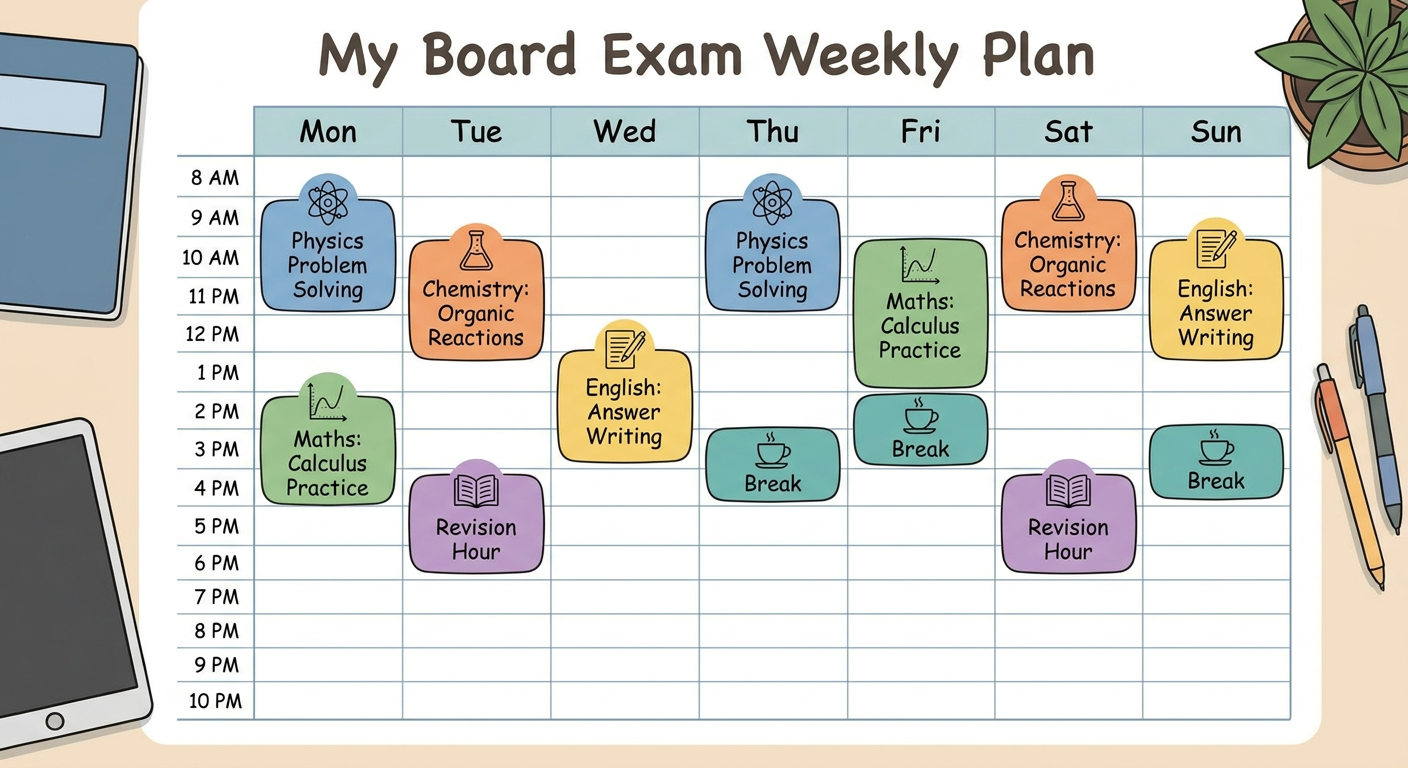
A goal without a plan is just a wish. A well-structured study plan is the backbone of your board exam preparation. It turns the massive syllabus into small, manageable chunks and ensures you cover everything without burning out. Don't just copy your friend's timetable; create one that works for you.
The Art of Time Management
Start by listing all the chapters you need to cover for each subject. Divide your days into study slots. A great technique is the Pomodoro Method: study for 25-30 minutes with intense focus, then take a 5-minute break. After four such sessions, take a longer break of 15-20 minutes.
This method helps maintain concentration and prevents mental fatigue. Be realistic. Don't plan for 12 hours of non-stop study. Allocate time for school or coaching, homework, revision, and most importantly, breaks. A balanced routine is a sustainable routine.
Subject-Wise Strategy
Every subject needs a different approach. For subjects like Physics and Maths, focus on understanding concepts and practicing problems. Don't just read the solutions; try to solve them yourself first. For theory-heavy subjects like Biology, History, or Economics, use techniques like active recall (trying to remember information without looking at the book) and making flowcharts or mind maps.
For complex Math topics like Integration, knowing specific rules is a lifesaver. Tricks like the ILATE rule for integration by parts can save you a lot of time and confusion. Watch this video to master it:
For languages like English or Hindi, practice writing. Read the chapters thoroughly to understand the themes and characters, and practice writing answers in the correct format. The key is consistent practice across all subjects.
The Power of PYQs and Mock Tests
If there is one secret weapon for your board exam preparation, this is it: Previous Year Questions (PYQs). Solving PYQs gives you the best insight into the exam pattern, important topics, and the type of questions asked. It helps you practice time management and reduces exam-day anxiety because the paper feels familiar.
Aim to solve at least the last 5-7 years of papers for each subject. You can find a vast collection of previous year questions on our platform. Once you're done with the syllabus, start taking full-length mock tests. Time yourself strictly and simulate the exam environment. Analyze your mistakes after each test and work on your weak areas.
Beyond the Books: Health, Mindset, and Revision
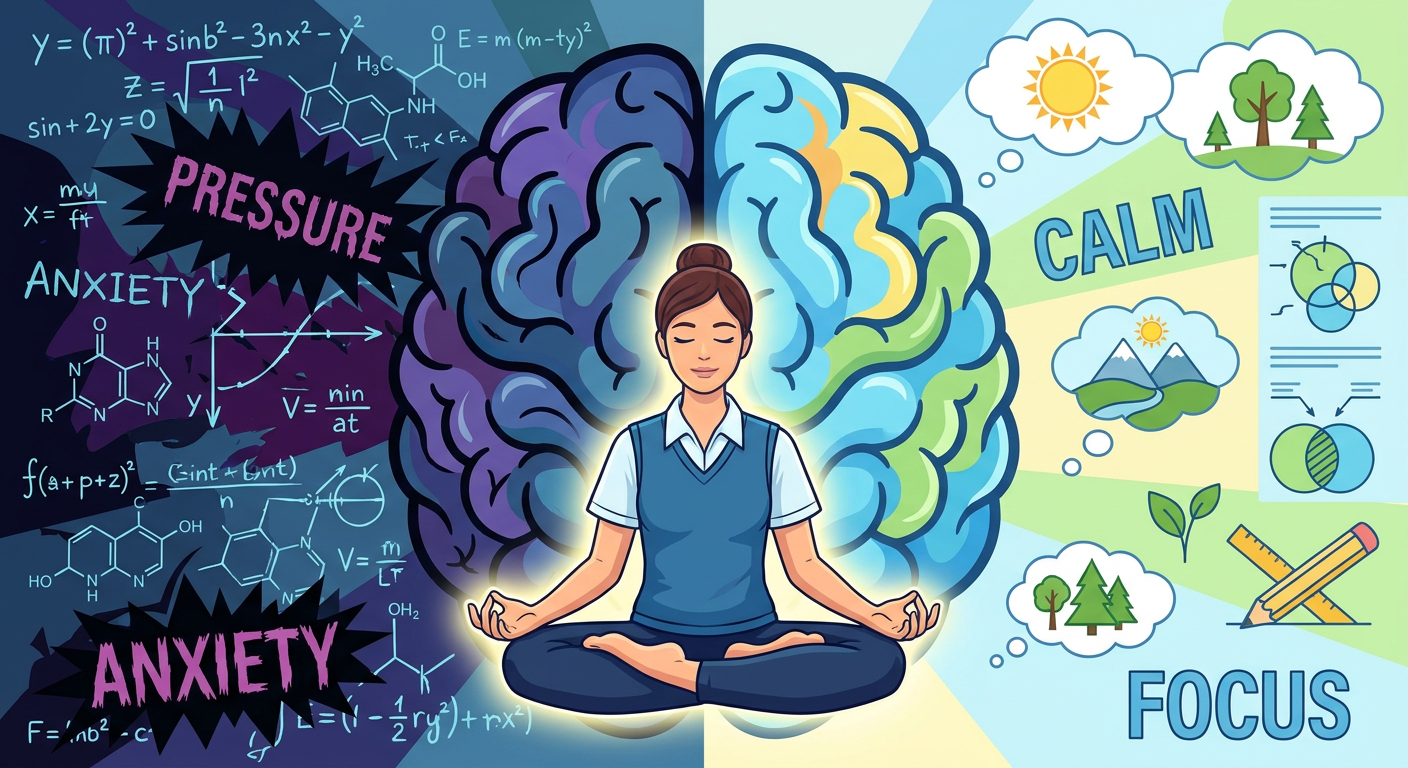
Your mental and physical health are just as important as your syllabus completion. Many brilliant students falter because of stress and burnout. Don't let that be you. A healthy body and a calm mind are your biggest assets during this marathon.
Don't Burn Out: The Role of Sleep and Breaks
Pulling all-nighters is a terrible idea. Your brain consolidates information and forms memories while you sleep. Aim for 7-8 hours of quality sleep every night. Lack of sleep directly impacts your ability to concentrate and recall information.
Also, schedule regular breaks in your study plan. Step away from your books. Talk to your family, listen to music, or do some light exercise. These short breaks refresh your mind and improve your overall productivity. If you're feeling overwhelmed, talking to friends in our student communities can also be a great stress-buster.
Master Revision: The Key to Retention
Studying something once is not enough. Revision is what cements the knowledge in your long-term memory. Don't leave revision for the last week. Incorporate it into your daily routine. Spend 15-20 minutes at the end of the day quickly going over what you studied.
Create short, concise notes or flashcards for quick revision. Our formula sheets can be a great tool for subjects like Physics, Chemistry, and Maths. Spaced repetition—revising a topic at increasing intervals—is a scientifically proven method to improve memory retention.
Connecting Boards with Competitive Exams (JEE/NEET)
Many Class 12 students juggle board prep with JEE or NEET coaching. It can feel like fighting a war on two fronts, but it's manageable. The good news is that the core syllabus for Physics, Chemistry, and Maths/Biology is largely the same.
A strong understanding of your NCERT textbooks for the CBSE board exam builds a solid foundation for competitive exams. By preparing well for your boards, you are automatically covering a significant portion of the JEE/NEET syllabus. The difference lies in the application of concepts and the difficulty level of questions. Balancing both requires smart time management, which we discussed earlier.
The Final Countdown: Last-Month Strategy
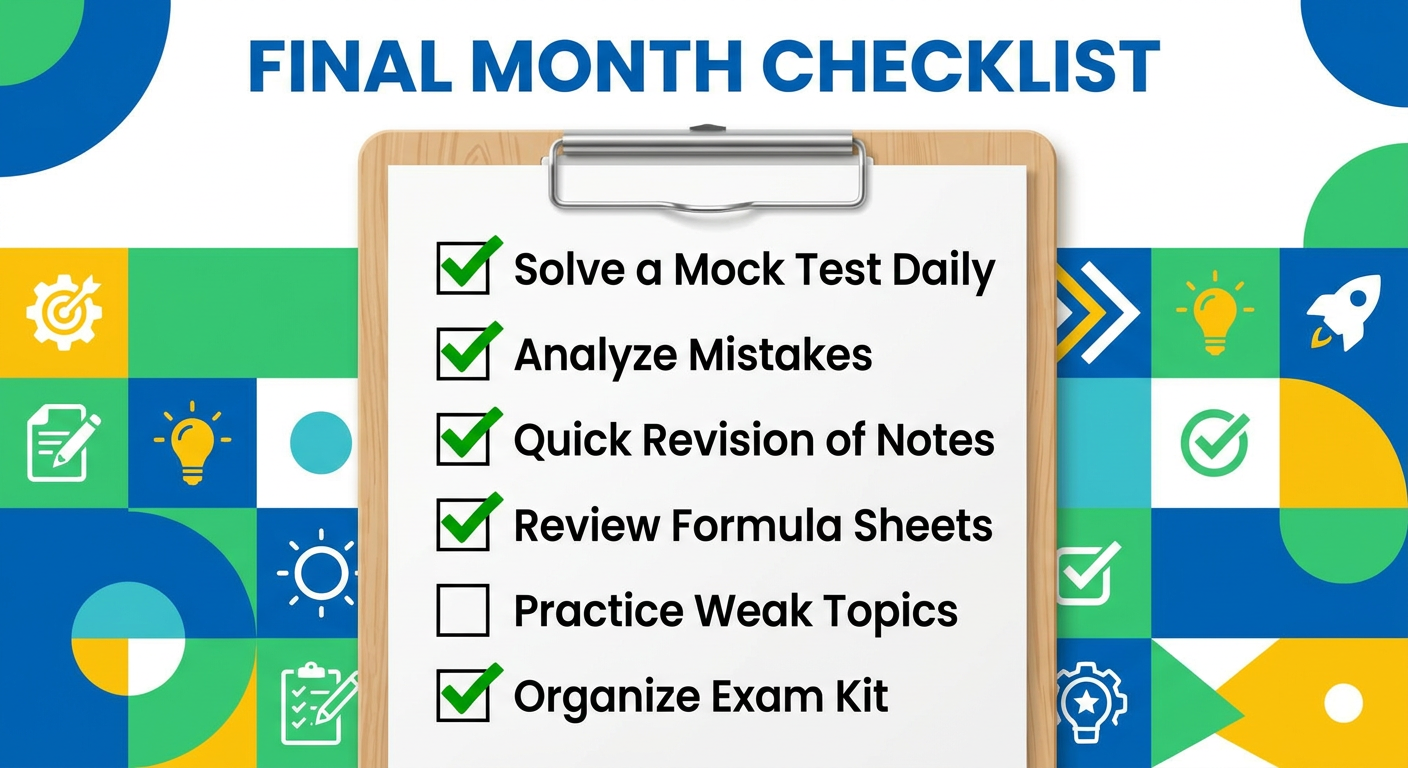
The last 30 days are all about consolidation and strategy. This is not the time to start a new, difficult chapter. Instead, focus on revision, practice, and fine-tuning your approach. The goal is to maximize your score with the knowledge you already have.
Your primary focus should be on mock tests and PYQs. Try to solve one full paper every day or every alternate day, strictly under exam conditions. This builds stamina and perfects your time management. After each test, spend at least an hour analyzing your performance. Identify silly mistakes, conceptual errors, and topics where you are losing marks.
Double down on revising your strong topics and work on improving your weak areas that have high weightage. Go through your short notes and formula sheets daily. On the day before the exam, relax. Don't try to cram everything. Trust your preparation, get a good night's sleep, and organize your exam kit: admit card, school ID, pens, and other necessary stationery. Walk into the exam hall with a calm and confident mind.
FAQs
When will the CBSE board exam date sheet be released?
Typically, CBSE releases the date sheet for Class 10 and 12 board exams a few months before the examination period, which usually starts in February/March. For the most accurate information, always check the official CBSE website, cbse.gov.in.
What is the passing criteria for the CBSE board exam?
To pass the CBSE board exam, a student must score a minimum of 33% marks in each subject (including both theory and practical/internal assessment components) and also 33% in aggregate.
How many mock tests should I solve before the board exams?
There's no magic number, but a good aim is to solve at least 5-10 full-length mock tests for each subject after completing your syllabus. The key is quality over quantity; analyze each test thoroughly to learn from your mistakes.
Can I prepare for JEE/NEET and board exams simultaneously?
Yes, absolutely. The core syllabus for Physics, Chemistry, and Maths/Biology is based on NCERT, which is the foundation for both boards and competitive exams. Strong conceptual preparation for your CBSE board exam will directly help your JEE/NEET performance.
Where can I find official updates about the CBSE exams?
The only reliable source for official updates, circulars, and announcements regarding the CBSE board exam is the official CBSE website: https://www.cbse.gov.in/. Avoid relying on rumors or unofficial news sources.
Are competency-based questions important for the CBSE board exam?
Yes, they are very important. CBSE has been increasing the weightage of competency-focused questions (like MCQs, case-based questions, source-based questions) to test analytical skills rather than rote learning. Practice these question types extensively from sample papers.