Over 10,000 women clear JEE Advanced, highest in 6 years - NewsBytes
Your complete guide to the JEE Advanced exam. Get details on eligibility, syllabus, exam pattern, cutoffs, counselling, and the strategy to get into an IIT.
17 min read
JEE Advanced: Your Ultimate Guide to Cracking the IIT Dream
Think of your JEE journey like a video game. You've battled through hours of study, solved countless problems, and finally defeated the first boss: JEE Main. Congratulations! But now, you face the final level. The one that separates the players from the champions. That final boss is the JEE Advanced exam.
This isn't just another test. It's the only gateway to the legendary Indian Institutes of Technology (IITs). The questions are tougher, the competition is fiercer, and the stakes are higher. It's designed to find the absolute best engineering minds in the country.
Feeling nervous? That's normal. But don't worry, we've got your back. This guide is your ultimate cheat sheet for the JEE Advanced. We will break down everything from eligibility and syllabus to exam patterns, cutoff trends, and the all-important JoSAA counselling process. By the end, you'll have a clear roadmap to conquer this final challenge and claim your seat in an IIT.
What Exactly is the JEE Advanced Exam?
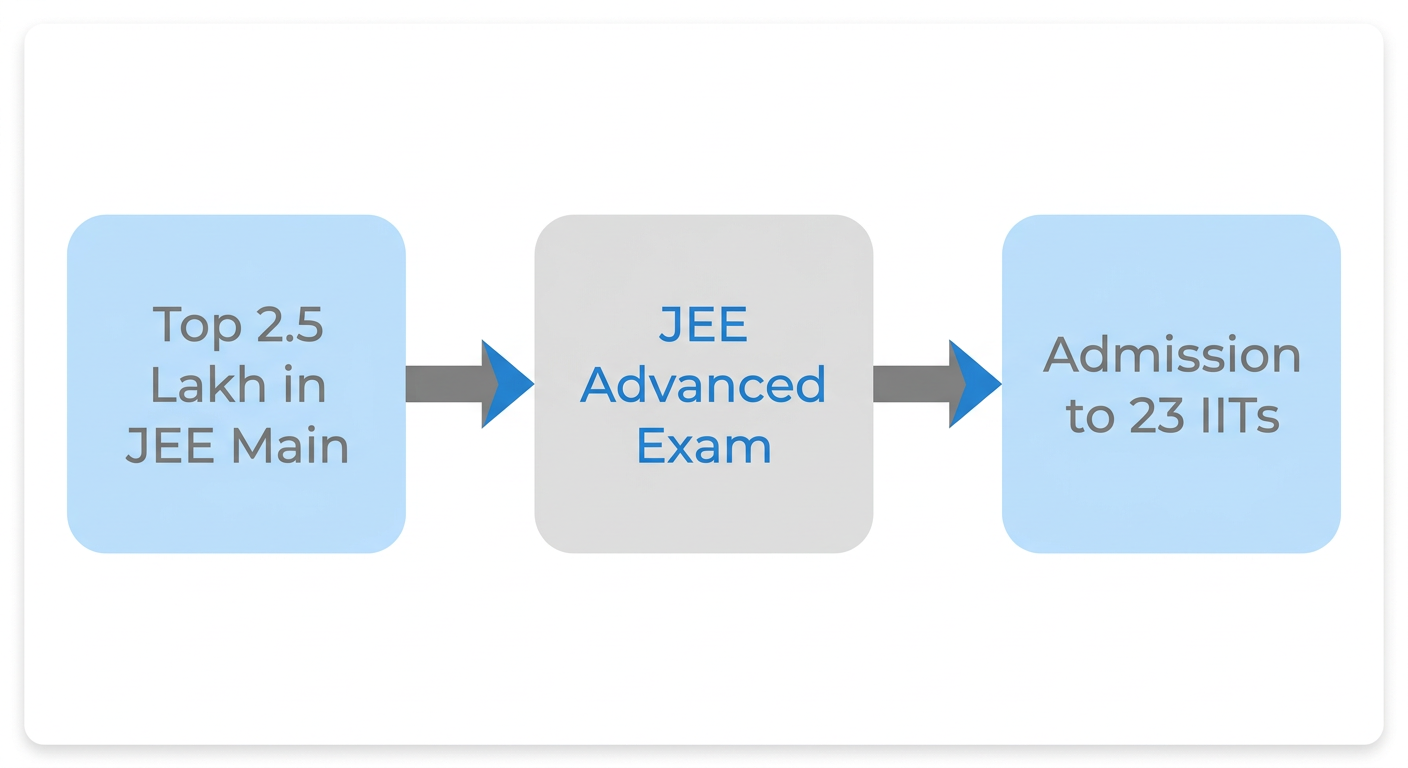
The Joint Entrance Examination (JEE) Advanced is the second and final stage of the JEE system. If JEE Main is a screening test for NITs, IIITs, and other GFTIs, then JEE Advanced is the exclusive entrance exam for admission into the undergraduate engineering, science, and architecture programs at the 23 IITs across India.
Only the top performers from JEE Main, roughly the top 2.5 lakh candidates, are eligible to sit for this exam. This exclusivity is what makes it so prestigious. It's not about just knowing the formulas; it's about applying them in complex, multi-concept problems you've never seen before. It tests your depth of understanding, analytical skills, and mental stamina under pressure.
Unlike JEE Main, which is conducted by the National Testing Agency (NTA), the JEE Advanced is conducted by one of the seven zonal IITs on a rotational basis (like IIT Bombay, IIT Delhi, IIT Madras, etc.). This change in authority often brings subtle shifts in the paper's style and focus each year, adding another layer of challenge.
JEE Advanced 2024: Key Dates and Highlights

Keeping track of dates is crucial. Missing a deadline can mean waiting a whole year. While the exact dates for future exams will be announced on the official website, here's a general timeline based on the 2024 schedule to give you a clear idea of how the process unfolds.
- JEE Advanced Registration: Typically starts right after the JEE Main results are declared, usually in late April.
- Admit Card Availability: You can usually download your admit card about a week to ten days before the exam, in mid-to-late May.
- JEE Advanced Exam Date: The exam is almost always held on a single day towards the end of May or the beginning of June.
- Candidate Response Sheet Release: A few days after the exam.
- Provisional Answer Key Release: About a week after the exam, allowing candidates to raise challenges.
- Final Answer Key and Result Declaration: This usually happens in the second week of June.
- JoSAA Counselling Starts: The counselling process begins almost immediately after the results are out, in mid-June.
Important Note: This timeline is for reference only. For the official and confirmed dates, you must always check the official JEE Advanced website. Don't rely on third-party sources for deadlines!
Are You Eligible? Decoding the JEE Advanced Criteria
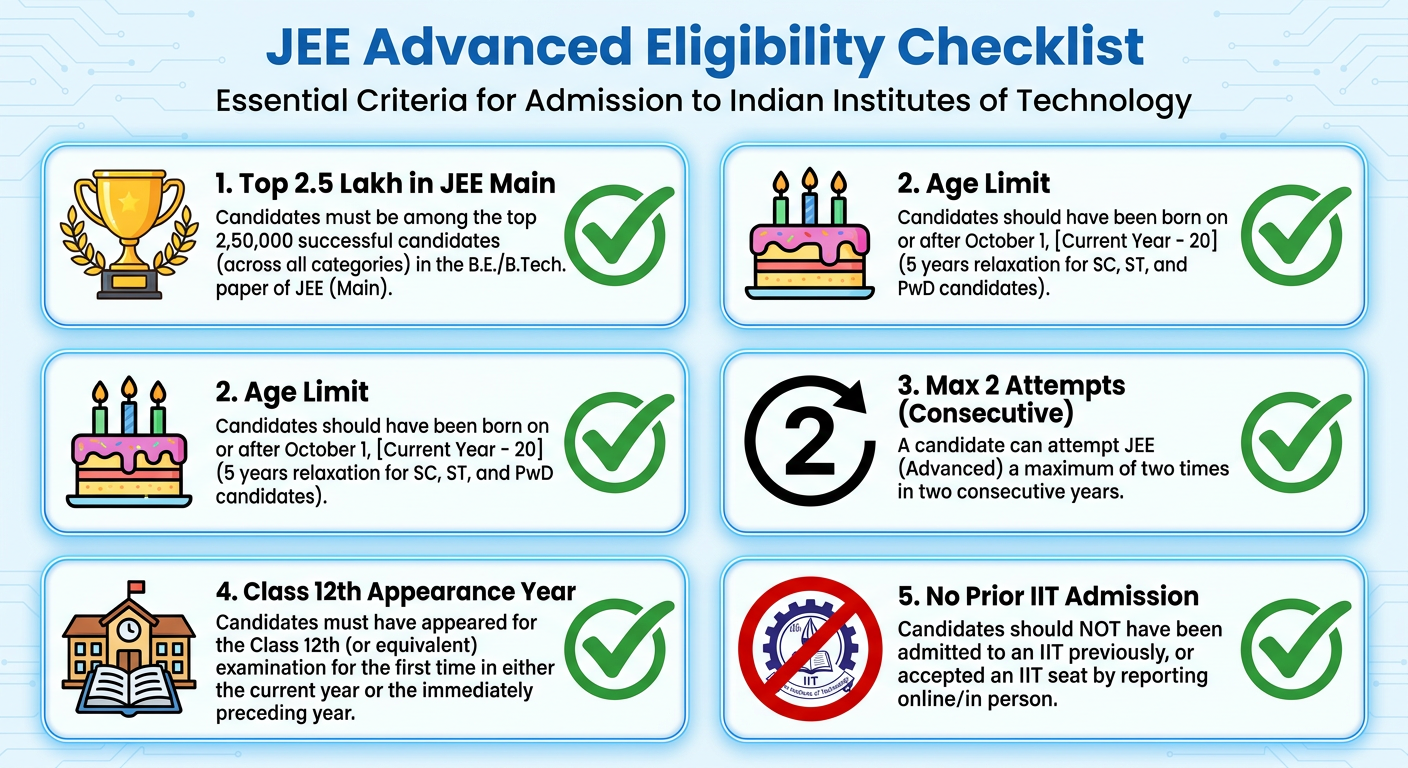
Before you even dream of an IIT, you need to make sure you tick all the eligibility boxes. The criteria for JEE Advanced eligibility are strict, so pay close attention. Missing even one can disqualify you.
Here's a simple breakdown of the five key pillars of eligibility:
-
JEE Main Performance: This is the first gate. You must be among the top 2,50,000 successful candidates (including all categories) in the JEE Main B.E./B.Tech paper. The NTA publishes the category-wise cutoff percentile along with the Main result.
-
Age Limit: Candidates should have been born on or after October 1, 1999 (for the 2024 exam). There's a five-year relaxation for SC, ST, and PwD candidates, meaning their birth date should be on or after October 1, 1994. This date shifts by one year for each subsequent exam year.
-
Number of Attempts: You get a maximum of two attempts at JEE Advanced, and they must be in two consecutive years. For instance, if you appeared for your Class 12 board exams in 2023, you could attempt JEE Advanced in 2023 and 2024. That's it. You cannot skip a year and take your second attempt later.
-
Class 12th (or Equivalent) Examination: You must have appeared for your Class 12th exams for the first time in either the same year as your first attempt or the year just before it. For example, for the 2024 exam, you should have appeared for Class 12 in either 2023 or 2024.
-
Previous IIT Admission: You must NOT have been admitted to an IIT before. If you accepted a seat at any IIT in a previous year (even if you didn't attend or dropped out), you are not eligible to appear for JEE Advanced again.
The Battlefield: Understanding the JEE Advanced Exam Pattern
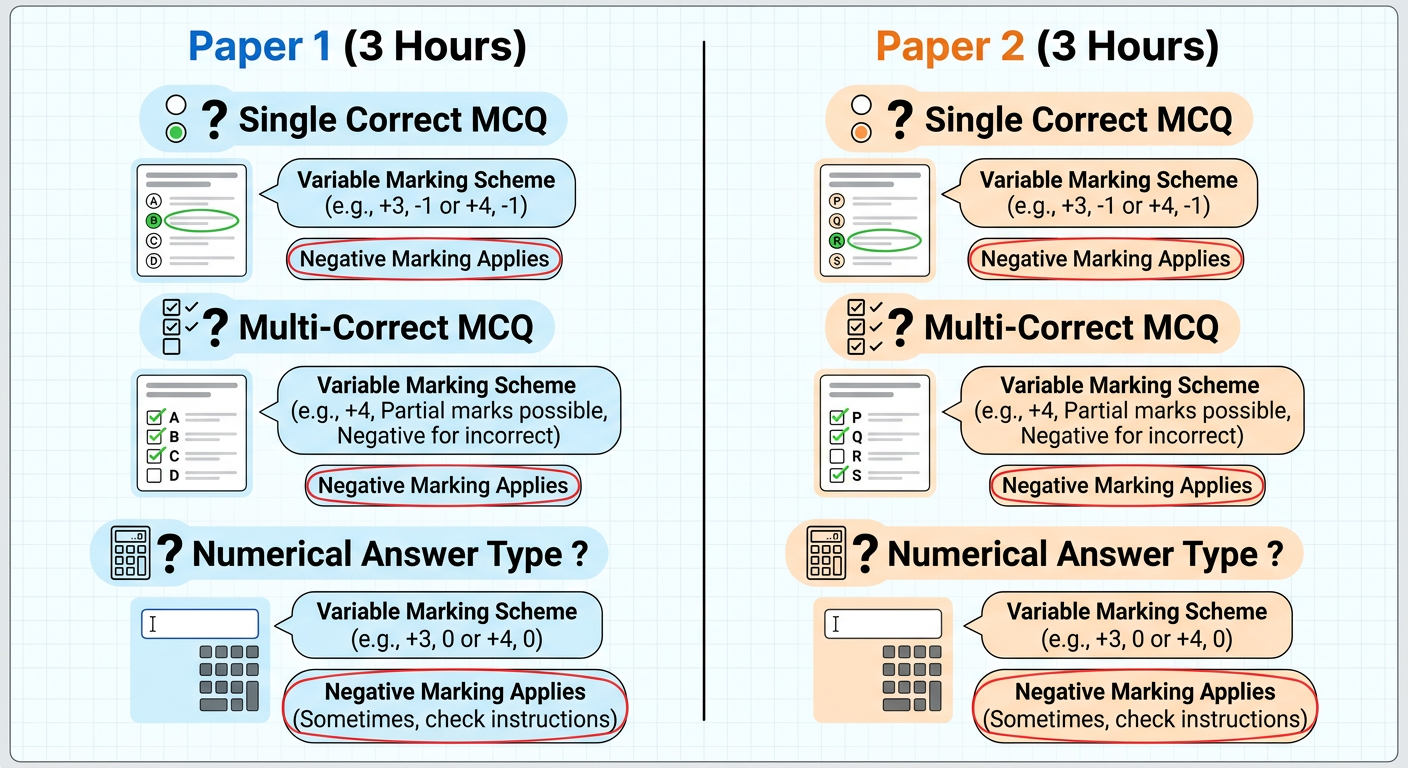
The JEE Advanced exam pattern is designed to be unpredictable and to test your adaptability. Unlike JEE Main's relatively fixed format, the pattern here can change every year. However, some core features remain consistent.
The exam consists of two papers: Paper 1 and Paper 2. Both are compulsory and are held on the same day in two three-hour shifts. Your final rank is based on the total marks scored in both papers combined. You can't afford to perform poorly in one and hope to make it up in the other; you need to be consistent.
The question types are what make this exam so tricky. You can expect a mix of:
- Multiple Choice Questions (MCQs) with a single correct answer: The classic format, but with a higher difficulty level.
- Multiple Choice Questions (MCQs) with one or more correct answers: These are notoriously difficult. You get marks only if you select all the correct options and no incorrect ones. Partial marking schemes may sometimes apply.
- Numerical Answer Type (NAT) Questions: You have to solve the problem and enter a numerical value as your answer. There's no guesswork here; you either know it or you don't. These are often free from negative marking.
- Paragraph/Comprehension based questions: A paragraph sets up a scenario, followed by a few questions based on it.
- Matrix Match (Match the Column) questions: You have to match entries from two or more columns.
Negative marking is a huge factor. While NAT questions are usually safe, MCQs often carry penalties for wrong answers. Understanding the marking scheme for each section, which is always provided in the question paper instructions, is the first step to a good strategy on exam day.
Mastering the Syllabus for JEE Advanced
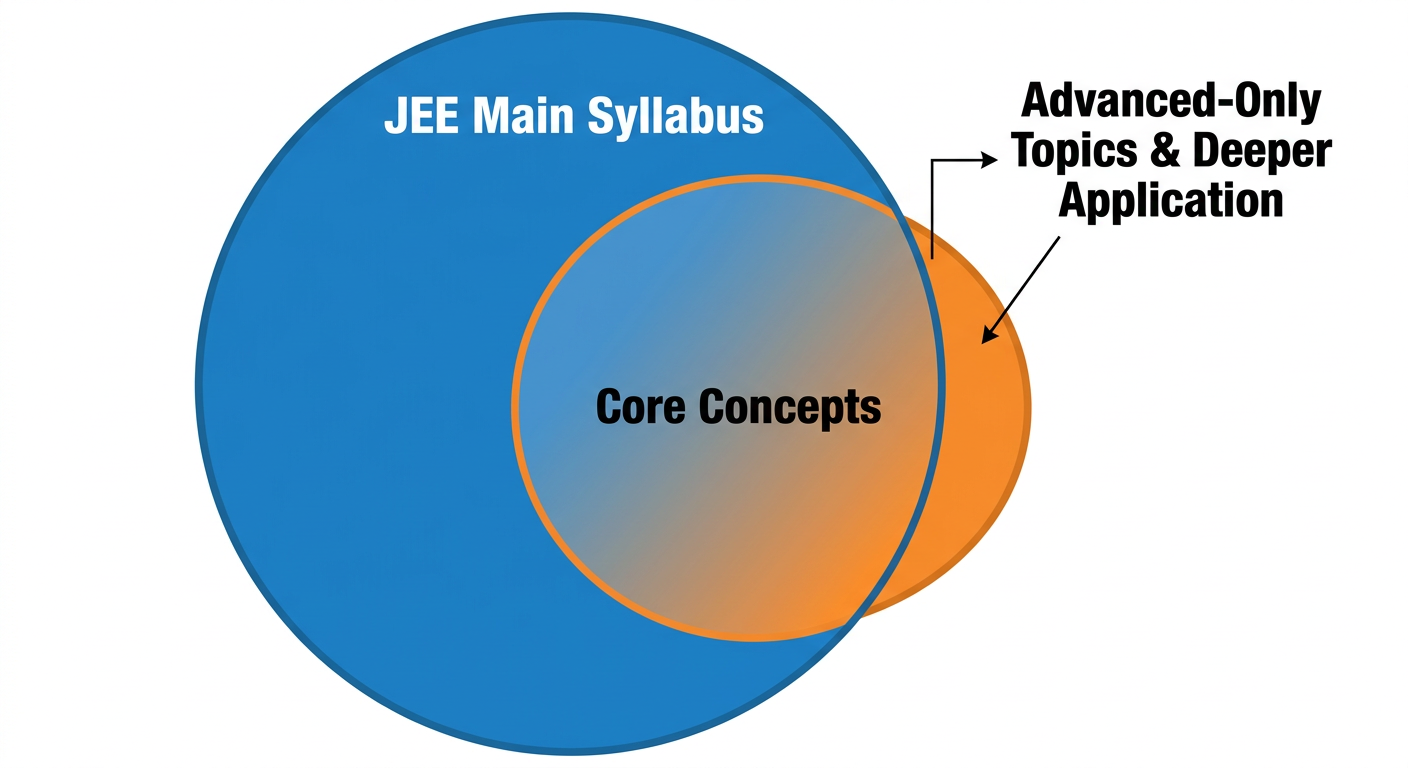
At first glance, the JEE Advanced syllabus looks very similar to the JEE Main syllabus. It covers the same three subjects: Physics, Chemistry, and Mathematics. However, the difference lies in the depth and the inclusion of a few extra topics.
Think of the JEE Main syllabus as the foundation. The JEE Advanced syllabus builds a skyscraper on top of it. It expects you to not just know the topics but to understand their interconnections. You'll often find questions that merge concepts from two or three different chapters.
While we can't list every topic here, it's smart to focus on the high-weightage chapters and the topics that are exclusive to or more emphasized in Advanced. For a complete, detailed breakdown, check out our JEE/NEET syllabus page.
Here’s a quick look at the focus areas:
- Physics: Mechanics (especially Rotation), Electromagnetism, Optics, and Modern Physics are perennial favorites. The questions demand a strong conceptual foundation and mathematical skill.
- Chemistry: Physical Chemistry (Thermodynamics, Electrochemistry), Organic Chemistry (Reaction Mechanisms, Stereochemistry), and Inorganic Chemistry (Chemical Bonding, Coordination Compounds) are crucial. Expect a lot of application-based questions in Organic.
- Mathematics: Calculus and Algebra form the backbone. Vectors & 3D Geometry and Coordinate Geometry are also extremely important. Questions are often lengthy and require clever manipulation.
Your preparation should be geared towards understanding the 'why' behind every concept, not just the 'what'.
Your Strategy: How to Prepare for JEE Advanced
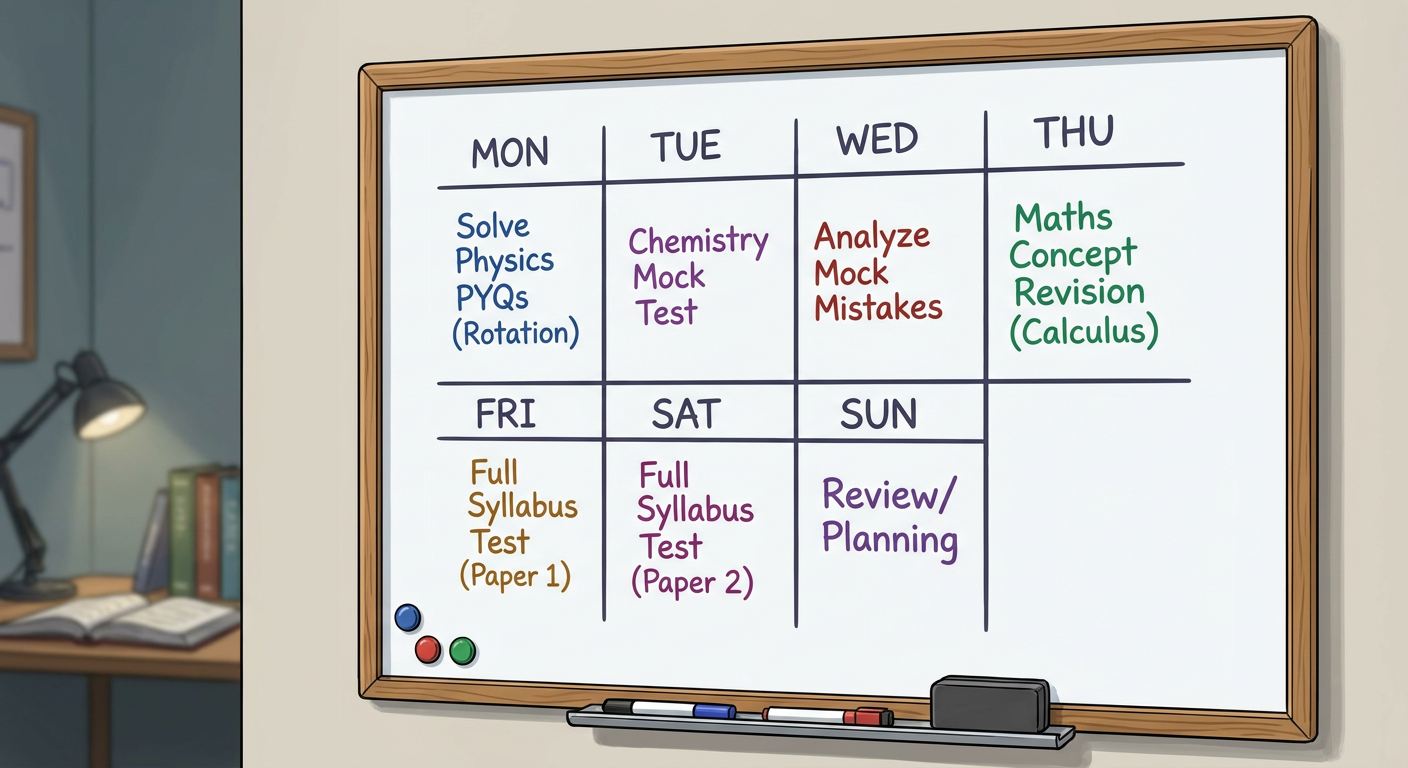
A great score in JEE Main doesn't automatically guarantee success in JEE Advanced. The preparation strategy needs a significant upgrade. Here's a practical, no-nonsense approach to your JEE Advanced preparation.
1. Prioritize Conceptual Clarity: Rote learning will get you nowhere. You must understand concepts from the ground up. Ask 'why' constantly. If you can't derive a formula or explain a mechanism in your own words, you haven't understood it deeply enough.
2. Master Problem Solving: The core of your prep is solving high-quality problems. Start with a standard textbook (like Cengage or Arihant series) to build your skills chapter by chapter. Focus on multi-concept questions.
3. Previous Year Questions are Gold: This is non-negotiable. Solving the last 10-15 years of Previous Year Questions is the single best way to understand the exam's level, question patterns, and mindset. Analyze not just the correct answer but also why the other options are wrong.
4. Take Mock Tests Seriously: Mock tests are your dress rehearsal for the main event. Take a full-length mock test (Paper 1 and Paper 2) every week or two in a simulated exam environment. No distractions, strict timing. This builds stamina and time management skills.
5. Analyze, Revise, Repeat: After every mock test, spend more time analyzing your mistakes than you spent taking the test. Was it a conceptual error, a silly calculation mistake, or a time management issue? Identify your weak areas and revise those concepts thoroughly. This feedback loop is what drives improvement.
For complex topics in Mathematics like Integration, mastering tricks and rules is key. For example, understanding the ILATE rule for integration by parts is essential. Here's a quick video to help you master it:
From Application to Admit Card: The Registration Process
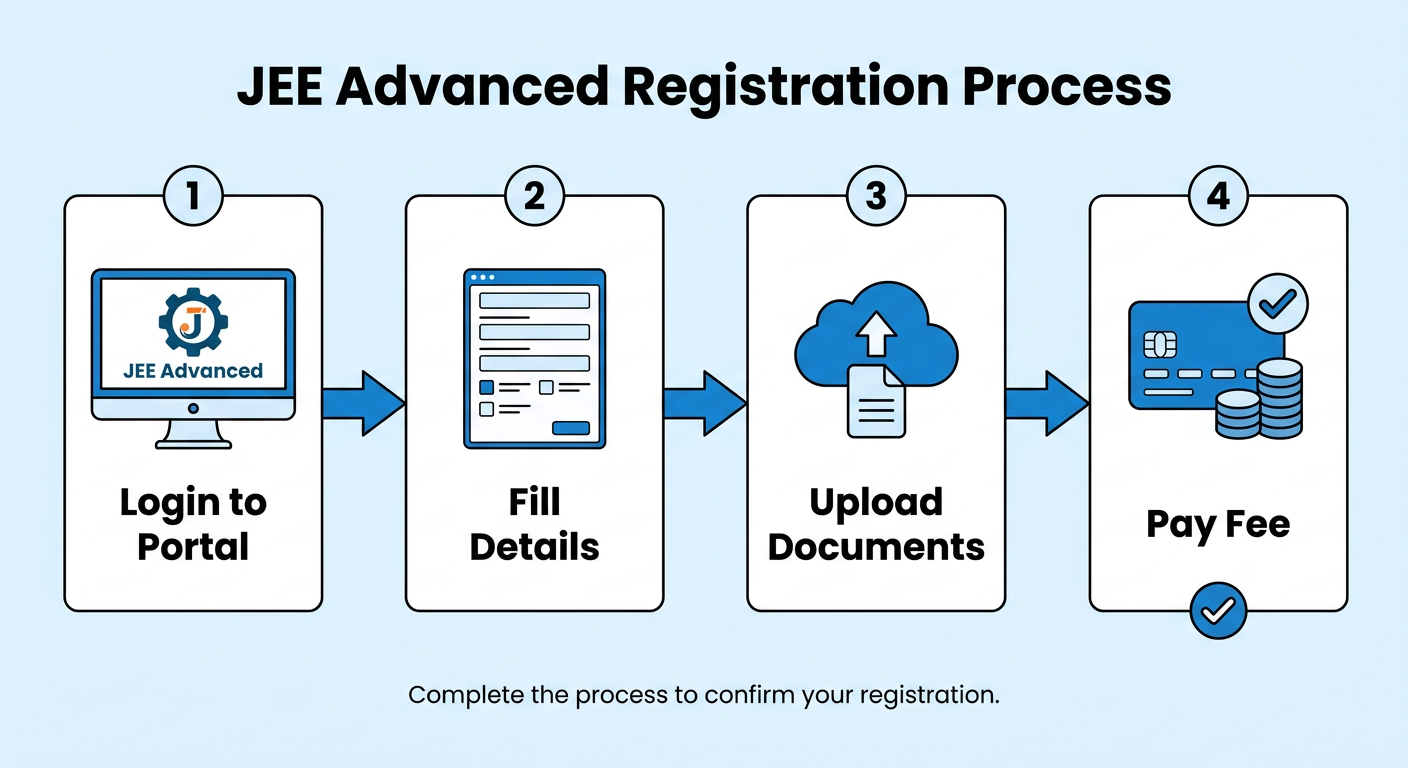
Once you've cleared the JEE Main cutoff, the next immediate step is to register for JEE Advanced. The process is straightforward, but you must be careful with the details you provide. The registration happens exclusively online through the official portal.
Here’s a step-by-step guide to the process:
-
Visit the Official Portal: After the JEE Main results, a registration portal will go live on the official JEE Advanced site. You'll log in using your JEE Main Application Number and password.
-
Fill in Additional Details: Some of your details will be pre-filled from your JEE Main form. You will need to provide additional information, such as your choice of examination cities for JEE Advanced.
-
Upload Scanned Documents: This is a critical step. You'll need to upload scanned copies of several documents in the specified format and size. These typically include:
- Class 10th Marksheet or Birth Certificate as proof of date of birth.
- Class 12th Marksheet (for candidates who appeared in the previous year).
- Category certificates (EWS, OBC-NCL, SC, ST) if applicable.
- PwD certificate if applicable.
-
Pay the Registration Fee: The final step is to pay the registration fee online. The fee varies for different categories (Female/SC/ST/PwD candidates have a lower fee). Your registration is complete only after the fee is successfully paid.
About a week before the exam, the admit card will be available for download from the same portal. Download it, print a copy, and check every single detail (your name, photo, exam center, etc.). Any discrepancy should be reported immediately.
After the Exam: Result, Rank List, and Cutoffs
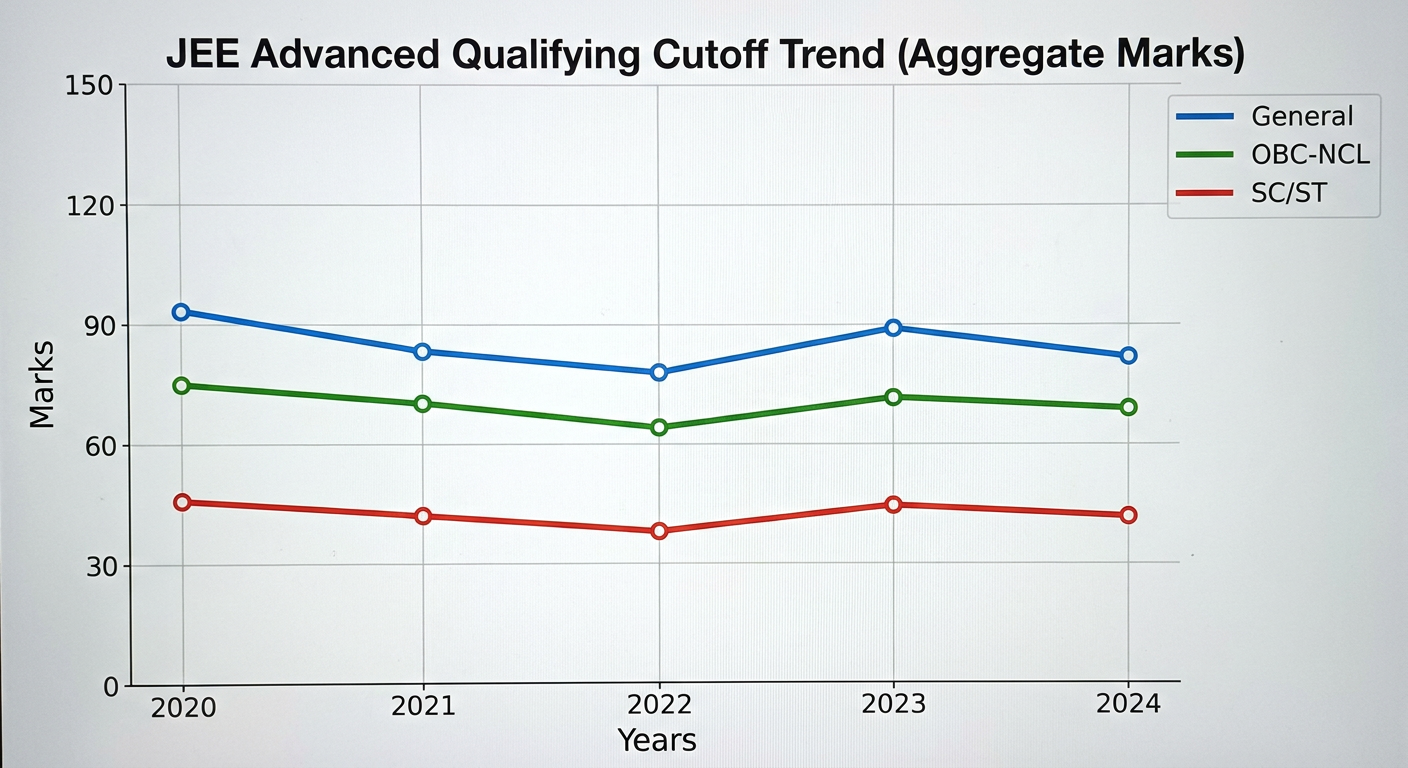
The period between the exam and the result is filled with anxiety and anticipation. The process is transparent. First, the candidate response sheets are released, followed by the provisional answer keys. You can compare your responses and calculate a probable score. A window is provided to challenge the provisional keys if you find an error.
Finally, the JEE Advanced result is declared based on the final answer key. The result includes your marks in each subject and your All India Rank (AIR). Separate rank lists are also prepared for different categories.
It's important to understand the two types of JEE Advanced cutoff:
- Qualifying Cutoff: This is the minimum percentage of marks you need in each subject AND in aggregate to be included in a rank list. Just scoring high in two subjects but failing to clear the minimum in one will disqualify you.
- Admission Cutoff: This is the opening and closing rank for admission to a particular branch in a particular IIT. This is determined by the demand for that seat during JoSAA counselling. So, even if you qualify, getting a seat depends on your rank.
Interestingly, recent trends show an inspiring increase in female participation and success. In 2023, for instance, a record number of over 10,000 women qualified for the exam, the highest in years. This is partly thanks to the supernumerary seats created specifically for female candidates to improve the gender ratio in IITs, making it a fantastic time for aspiring female engineers to aim for the top institutes. To see where your potential score might land you, you can try using a JEE rank predictor tool for an estimate.
The Final Step: JoSAA Counselling and Seat Allotment
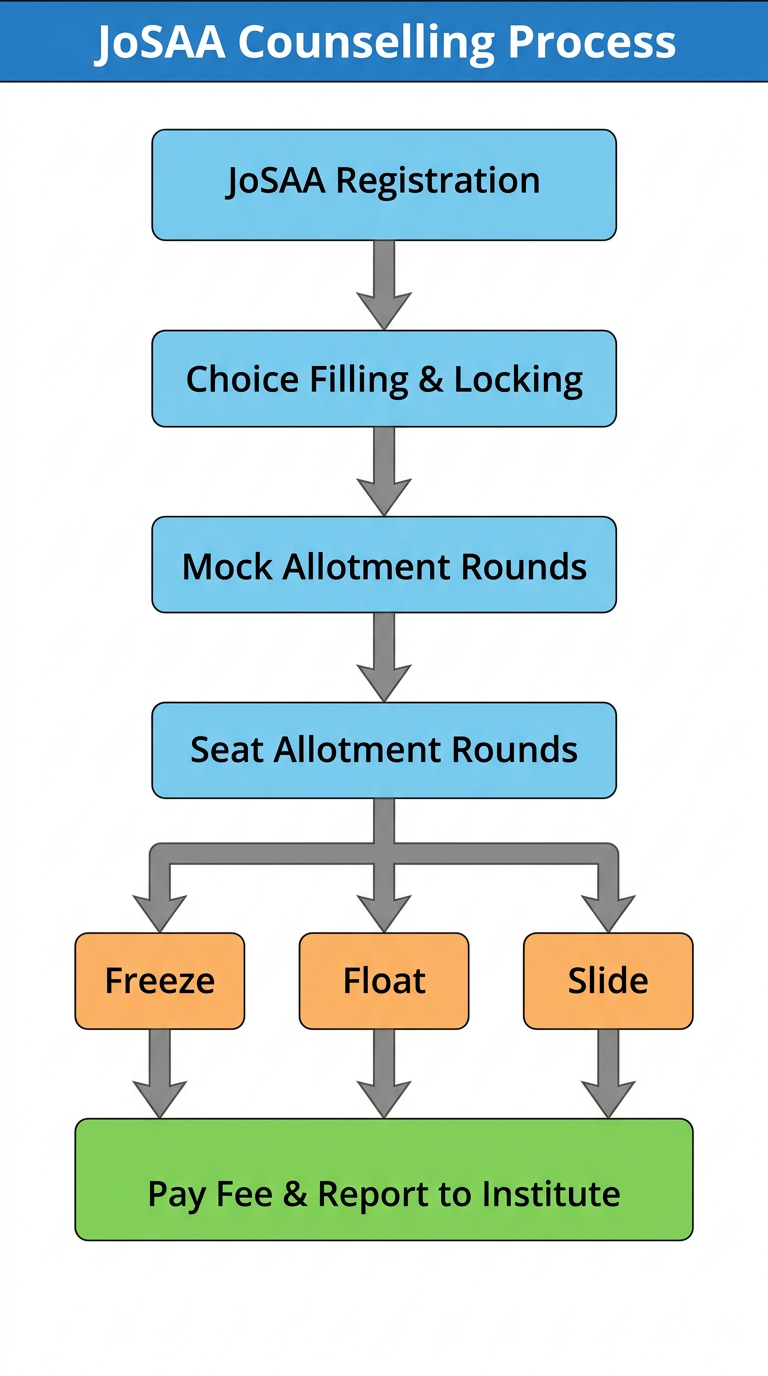
Congratulations, you have a rank! But the battle isn't over. The final, and arguably most crucial, phase is the JoSAA counselling. JoSAA, or the Joint Seat Allocation Authority, is the single platform for counselling and seat allotment for IITs, NITs, IIITs, and other GFTIs.
This process is done entirely online and involves several rounds. Here's how it works:
Step 1: Registration: All candidates who have a rank in JEE Advanced must register on the JoSAA portal.
Step 2: Choice Filling and Locking: This is the most critical step. You have to fill in your choices of institutes and branches in order of your preference. Be very careful and strategic here. List your dream choice at the top and go down from there. Fill as many choices as you are genuinely interested in. Your final locked choices will determine your seat allotment.
Step 3: Mock Seat Allotments: JoSAA usually conducts two rounds of mock allotments before the actual rounds begin. This gives you an idea of where you might land based on your rank and the choices you've filled. You can modify your choices after the mock rounds.
Step 4: Seat Allotment Rounds: The actual seat allotment happens over several rounds (usually 6-7). In each round, you might be allotted a seat based on your rank and choice list. You will then have three options:
- Freeze: You are happy with the allotted seat and don't want to be considered for further rounds.
- Float: You accept the seat but want to be considered for your higher preferences in the next rounds.
- Slide: You accept the seat but are open to being upgraded to a higher branch within the same institute.
Step 5: Final Allotment and Reporting: Once you have a seat you are satisfied with (or after the final round), you must download the allotment letter, pay the seat acceptance fee, and report to the allotted institute for document verification. Missing this step leads to cancellation of your allotted seat.
A Look at the Top IITs and Their Opening/Closing Ranks
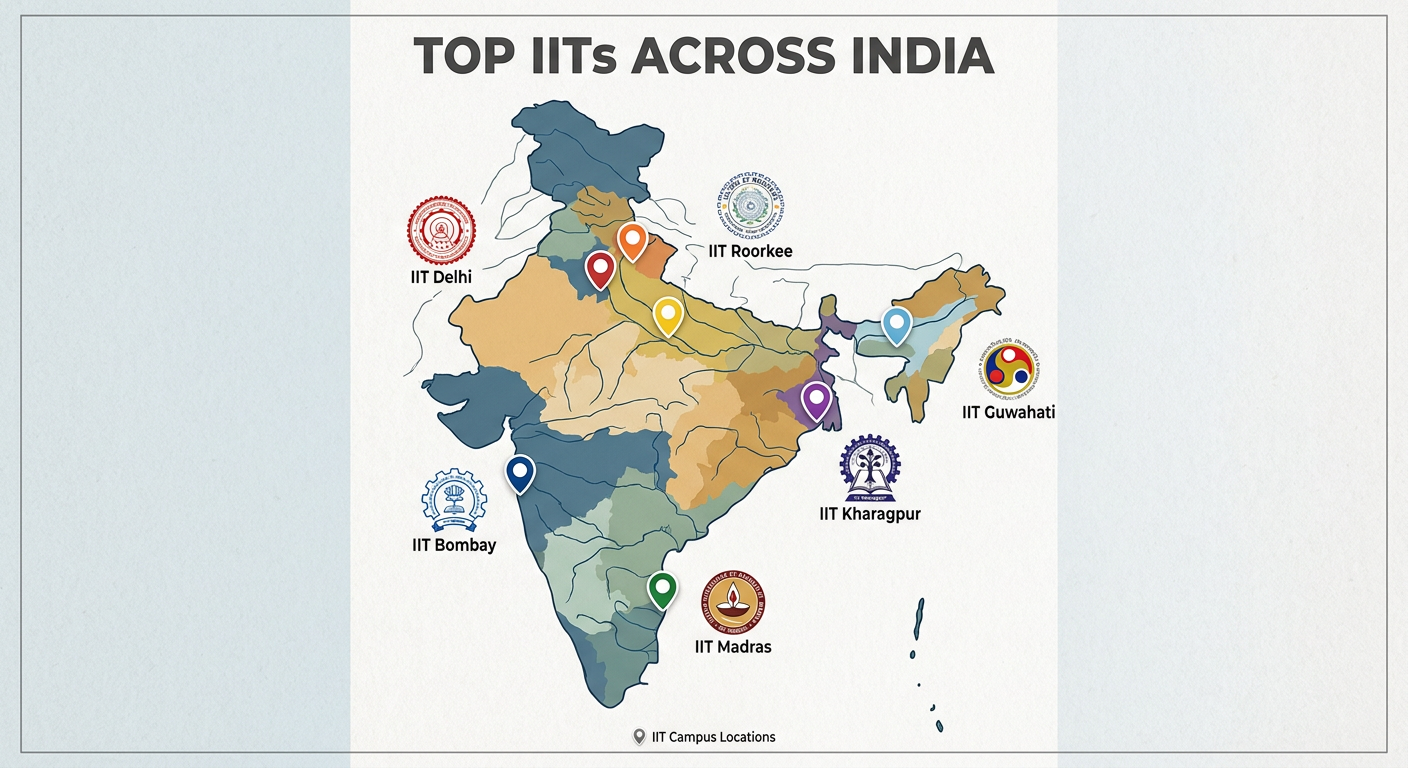
The ultimate prize for clearing JEE Advanced is a seat in one of the prestigious IITs. While all 23 IITs offer world-class education, some of the older ones are often considered the top tier due to their established reputation and alumni networks. These include IIT Bombay, IIT Delhi, IIT Madras, IIT Kanpur, and IIT Kharagpur.
Admission is based on Opening and Closing Ranks. The 'Opening Rank' is the rank of the first student admitted to a program, and the 'Closing Rank' is the rank of the last student admitted. These ranks give you a realistic idea of what it takes to get into a specific course.
For the most sought-after branches like Computer Science and Engineering (CSE) in the top 5 IITs, you typically need a rank well within the top 500, often even under AIR 100 for IIT Bombay. For other core branches like Electrical, Mechanical, or Civil in these top institutes, a rank within the top 2000-3000 is often competitive.
For newer IITs or less common branches, you can get a seat even with a rank of 8,000-12,000 or sometimes higher, especially with category benefits. These ranks change every year based on student preferences and the number of seats available. The best way to research this is to check the official JoSAA website for the previous years' opening and closing rank data to make an informed choice list for your counselling.
FAQs
How many times can I attempt JEE Advanced?
You can attempt the JEE Advanced a maximum of two times, and these must be in two consecutive years. For example, if you take your first attempt in 2024, your second and final attempt must be in 2025.
Is there negative marking in JEE Advanced?
Yes, negative marking is a key feature of the JEE Advanced. However, the marking scheme changes every year and for different sections. Some sections, like Numerical Answer Type (NAT) questions, typically do not have negative marking, while Multiple Choice Questions often do. Always read the instructions for each section carefully on exam day.
What is the difference between JEE Main and JEE Advanced?
JEE Main is the qualifying exam for JEE Advanced and the primary entrance exam for NITs, IIITs, and GFTIs. JEE Advanced is the exclusive entrance exam for admission into the 23 IITs. The difficulty level of Advanced is significantly higher, focusing more on in-depth conceptual understanding and analytical skills.
What happens if I qualify for JEE Advanced but don't get a seat?
If you have a rank in JEE Advanced, you are eligible for admission to other premier institutes like the Indian Institute of Science (IISc), Indian Institutes of Science Education and Research (IISERs), and the Rajiv Gandhi Institute of Petroleum Technology (RGIPT), which also use JEE Advanced ranks for their admission process. Your JEE Main rank remains valid for JoSAA counselling for NITs and IIITs.
Are 12th board marks important for JEE Advanced?
While a specific percentage in Class 12th is no longer the primary eligibility criterion, you must pass your board exams. Until recently, candidates needed to either be in the top 20 percentile of their respective boards or score at least 75% marks (65% for SC/ST). This rule has been relaxed in recent years, but it's always best to check the latest information brochure on the official site as policies can be reinstated.
Can I get into an IIT without clearing JEE Advanced?
No. Clearing JEE Advanced is the only way to get admission into an undergraduate engineering or science course at any of the 23 IITs. There are some postgraduate courses and specific design courses (which require UCEED) that have different entry paths, but for B.Tech, it's exclusively through JEE Advanced.