JEE-Advanced 2026: Computer Science first choice among top 500; IIT Bombay gets max top rankers - The New Indian Express
Everything you need to know about the JEE Advanced exam, from eligibility and syllabus to paper pattern, cutoffs, and preparation strategy for getting into IITs.
13 min read
Think of your JEE journey as a video game. You’ve spent two years levelling up, grinding through quests in Physics, Chemistry, and Maths. The JEE Main was a tough level, a major boss fight that lakhs of players attempted. But you cleared it. Now what?
Welcome to the final level. The end-game content. The ultimate boss raid that only the top 2.5 lakh players even get to attempt. This is the JEE Advanced.
It’s not just another exam. It's the one and only gateway to the most prestigious engineering colleges in India: the Indian Institutes of Technology (IITs). Winning here doesn’t just mean a good score; it means a chance to study at an institution that has produced global leaders, innovators, and thinkers.
But the rules of the game change here. The difficulty spikes. The questions are designed not just to test what you know, but how you think. This guide is your complete walkthrough. We'll cover everything from eligibility and paper patterns to the cutoffs and counselling process. Let’s get you ready for the final battle.
What Exactly is the JEE Advanced Exam?
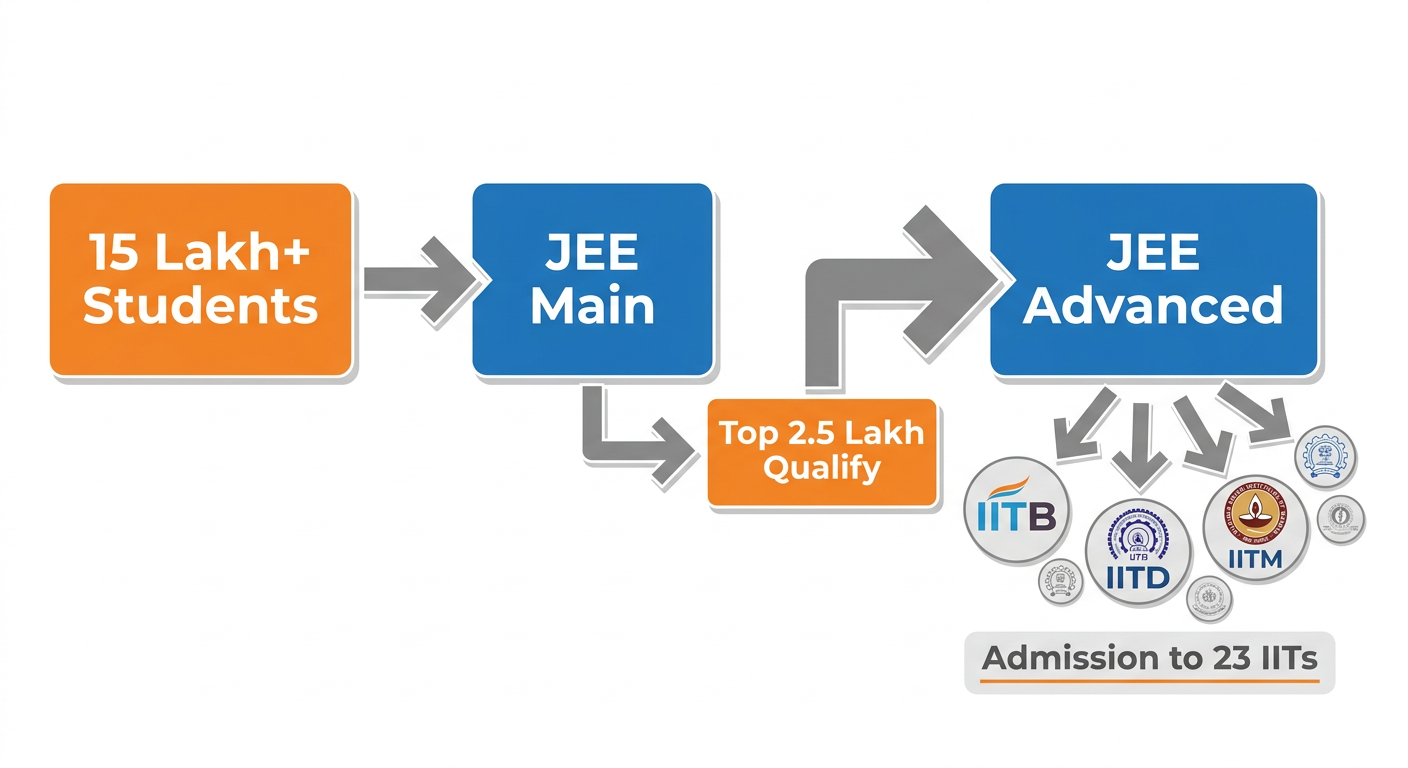
The Joint Entrance Examination, or JEE Advanced, is the second and final stage of the JEE system. If JEE Main is the qualifier, JEE Advanced is the grand finale. It is conducted by one of the seven zonal IITs on a rotational basis (like IIT Bombay, IIT Delhi, IIT Madras, etc.) under the guidance of the Joint Admission Board (JAB).
Its single, focused purpose is to select the brightest minds for admission into the undergraduate engineering, science, and architecture programs at the 23 IITs across the country. Your All India Rank (AIR) in this exam is the only thing that determines your entry into an IIT.
The Real Difference: JEE Advanced vs JEE Main
Many students make the mistake of thinking JEE Advanced is just a harder version of JEE Main. This is a critical misunderstanding. While JEE Main tests your knowledge and speed across a wide syllabus, JEE Advanced tests your conceptual depth and analytical skills.
The questions are often multi-concept, requiring you to pull ideas from different topics to solve a single problem. They are designed to be tricky and to push your thinking to its limits. Speed is less important than accuracy and a deep, fundamental understanding of the subjects. This is the key difference you must understand for your JEE Advanced preparation.
Are You Eligible? Checking the JEE Advanced Criteria
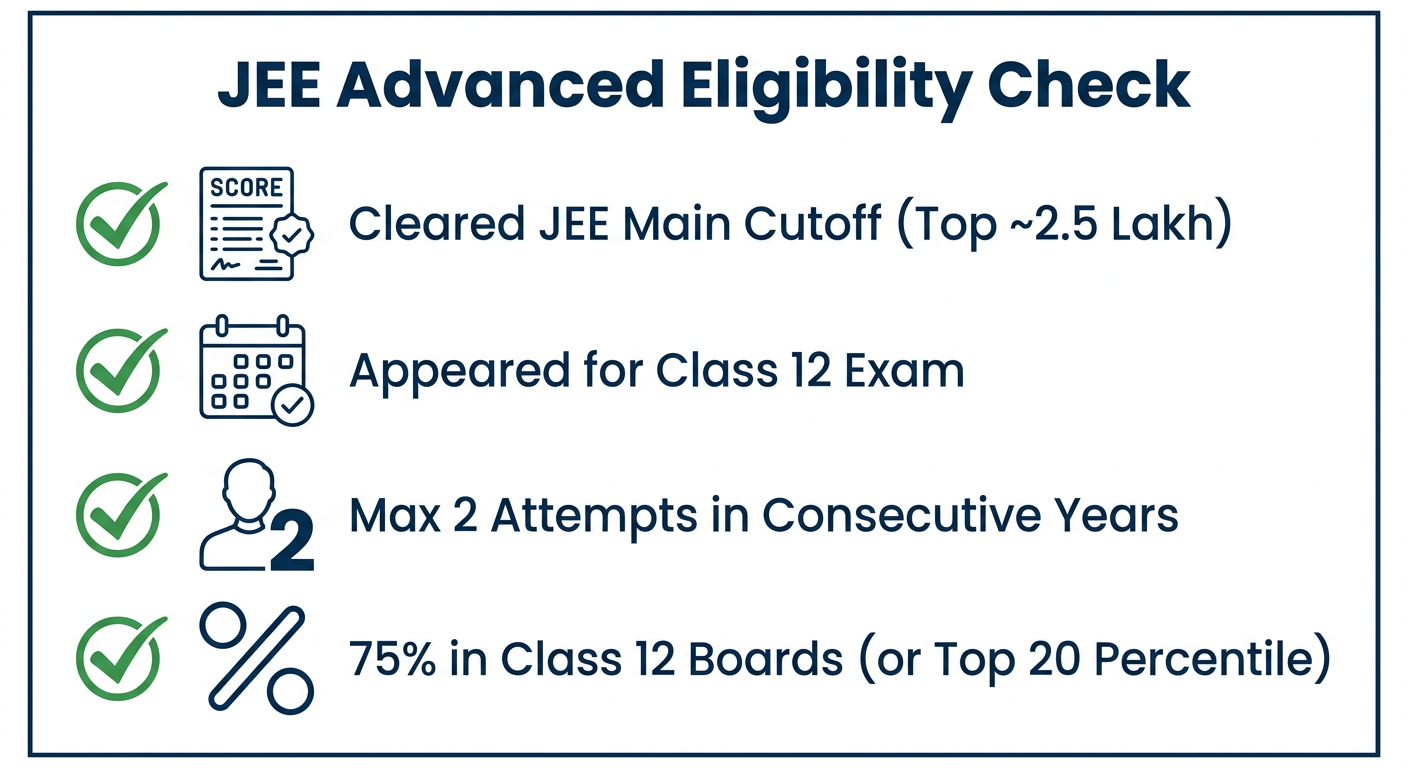
Before you even dream of an IIT, you need to make sure you can actually sit for the exam. The JEE Advanced eligibility criteria are strict and non-negotiable. It’s a multi-layered filter. Let’s break it down into simple terms.
H3: JEE Main Performance
This is the very first hurdle. You must be among the top candidates who clear the JEE Main cut-off for appearing in JEE Advanced. Every year, around 2,50,000 students from all categories are shortlisted.
This quota includes reservations as per government norms: 27% for OBC-NCL, 15% for SC, 7.5% for ST, and 10% for GEN-EWS. So, your category rank in JEE Main is what truly matters here. Always check the official information bulletin on the official JEE Main site (NTA) for the exact numbers for the year.
H3: Age Limit and Previous Appearances
This is a simple but firm rule. A candidate can attempt the JEE Advanced a maximum of two times in two consecutive years. For example, if you are appearing for your Class 12 board exams in 2024, you can attempt JEE Advanced in 2024 and 2025, and that's it. Your birth date also matters; candidates must have been born on or after a specific date, which is usually set to ensure they are not older than 25.
H3: Class 12th Performance
Historically, there has been a performance criterion in your Class 12 (or equivalent) examination. To be eligible for admission to IITs, a candidate must have secured at least 75% aggregate marks (65% for SC, ST, and PwD candidates). Alternatively, you must be within the top 20 percentile of successful candidates in your respective board exam.
Important Note: This 75% rule has been waived in some recent years due to the pandemic. It's absolutely crucial to verify the latest rule for your exam year from the official official JEE Advanced site. Don't rely on old information!
Decoding the JEE Advanced Paper Pattern
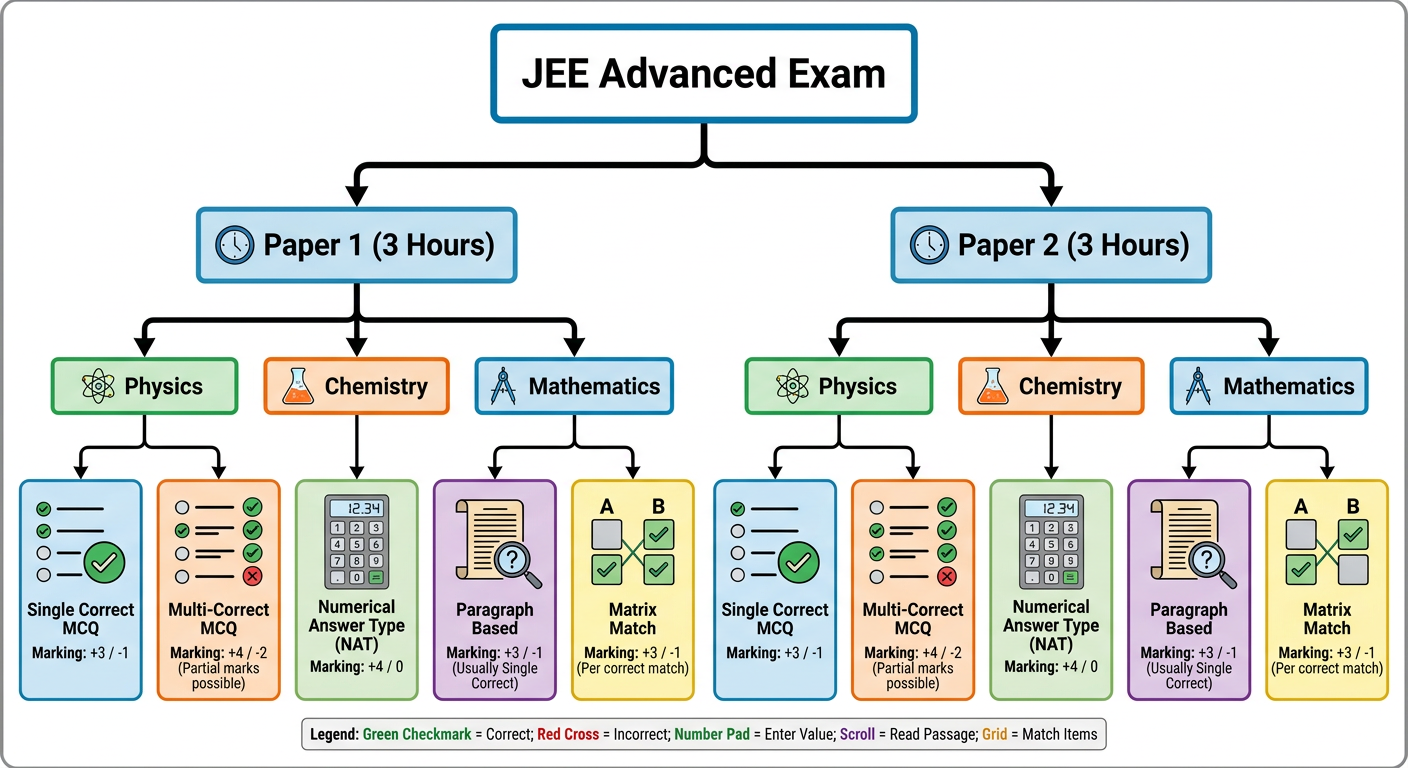
This is where the game gets real. The JEE Advanced paper pattern is famous for its unpredictability and complexity. Understanding it is your first step to building a solid strategy.
The exam consists of two compulsory papers: Paper 1 and Paper 2. Both are three hours long and are usually held on the same day with a break in between. You MUST appear for both papers. Your final score is the aggregate of your marks in Paper 1 and Paper 2.
Each paper is divided into three sections: Physics, Chemistry, and Mathematics. The total marks and the exact number of questions can change every year, which is a key part of the challenge.
H3: The Tricky Question Types
Unlike JEE Main's straightforward MCQs, JEE Advanced uses a variety of question formats to test you:
- Multiple Choice Questions (MCQs) with One Correct Answer: The classic format, but the options are designed to be confusing.
- Multiple Choice Questions (MCQs) with Multiple Correct Answers: These are killers. You get marks only if you select ALL the correct options and no incorrect ones. Some years have partial marking schemes for these.
- Numerical Answer Type (NAT) Questions: You have to solve the problem and enter a numerical value (an integer or a decimal) using the on-screen keypad. There is typically no negative marking for these, making them scoring opportunities if you are confident.
- Paragraph/Comprehension Based Questions: A passage of information is given, followed by a few questions based on it. These test your reading and application skills.
- Matrix Match (Match the Following) Questions: You have to match items from one column to another. These can be complex, with one-to-one or one-to-many matches possible.
H3: Understanding the Marking Scheme
Pay close attention here. The marking scheme is not uniform across the paper and it changes every year. Some sections might have negative marking for wrong answers, while others might not. For 'multiple correct' questions, there can be partial marks. For example, if A, B, C are correct and you mark A, B, you might get partial credit.
Reading the instructions at the beginning of each section of the actual exam paper is non-negotiable. Your entire strategy for attempting the paper depends on it.
The Syllabus: What to Study for JEE Advanced
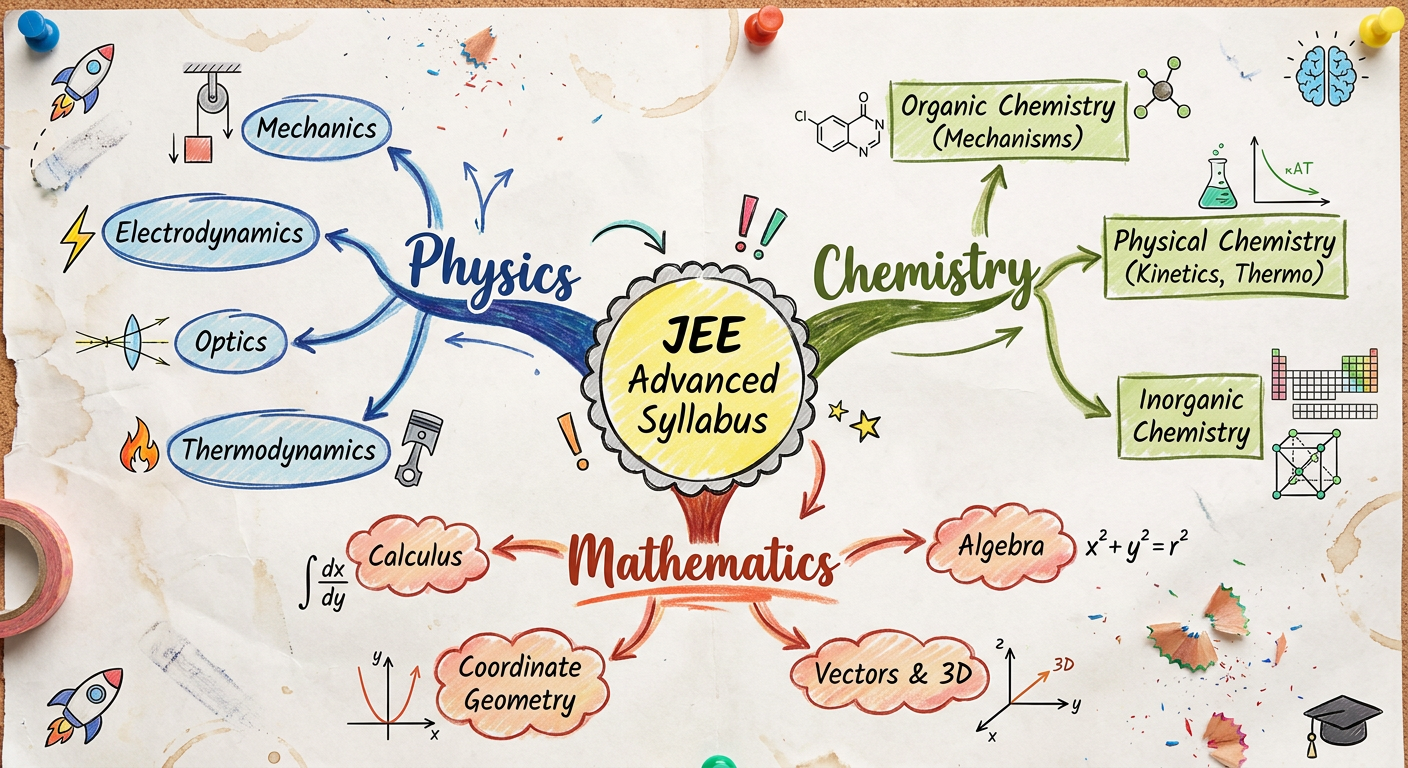
The JEE Advanced syllabus is largely based on the Class 11 and 12 CBSE curriculum, and it overlaps significantly with the JEE Main syllabus. However, there are a few topics exclusive to Advanced. More importantly, the depth of knowledge required is much, much greater.
It's not about learning more chapters. It's about understanding the connections between chapters. For instance, a question in Physics might combine concepts from Rotational Motion and Electromagnetism. A Chemistry problem could link Thermodynamics with Chemical Equilibrium.
Instead of just listing the whole syllabus, which you can find on the official website, let’s focus on the approach:
- Physics: Focus on deep conceptual clarity in Mechanics, Electrodynamics, and Optics. These form the backbone of the paper.
- Chemistry: In Organic Chemistry, mastering reaction mechanisms is key. In Physical Chemistry, be thorough with Thermodynamics and Electrochemistry. Inorganic Chemistry often has questions directly from NCERT, but linked with concepts.
- Mathematics: Calculus (especially applications), Coordinate Geometry, and Algebra are huge. You need to be comfortable with complex manipulations and creative problem-solving. Vectors and 3D Geometry are also consistently important.
The Battle Plan: How to Prepare for JEE Advanced
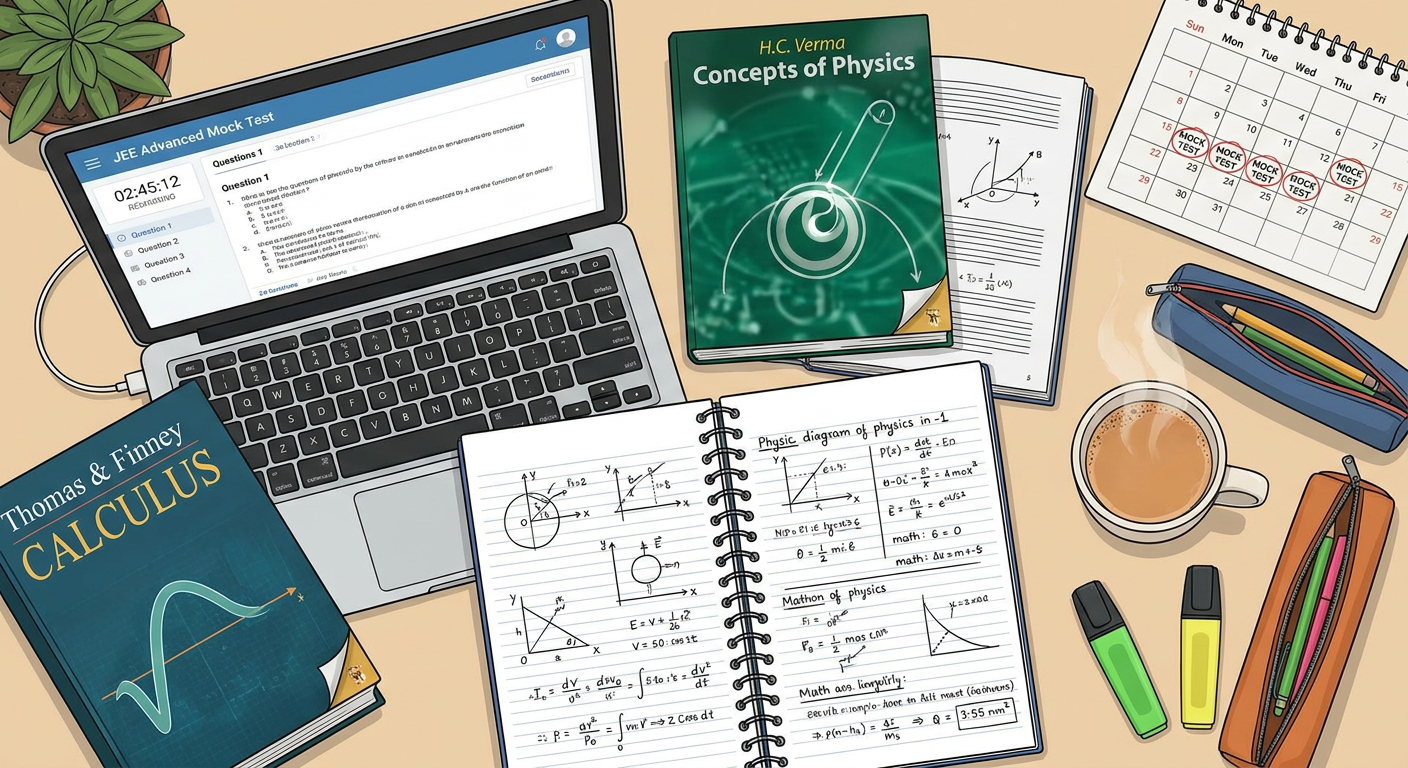
Preparation for JEE Advanced is a marathon, not a sprint. Once you are done with JEE Main, you need to shift your strategy from speed and coverage to depth and accuracy. Here’s how you build your battle plan.
H3: From Main to Advanced: Shifting Gears
Your focus must shift. Stop trying to solve 30 questions in an hour. Instead, try to solve 10-15 tough, Advanced-level problems with full concentration and understanding. The goal is to build your analytical muscle. Spend time with a problem even if you can't solve it immediately. The struggle is what builds skill.
H3: The Power of Mock Tests and PYQs
This is the most critical part of your JEE Advanced preparation. You MUST solve Previous Year Questions (PYQs). It's the only way to understand the real 'feel' of the exam, the patterns, and the level of difficulty. Treat them like sacred texts.
Similarly, take as many high-quality mock tests as possible, simulating the exact exam conditions. Two papers, 3 hours each, with a break in between. Analyze every single mock test. Where did you go wrong? Was it a concept gap, a silly mistake, or a time management issue? This analysis is more important than the test itself.
H3: Choosing the Right Study Material
Don't hoard books. Stick to a few standard, high-quality resources and master them. For problem-solving, books with challenging, non-repetitive problems are ideal.
In Mathematics, for example, mastering complex topics like Integration by Parts is crucial. The ILATE rule is a great starting point for this.
Ultimately, focus on quality over quantity. For comprehensive notes, formula sheets, and expert masterclasses, you can always check out our collection of free JEE resources.
After the Exam: Understanding Cutoffs and Ranks
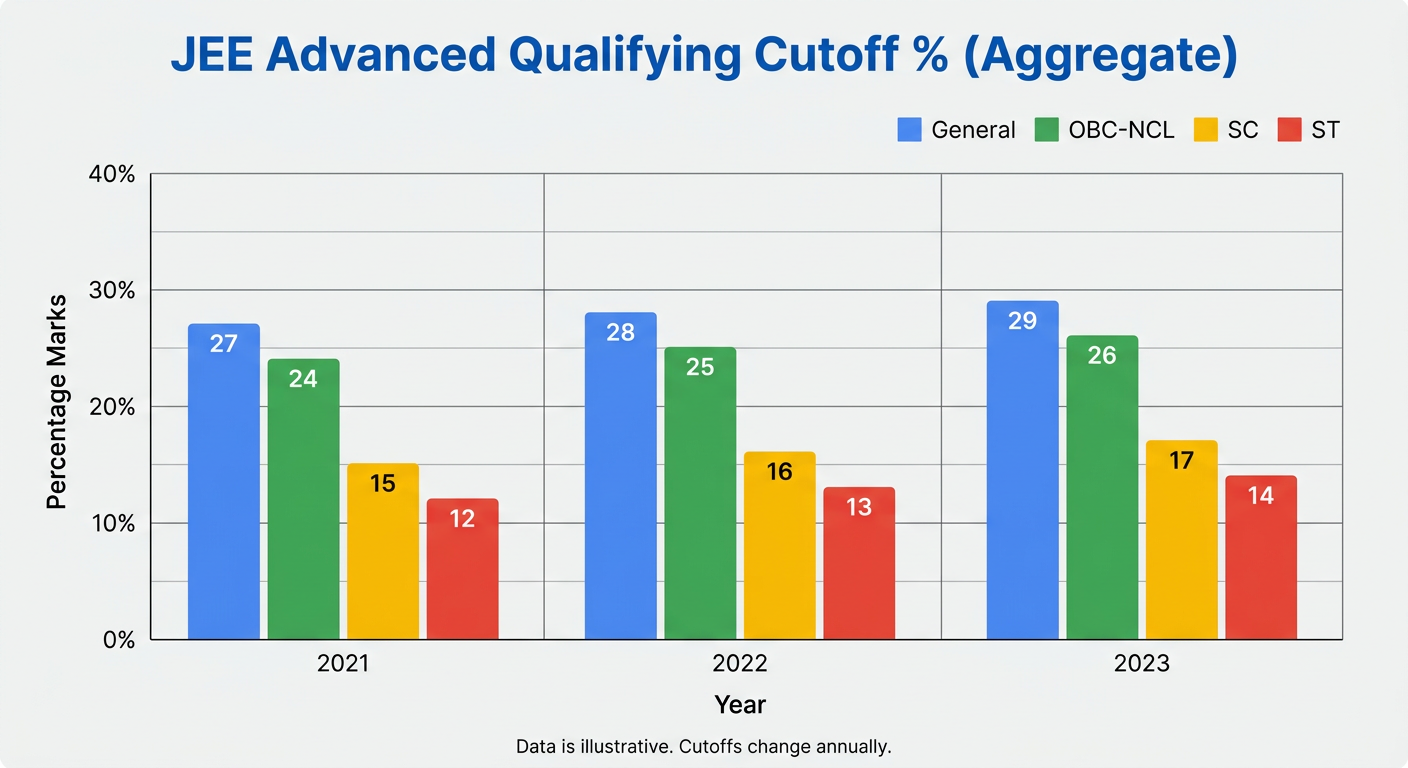
The suspense doesn't end when the exam is over. The wait for the results, cutoffs, and ranks can be nerve-wracking. Let's demystify this phase.
There are two types of cutoffs you need to know about:
- Qualifying Cutoff: The minimum marks you need to be included in a rank list.
- Admission Cutoff: The rank (and corresponding marks) you need to get a specific seat in a specific IIT branch.
H3: What is the Qualifying Cutoff?
To even be considered for a rank, you must clear a minimum percentage of marks in each of the three subjects (Physics, Chemistry, Maths) AND a minimum percentage in the aggregate total. This is the JEE Advanced cut off. These percentages are decided by the conducting IIT after the exam and vary each year depending on the paper's difficulty.
For example, in a given year, the qualifying aggregate cut off for the general category might be around 25-30%, while for reserved categories, it will be lower. This is just to get your name on the list; it doesn't guarantee a seat.
H3: How are Ranks Calculated?
Your final rank is based on your aggregate marks out of the total marks from Paper 1 and Paper 2 combined. The higher your total score, the better your All India Rank (AIR). In case of a tie in total marks, specific tie-breaking rules are applied (e.g., higher marks in Mathematics, then Physics).
Wondering what rank you might get based on your expected score? You can use a JEE rank predictor tool to get a good estimate.
H3: The IIT Dream: Top Ranks and Branch Choices
Getting a rank is one thing; getting your dream branch is another. As recent trends show, Computer Science and Engineering (CSE) remains the top choice for almost all top rankers. Elite institutions like IIT Bombay are consistently the first preference for a majority of the top 100 rank holders. Following CSE, branches like Electrical Engineering, Mechanical Engineering, and burgeoning fields like AI and Data Science are highly sought after.
The Final Step: JoSAA Counselling and Seat Allotment
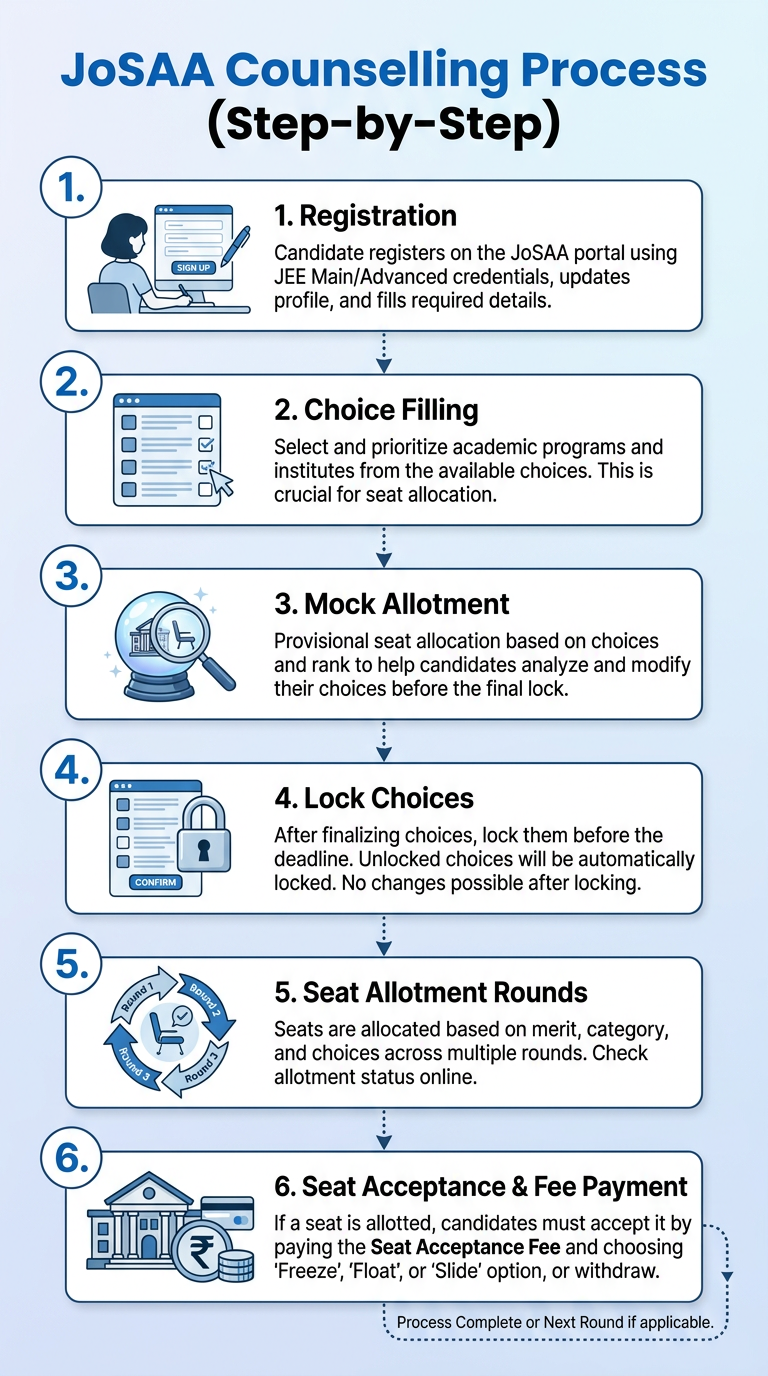
Once the ranks are out, the final stage begins: the joint seat allocation process, managed by the Joint Seat Allocation Authority (JoSAA). This is a single, centralized online platform for admissions to IITs, NITs, IIITs, and other Government-Funded Technical Institutes (GFTIs).
The JoSAA counselling process involves several rounds. Here's a quick overview:
- Registration: All qualified candidates must register on the JoSAA portal.
- Choice Filling: This is the most crucial step. You have to fill in your choices of institutes and branches in order of your preference. Be very careful and realistic. Fill as many choices as you can.
- Mock Seat Allotments: JoSAA releases a few rounds of mock allotments based on the choices you've filled. This helps you understand your likely admission chances and allows you to revise your choices.
- Final Seat Allotment: Based on your final locked choices and your AIR, a seat is allotted to you in several rounds.
- Seat Acceptance: Once you are allotted a seat, you can choose to 'Freeze' (accept the seat), 'Slide' (accept the seat but be open to a higher preference in the same institute), or 'Float' (accept the seat but be open to a higher preference in any institute). You must pay the seat acceptance fee to confirm.
This process requires careful planning. Research last year's opening and closing ranks thoroughly before filling your choices.
FAQs
### How many times can I attempt JEE Advanced?
You can attempt the JEE Advanced a maximum of two times in two consecutive years. For instance, if you take your Class 12 board exam in 2024, your attempts are in 2024 and 2025.
### Is there negative marking in JEE Advanced?
Yes, in most sections. The exact marking scheme, including negative marks for incorrect answers, varies from year to year and even from section to section within the same paper. Always read the instructions carefully during the exam.
### What is the 75% criteria for JEE Advanced?
To be eligible for admission into an IIT, you generally need to score at least 75% aggregate marks in your Class 12 board exams (65% for SC/ST/PwD) or be in the top 20 percentile of your board. However, this rule is subject to change, so always check the latest official information bulletin.
### Can I get into an IIT without clearing JEE Advanced?
No. Admission to the undergraduate B.Tech, B.S., or B.Arch programs in any of the 23 IITs is exclusively through the JEE Advanced rank. There is no other way.
### Which IIT is best for Computer Science?
While all IITs offer excellent CSE programs, IIT Bombay is consistently the top choice for the highest-ranking students, followed closely by IIT Delhi, IIT Madras, IIT Kanpur, and IIT Kharagpur. The preference often comes down to perception, faculty, and placement statistics.
### Is the JEE Advanced syllabus different from JEE Main?
The core syllabus is largely the same, but JEE Advanced includes a few extra topics and expects a much deeper, more analytical understanding of all concepts. The focus is on multi-concept application rather than direct formula-based questions.