JEE Advanced 2026 admit cards released by IIT Roorkee; exam on May 17 - Deccan Herald
Your complete guide to downloading the JEE admit card, understanding the details, and preparing for exam day. Find step-by-step instructions and key guidelines.
19 min read
How to Download Your JEE Admit Card: The Ultimate Guide
Think of it like the golden ticket in Charlie and the Chocolate Factory. Without it, you're not getting into the factory. In the world of JEE, your admit card is that golden ticket. It's the single most important document that stands between you and the exam hall. Every year, lakhs of students gear up for one of the toughest exams in the country, but all that preparation means nothing if you fumble with this final, crucial step. This guide is here to make sure that doesn't happen. We'll walk you through everything you need to know about your JEE admit card, from downloading it to understanding every detail on it.
This isn't just a piece of paper. It's your official hall pass, your proof of identity, and your key to unlocking a future in a top engineering college. Let's get you ready to download it, check it, and walk into that exam centre with complete confidence.
The JEE Admit Card: Your Gateway to the Exam Hall
First things first, what exactly is the JEE admit card? It is an official document issued by the National Testing Agency (NTA) that authorises a candidate to appear for the Joint Entrance Examination. Without a valid, printed copy of this document, you will be denied entry at the exam centre. No exceptions. It contains vital information like your name, roll number, exam centre address, date, and shift timing.
Getting your hands on it is a straightforward digital process. The NTA releases the admit card on its official website a few days before the exam date. You need to be alert and download it as soon as it's available.
How to Download Your JEE Main Admit Card: A Step-by-Step Guide
Downloading your admit card is simple, but you need to be careful and follow the steps precisely. Don't wait until the last minute, as high server traffic can cause frustrating delays.
Here’s exactly what you need to do:
-
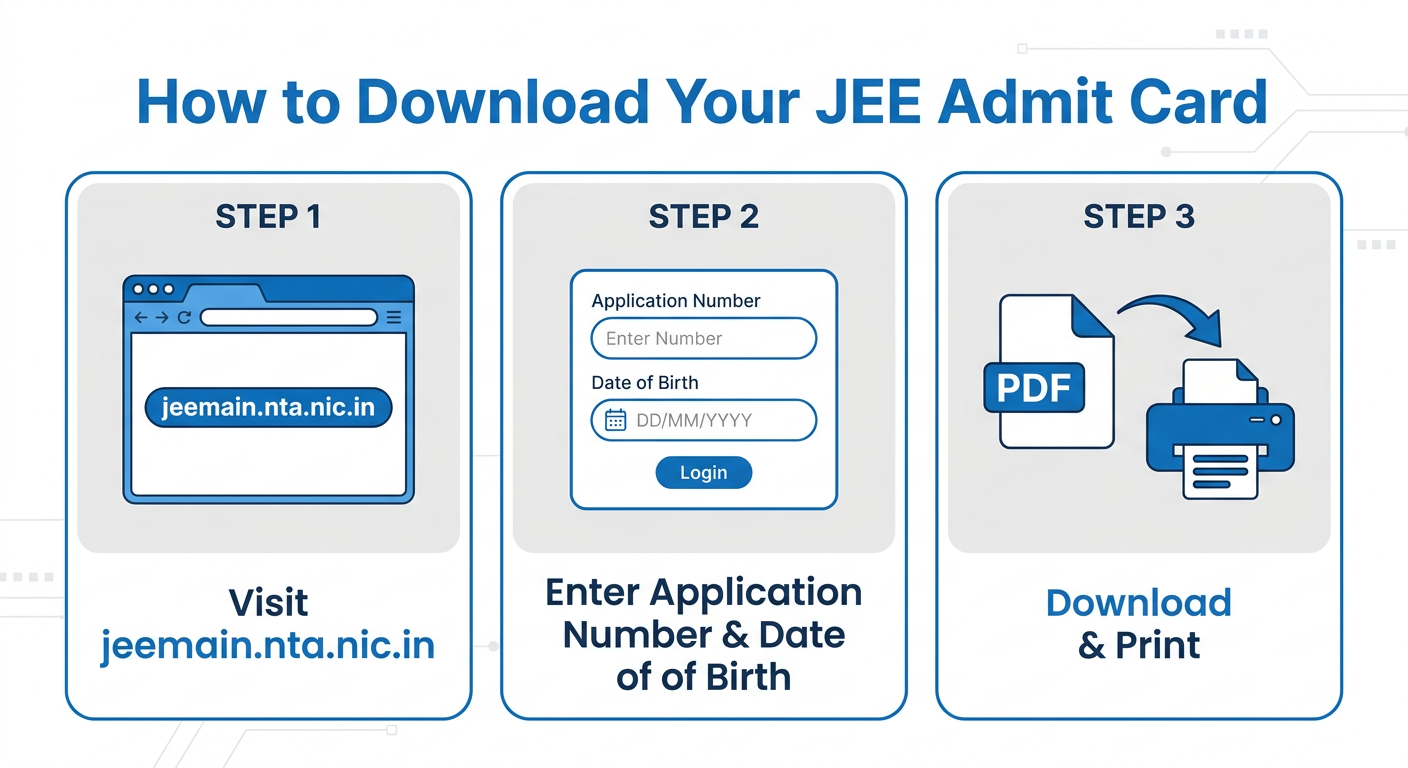
Visit the Official Website: The only place to get your authentic admit card is the official JEE Main NTA website. Head over to https://jeemain.nta.nic.in/. Be wary of any other fake or third-party websites claiming to provide the admit card.
-
Find the Download Link: On the homepage, look for a flashing or highlighted link that says something like “Download Admit Card for JEE (Main) – 202X”. This link is usually very prominent during the release window.
-
Enter Your Credentials: You will be redirected to a login page. Here, you'll need to enter your details to access your admit card. You will typically need:
- Your JEE Main Application Number
- Your Date of Birth (in DD/MM/YYYY format)
- A Security Pin (displayed on the screen)
-
The Self-Declaration Form: Before you see your admit card, you'll be presented with a Self-Declaration (Undertaking) form regarding COVID-19 guidelines or other health advisories. You must read this carefully, fill in the required details (like recent travel history and health status), and submit it. This undertaking is part of the admit card itself.
-
Download and Verify: After submitting the undertaking, your admit card will appear on the screen. Do not just hit the print button yet. First, click the 'Download Admit Card' button and save the PDF file to a safe location on your computer and on a cloud drive like Google Drive. This ensures you have a digital backup.
-
Print Multiple Copies: Take a clear, colour printout of the admit card on an A4 size sheet. It's wise to print at least two or three copies. Keep one in your exam file, one as a spare at home, and maybe even give one to your parents for safekeeping.
Remember to keep your JEE application number handy. If you've forgotten it, there is usually an option on the login page to retrieve it using your registered mobile number and email ID.
What's the Difference? City Intimation Slip vs. JEE Admit Card
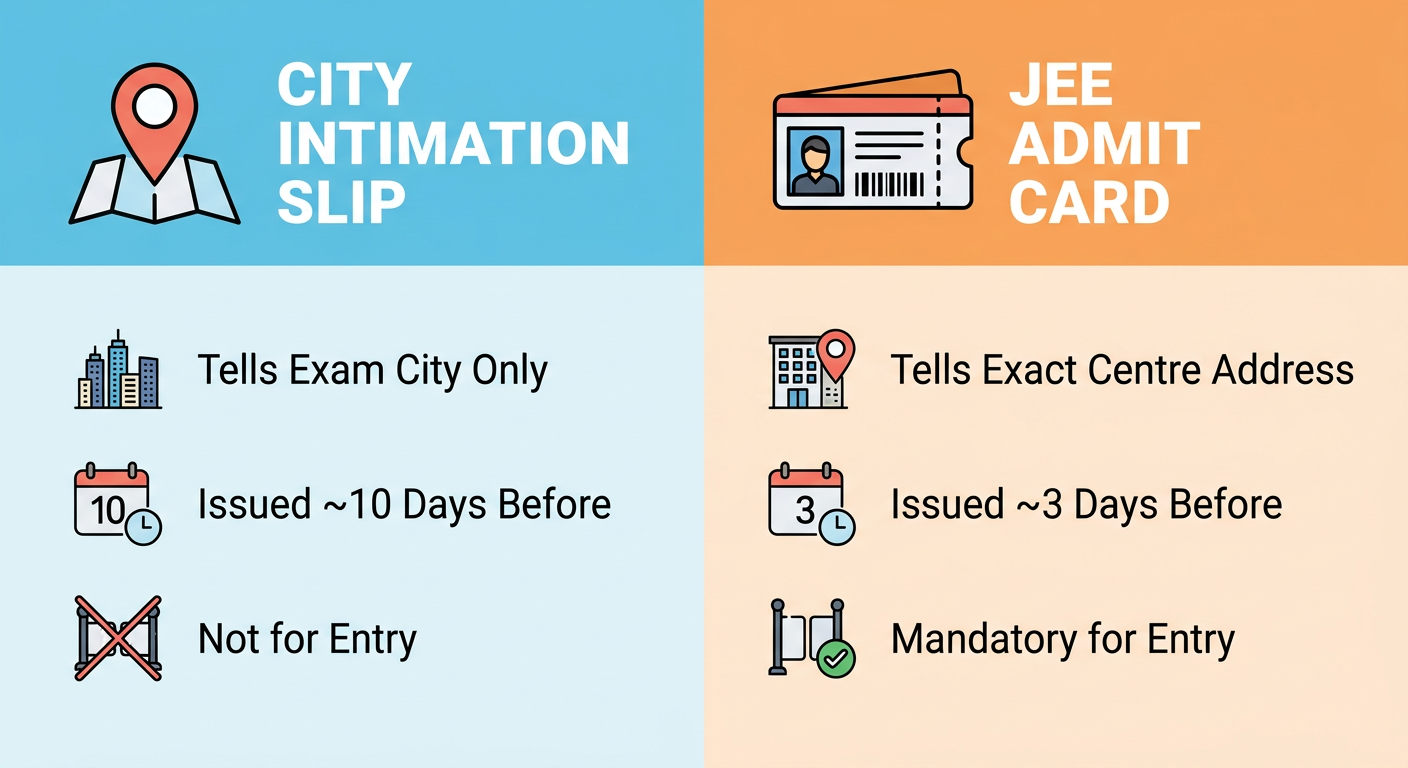
The NTA releases two important documents before the exam, and students often get them confused: the Advance Intimation Slip for Allotment of Exam City and the final Admit Card. Knowing the difference is crucial for planning.
Think of the City Intimation Slip as a heads-up. It is released about a week to ten days before the exam. Its only purpose is to inform you of the city where your exam centre will be located. This allows you and your parents to make necessary travel and accommodation arrangements in advance, especially if the assigned city is far from your home. It does not contain the name or address of your specific exam centre and you cannot use it to enter the exam hall.
On the other hand, the JEE admit card is the final, official hall ticket. It is released only about three days before the exam. It contains all the detailed information: your exact exam centre name and address, your specific shift timing, your roll number, and reporting time.
Here’s a simple breakdown:
| Feature | Advance City Intimation Slip | JEE Admit Card (Final) |
|---|---|---|
| Purpose | To inform you of the exam city for travel planning. | To grant you entry into the exam hall. |
| Release Date | Approx. 7-10 days before the exam. | Approx. 3-4 days before the exam. |
| Centre Details | Only the name of the city. | Full name and address of the exam centre. |
| Exam Entry | NOT valid for entry. | MANDATORY for entry. |
| Contains | Application Number, Candidate Name, Paper, Exam City. | All details from the slip, PLUS Roll Number, Exam Centre, Date & Shift, Reporting Time, Instructions. |
So, use the city slip to plan your journey, but wait for the admit card for the final, actionable details. Both documents are downloaded from the same official NTA portal using your application number and date of birth.
Decoding Your JEE Admit Card: What to Check
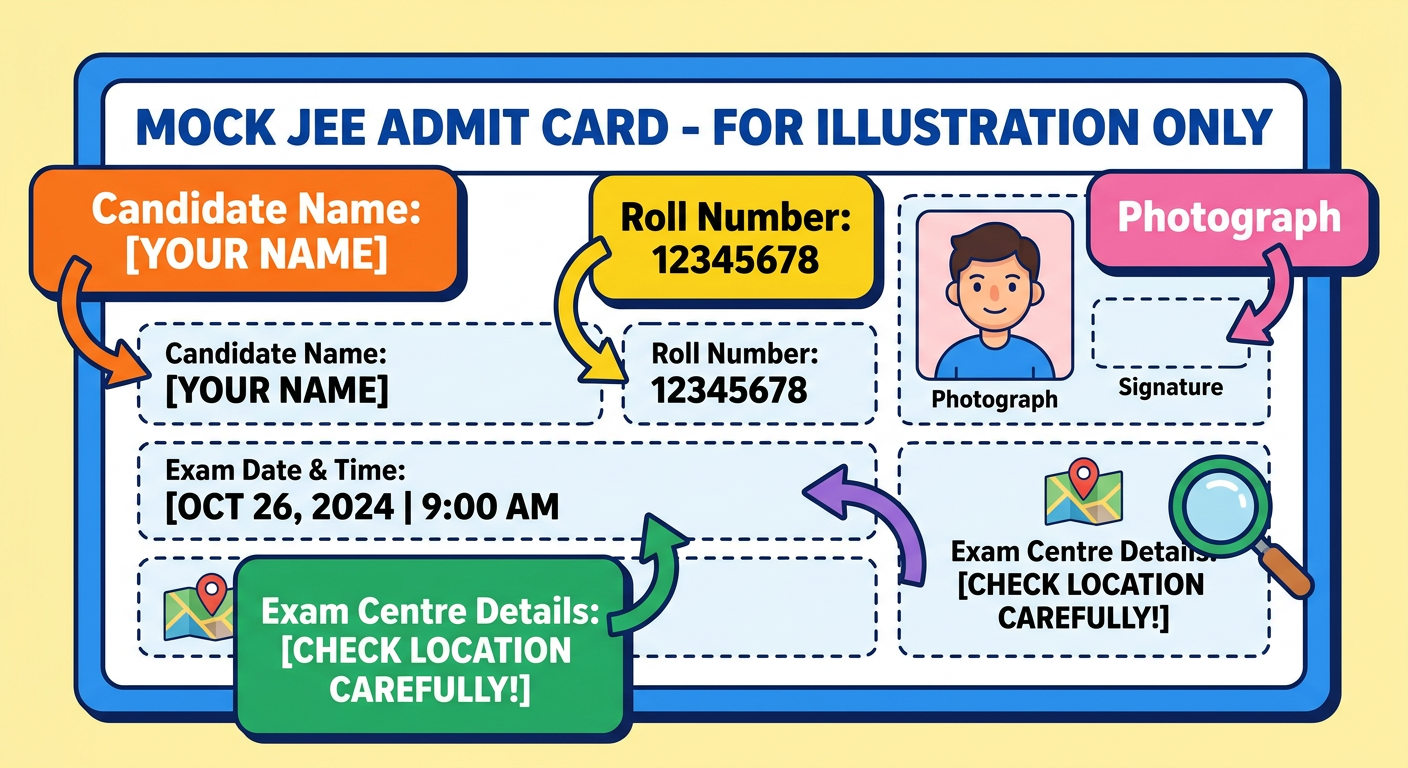
Once you have downloaded your admit card PDF, your job is not done. You need to transform into a detective for a few minutes. Carefully scrutinize every single detail on the document. A small error can lead to big problems on exam day. Panicking is not an option; verification is.
Open the downloaded PDF and get a checklist ready. Here are the things you must verify with extreme care. Match them against the details you entered in your JEE application form.
Your Personal Details:
- Name: Is your name spelled exactly as it is on your photo ID proof (like Aadhaar or school ID)? Even a small spelling mistake can cause issues.
- Father's Name: Check the spelling here as well.
- Date of Birth: Ensure it is correct and matches your official documents.
- Gender: Verify that this is correctly mentioned.
- Category: Check if your category (General, EWS, OBC-NCL, SC, ST) is printed correctly. This is crucial for counselling and admissions later.
- Person with Disability (PwD) Status: If applicable, ensure this is mentioned correctly, along with any provisions for a scribe.
Your Photograph and Signature:
- Photograph: Is the photo on the admit card clearly visible and is it yours? It should be the same photograph you uploaded during the application process.
- Signature: Similarly, check if your signature is clear and matches the one you uploaded.
A mismatch in the photo or signature is a serious issue that needs immediate attention.
Exam Details:
- Roll Number: This is your unique identifier for the exam.
- Application Number: Cross-check this with your application confirmation page.
- Course Name/Paper: Ensure it correctly states B.E./B.Tech (Paper 1), B.Arch (Paper 2A), or B.Planning (Paper 2B), based on what you applied for.
- Medium of Question Paper: Check if the language you selected (e.g., English, Hindi, Gujarati) is correctly mentioned.
- Date of Examination: Note down the exact date.
- Shift and Timing: This is critical. Check your shift (morning or afternoon) and the exact reporting time, gate closing time, and test duration.
Exam Centre Details:
- Name and Address of Exam Centre: Read the full address carefully. Google the location immediately to understand how to get there and how long it will take.
Finally, read all the Important Instructions for candidates printed on the subsequent pages of the admit card. These are not just suggestions; they are rules you must follow.
Found a Mistake on Your Admit Card? Here’s What to Do
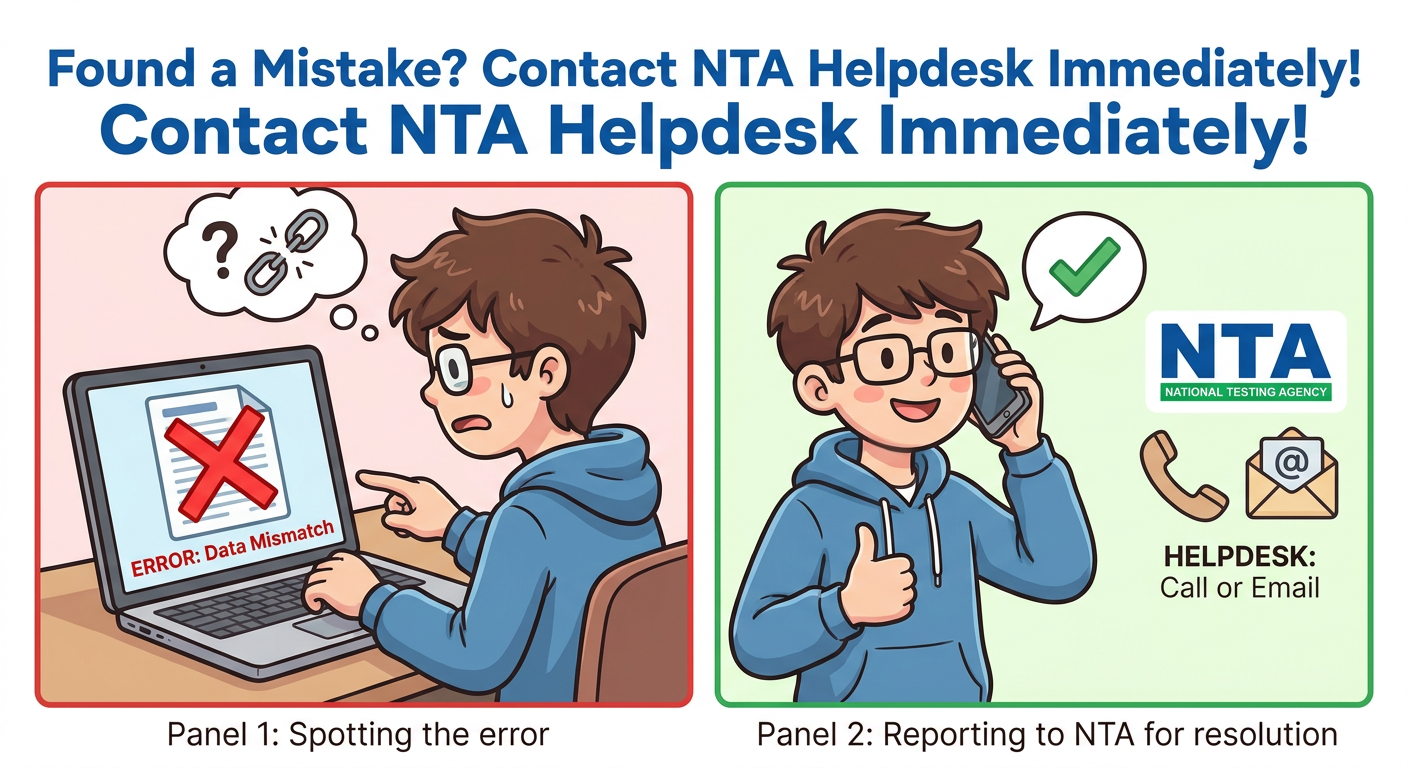
Discovering an error on your JEE admit card can be scary, but it's important to act quickly and calmly. The NTA has a dedicated process to handle such issues. Do not try to edit the PDF yourself or simply ignore the problem, hoping it won't matter on exam day. It will.
If you find any discrepancy in your personal details, photograph, signature, or any other information on the admit card, you must immediately contact the NTA Helpdesk. Here's how to proceed:
-
Gather Your Documents: Before you call or email, keep your JEE Main Application Confirmation Page, your registered email, and your registered mobile number handy. You will need to provide your Application Number to the support staff.
-
Contact the NTA Helpline: You can reach out to the NTA through their official helpline numbers. The numbers are usually provided on the NTA website and on the admit card itself.
- Helpline Numbers: Check the latest Information Bulletin or the NTA website for the current, active phone numbers.
- Email: You can also email the NTA explaining your issue. Clearly state your name, application number, and the exact discrepancy you have found. It's a good idea to attach a scanned copy of your admit card with the error highlighted, and a copy of your confirmation page.
-
Be Patient but Persistent: The helplines can be very busy, especially just after the admit card release. Keep trying until you get through. When you speak to them, explain the issue clearly and politely. Note down the name of the person you spoke to and any reference number they provide for your complaint.
-
Follow Their Instructions: The NTA official will guide you on the next steps. They might correct the detail in their database and ask you to re-download the admit card after a certain period. In some cases, they might ask you to carry proof of identity (like your Aadhaar card or Class 10 mark sheet) to the exam centre, along with an affidavit or undertaking stating the correction.
What if the photo or signature is wrong?
This is considered a high-priority issue. If the photograph or signature on your admit card is not yours or is unclear, you must contact the NTA immediately. They will provide specific instructions. Often, you might be asked to bring your original passport-sized photographs (the same one you uploaded) and a valid photo ID to the exam centre, where an official will verify your identity.
The key is to act fast. The sooner you report the issue, the more time the NTA has to resolve it, giving you peace of mind before the exam.
Essential JEE Exam Day Guidelines: What to Bring (and What to Leave)
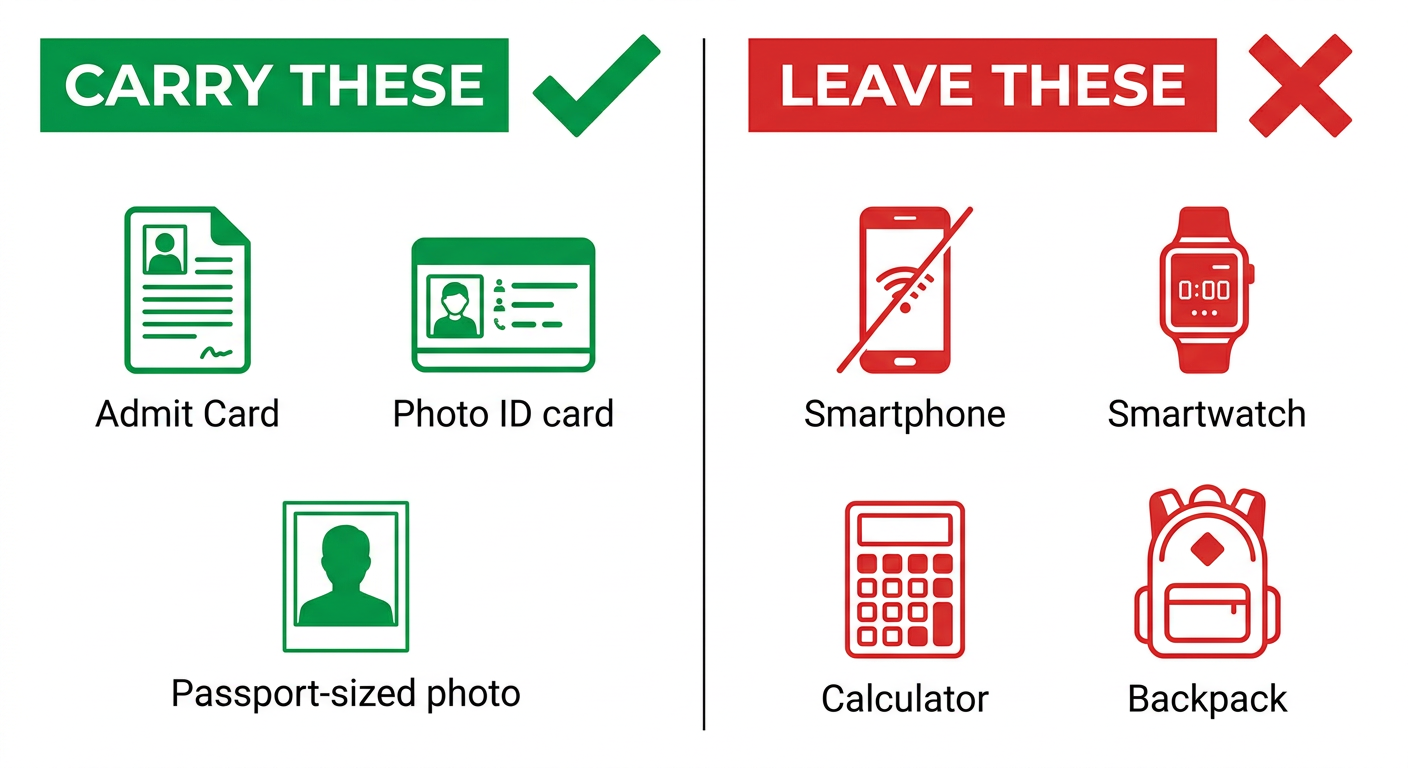
On the day of the exam, your focus should be solely on Physics, Chemistry, and Maths, not on arguing with a security guard about a prohibited item. Knowing the exam day rules is just as important as knowing your syllabus. Your admit card itself lists most of these guidelines, and you must read them thoroughly.
What to Carry to the Exam Centre
Think of this as your exam day survival kit. Pack only what is necessary and permitted. It's best to carry these items in a transparent pouch or folder.
-
Printed Copy of the Admit Card: This is non-negotiable. A clear, printed copy (preferably colour) on an A4 sheet. Make sure all pages are printed, including the self-declaration undertaking and instructions.
-
Completed Self-Declaration (Undertaking): The form is on the first page of your admit card. You must fill it out, paste your photograph, and put your left-hand thumb impression before reaching the centre. Your signature should be done in the presence of the invigilator inside the exam hall.
-
One Passport-Size Photograph: This should be the same photograph as the one you uploaded in your application and have pasted on the admit card. This photo will be pasted on the attendance sheet at the centre.
-
A Valid, Original Photo ID Proof: This is extremely important. It must be an original document, not a photocopy or a digital scan on your phone. Accepted IDs include:
- Aadhaar Card (with photograph)
- School Identity Card
- PAN Card
- Driving License
- Voter ID
- Passport
- Class 12 Board Admit Card with photograph
-
PwD Certificate (if applicable): Candidates claiming relaxation under the PwD category must carry their PwD certificate issued by a competent authority.
-
A Simple Transparent Ballpoint Pen: While rough sheets and a pen are often provided, it's a good practice to carry your own simple, transparent pen.
-
Personal Hand Sanitizer (50ml): A small, transparent bottle is allowed.
-
Transparent Water Bottle: You can carry your own water bottle, but it must be transparent with no labels.
What NOT to Carry: The Prohibited Items List
Bringing any of these items can lead to disqualification. Security is very strict.
- Electronic Devices: Mobile phones, smartwatches, fitness trackers, calculators, earphones, microphones, pagers, or any other electronic gadget are strictly banned.
- Bags and Baggage: Handbags, backpacks, and purses are not allowed inside the exam hall. Most centres do not have a locker facility, so it's best to leave your bags with your parents or at home.
- Stationery: Do not carry instrument/geometry boxes, pencil boxes, or any kind of paper or textual material other than your admit card and ID.
- Food and Drinks: Eatables (packed or open) are not allowed, except for diabetic students who may be permitted to carry fruits or sugar tablets after inspection.
- Jewelry and Accessories: Avoid wearing any metallic items, jewelry, or accessories. Even belts with large buckles can be an issue during frisking.
Dress simply and comfortably. Follow the instructions of the invigilators and staff at the centre. Reaching the centre well before the reporting time mentioned on your admit card will help you complete all pre-exam formalities without any stress.
Preparing for the Big Day: Beyond the Admit Card
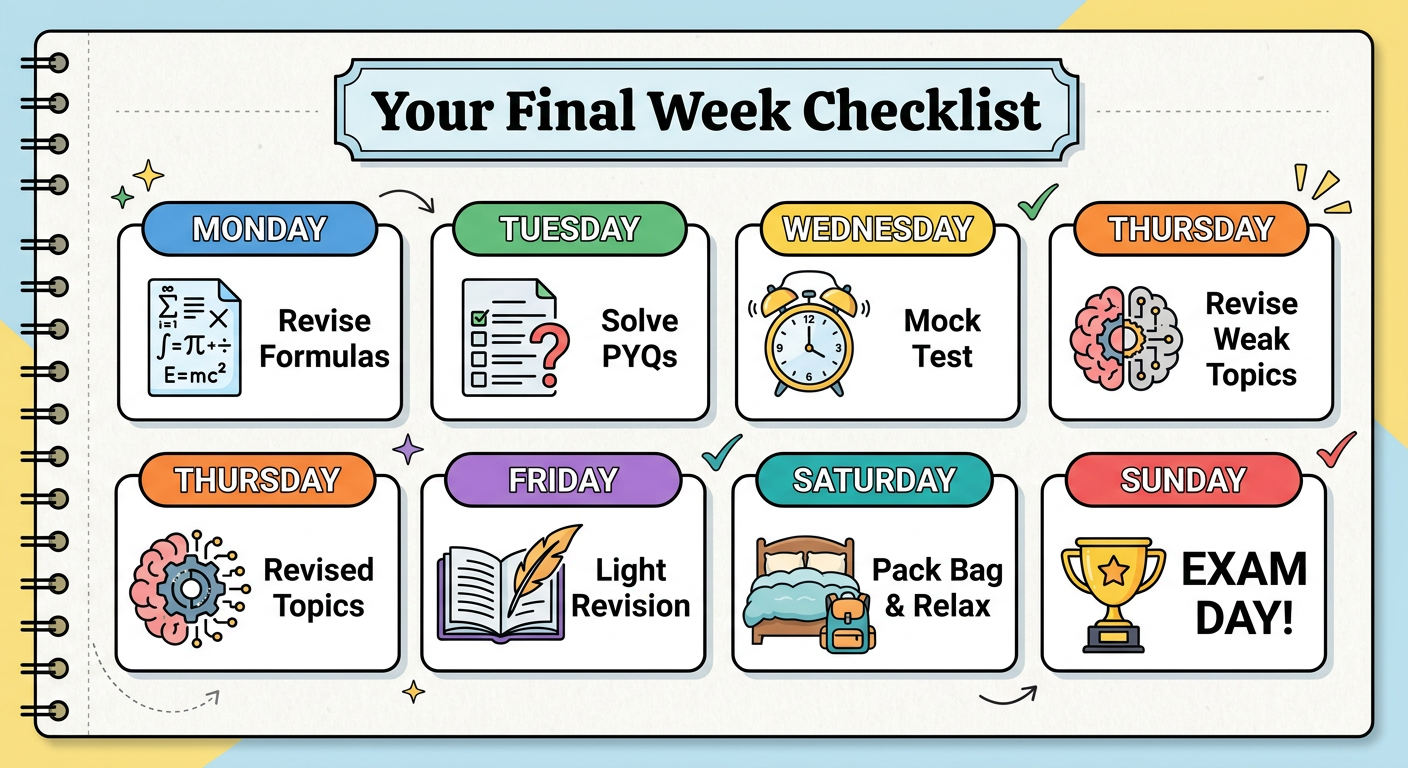
With your JEE admit card secured and all logistical details sorted, the final week is all about consolidating your hard work and getting into the right mindset. This is not the time for panic or learning new, complex topics. It's time for smart revision and self-care.
Final Week Revision Strategy
Your goal now is to reinforce what you already know and build confidence. Cramming new chapters will only lead to confusion and anxiety.
- Focus on Revision: Go through your short notes, mind maps, and highlighted concepts. Don't try to re-read entire textbooks.
- Master the Formulas: This is the perfect time to repeatedly go over key formulas. A strong grasp on formulas can help you solve many questions directly. Check out our curated formula sheets to make this process easier.
- Solve Previous Year Questions (PYQs): Instead of solving new books, focus on Previous Year Questions. This helps you understand the exam pattern, the types of questions asked, and manage your time effectively. Try to solve at least one full paper in a timed setting to simulate the exam environment.
- Take Mock Tests Strategically: You can take one or two mock tests in the final week, but not on the last day. The purpose is to fine-tune your strategy, not to judge your performance. Analyze your mistakes and revise the corresponding concepts. You can find high-quality mock tests in our free resources hub.
- Prioritize High-Weightage Topics: Spend a little more time revising topics that you know have historically carried more weight in the JEE Main exam.
The Day Before the Exam
What you do in the 24 hours before the exam can significantly impact your performance. The goal is to stay calm, relaxed, and prepared.
- Visit the Exam Centre (If Possible): If your exam centre is in the same city, it's a great idea to do a dry run the day before. Visit the location to understand the travel time, traffic conditions, and exact location. This will prevent any last-minute panic on exam day.
- Organize Your Documents: Pack your 'exam day kit' the night before. Put your printed admit card, original ID proof, and passport-sized photographs in a transparent folder. Keep it in a place where you won't forget it.
- Stop Studying: Avoid intense study sessions. Your brain needs rest to perform optimally. A light revision of formulas or your short notes is fine, but stop all serious studying by the evening.
- Eat a Light, Healthy Meal: Avoid heavy, oily, or junk food. Eat a simple, nutritious dinner that you are used to.
- Get a Good Night's Sleep: This is perhaps the most critical advice. Aim for at least 7-8 hours of sound sleep. A well-rested mind is far more efficient and less prone to silly mistakes.
- Stay Positive: Avoid talking to friends who might be panicking. Listen to some calming music, talk to your parents, or do something that relaxes you. Trust your preparation and believe in yourself.
After the Exam: What's Next?
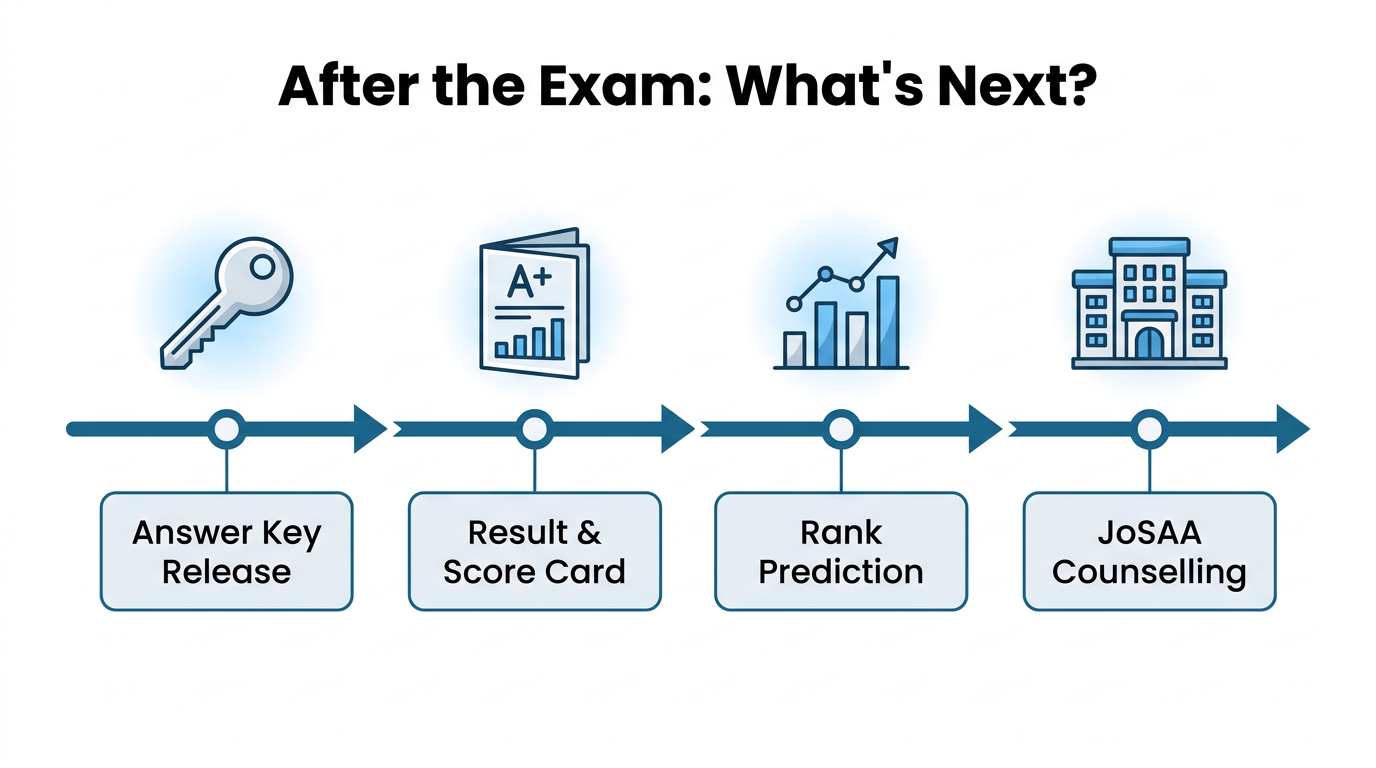
Once you step out of the exam hall, take a deep breath. You have crossed a major milestone! The journey, however, isn't over yet. Knowing the next steps in the process will help you stay informed and prepared for what's to come.
1. Answer Key and Response Sheet Release: A few days after the exam concludes, the NTA will release the provisional answer keys for all the papers along with your recorded responses (your response sheet). You can download these from the official JEE Main website using your login credentials.
2. Challenge the Answer Key: This is your opportunity to review the official answers. If you believe an answer provided by the NTA is incorrect, you can challenge it. There is a specific window (usually 2-3 days) and a non-refundable processing fee for each question challenged. If your challenge is found to be correct, the answer key will be revised, and the fee is sometimes refunded.
3. Final Answer Key and Result Declaration: After considering all the challenges, the NTA will release the Final Answer Key. Your result will be calculated based on this final key. The JEE Main result is typically announced in the form of a Score Card, which will contain your percentile scores for Physics, Chemistry, and Maths, as well as your overall NTA Score.
4. Rank Prediction and Analysis: The moment your exam is over, the anxiety to know your potential rank begins. While you wait for the official results, you can get a fairly accurate estimate of where you stand. Use our JEE rank predictor tool by inputting your expected score. This tool uses historical data and trends to give you an idea of your potential All India Rank, helping you manage expectations and start researching colleges.
5. JEE Advanced (for the eligible): If you are among the top ~2.5 lakh candidates who clear the JEE Main cutoff, you become eligible to appear for JEE Advanced, the gateway to the prestigious IITs. The registration for JEE Advanced usually begins shortly after the JEE Main results are declared.
6. Counselling and Seat Allotment (JoSAA): After the final ranks are out, the Joint Seat Allocation Authority (JoSAA) conducts the centralized counselling for admission to IITs, NITs, IIITs, and other Government Funded Technical Institutes (GFTIs). This is a multi-round process where you fill in your preferred choices of colleges and branches, and seats are allocated based on your rank, category, and choices.
The process after the exam is as structured as the preparation before it. Stay updated with official announcements on the NTA JEE website and the JoSAA portal.
FAQs
When is the JEE Main admit card released?
The JEE Main admit card is typically released about 3 to 4 days before the scheduled exam date. However, the NTA releases an Advance City Intimation Slip around 7-10 days prior, which informs you about the city of your exam centre.
What if I forget my application number?
Don't worry. On the admit card download portal, there is usually a "Forgot Application Number?" link. Clicking on it will allow you to retrieve your application number by entering your name, parent's name, date of birth, and the security pin displayed.
Can I show a digital copy of the admit card?
No. A digital copy (e.g., on a mobile phone or tablet) of the admit card is strictly not allowed. You must carry a printed hard copy of the admit card to the examination centre. It's recommended to carry a clear colour printout on A4 size paper.
How many copies of the admit card should I print?
It is highly recommended to print at least two or three copies. Carry one to the exam centre, and keep the others as a backup. You will also need the admit card during the counselling and admission process, so it's good to have spares.
What photo ID is valid for the JEE exam?
You must carry an original, valid, and non-expired photo identification card. Accepted forms include Aadhaar Card, School ID, PAN Card, Driving License, Voter ID, Passport, or Class 12 Board Admit Card with a photograph. Photocopies or digital versions are not accepted.
Do I need a colour printout of the admit card?
While the NTA instructions usually just say "a clear printout," it is always better to take a colour printout if possible. A colour print makes your photograph clearer and helps in easy verification by the exam centre staff. It minimizes any potential issues regarding the clarity of your photo.