CBSE Syllabus 2026-27: Check Class 10, 12 Important Topics & Download PDF - Shiksha.com
Get the direct link to download the official CBSE syllabus 2024-25 for Class 10 and 12. Understand key changes and how they impact your JEE & NEET prep.
5 min read
Ever seen a heist movie? The crew doesn't just show up and hope for the best. They spend days studying blueprints, learning every corridor and camera angle. For you, the CBSE board exams, JEE, and NEET are the vault. And your blueprint? It's the official CBSE syllabus.
Without it, you're just studying blind. You might waste weeks on topics that were removed or, even worse, completely miss chapters that are guaranteed to have questions. Getting this right is the first step to a smart preparation strategy.
Every year, the Central Board of Secondary Education releases the official curriculum, and sticking to it is non-negotiable. This guide will show you exactly where to find the latest CBSE syllabus for the 2024-25 academic session and how to use it to your advantage for competitive exams.
What is the Latest CBSE Syllabus for 2024-25?
 The latest CBSE syllabus for the academic year 2024-25 has been released by the board. The big news? There are no major reductions or deletions like we saw during the COVID-19 pandemic years. The curriculum has largely stabilized.
This means you are expected to cover the full, rationalized syllabus. 'Rationalized' simply means the content has been adjusted over the last few years to remove overlapping topics and reduce some of the burden. But don't mistake this for a 'reduced' syllabus. It's comprehensive and forms the bedrock of your board exam preparation.
Always, and I mean always, download the syllabus from the official source. Unofficial coaching websites or old PDFs can have outdated information, leading you down the wrong path. The official document is your single source of truth.
How to Download the CBSE Syllabus PDF (Class 10 & 12)
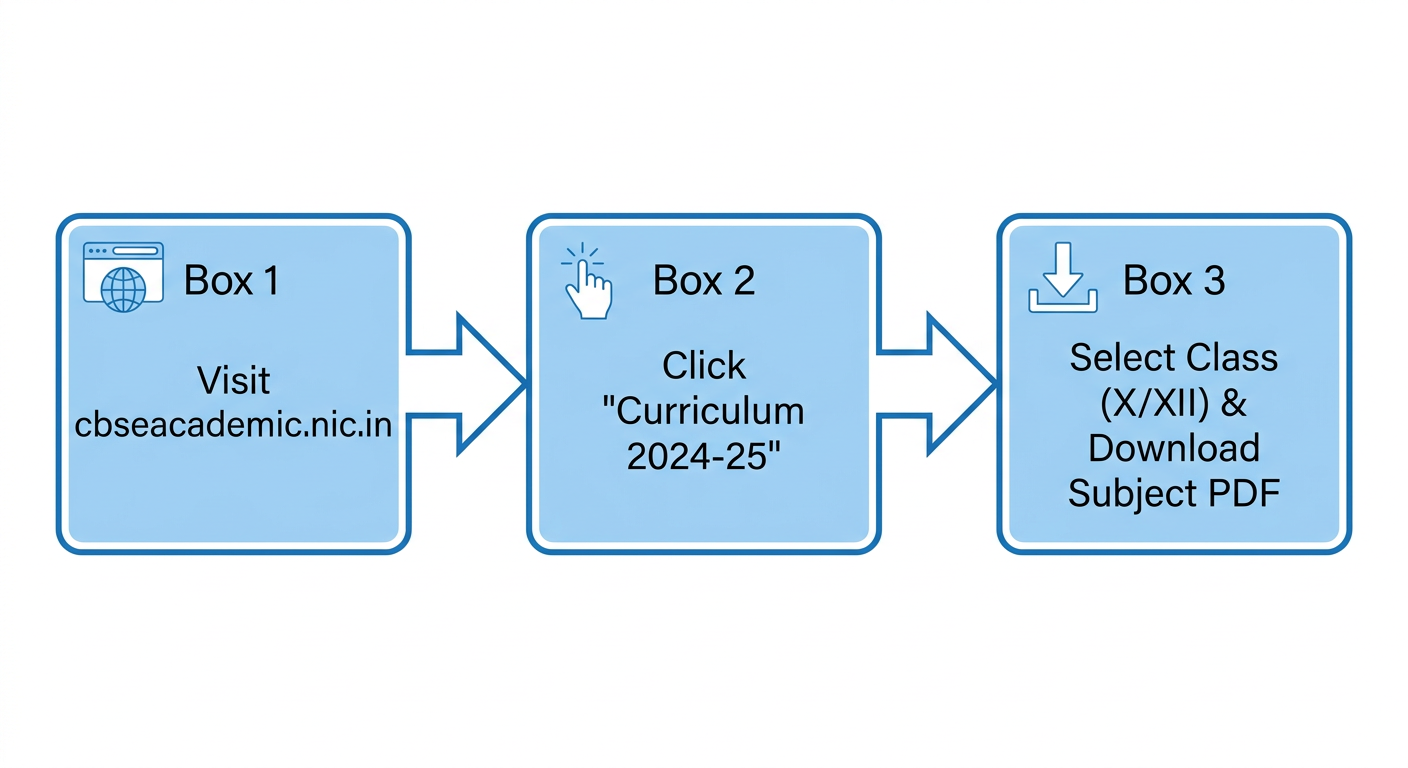 Finding the official document is easy if you know where to look. Don't get lost in a sea of confusing links. Here is a simple, step-by-step process to get your hands on the official CBSE syllabus PDF download.
- Go to the Official Website: Navigate to the CBSE's academic portal. The main board website is https://www.cbse.gov.in/, and from there you can find the 'Academics' section.
- Find the 'Curriculum' Link: On the academic website's main menu, look for a tab or link labeled "Curriculum". Click on it.
- Select the Academic Year: You'll see options for different years. Choose "Curriculum for the Academic Year 2024-25".
- Choose Your Class: The page will be split into two main links:
- Secondary Curriculum (Class IX-X)
- Senior Secondary Curriculum (Class XI-XII)
- Download Your Subjects: After clicking your class level, you'll see a list of subjects. You can download the curriculum for each subject individually. Save these PDFs on your phone and laptop for quick reference.
Why the CBSE Class 12 Syllabus is Your Weapon for JEE & NEET
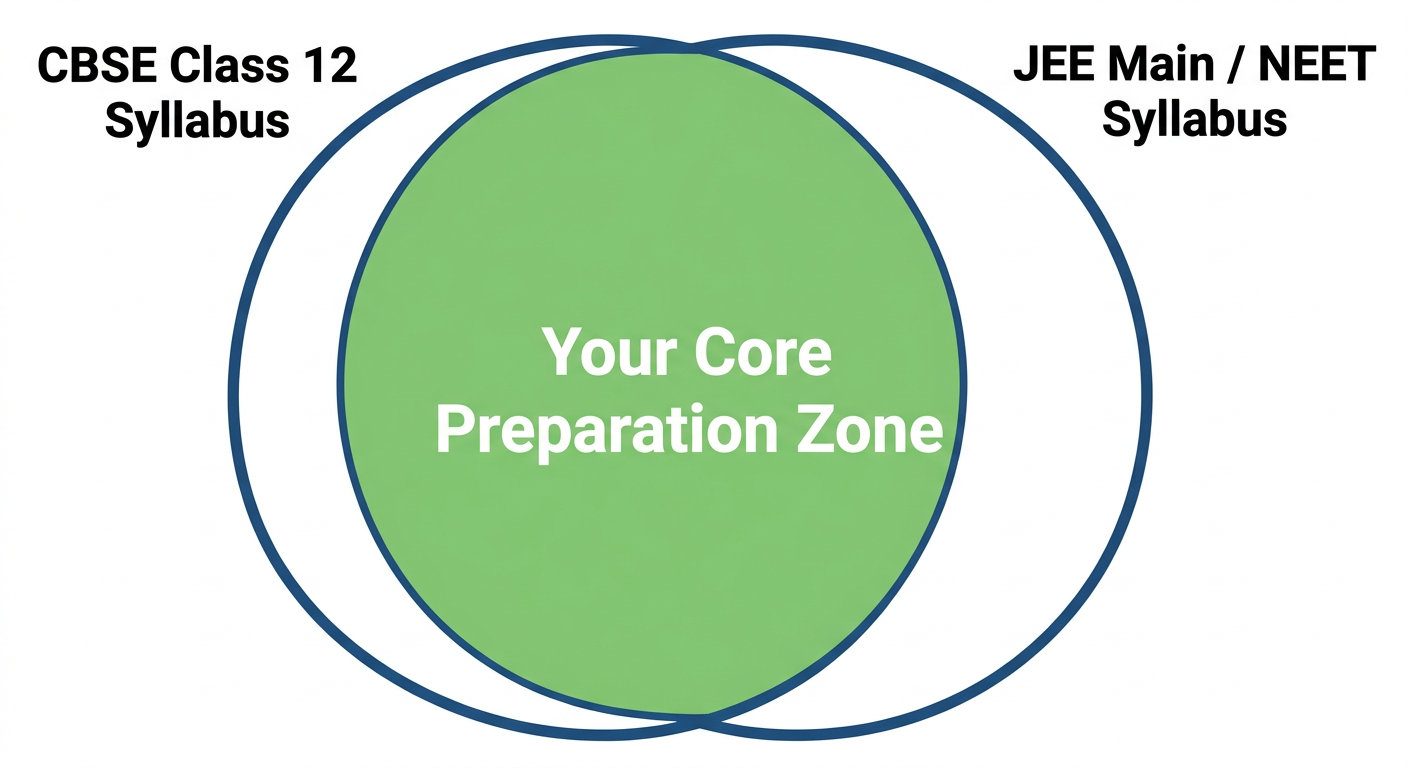 If you're a JEE or NEET aspirant, listen closely. The CBSE class 12 syllabus is not just for your board exams. It is the single most important document for your competitive exam preparation. Think of it as hitting two targets with one arrow.
The syllabus for JEE Main and NEET is heavily based on the Class 11 and 12 CBSE curriculum. The National Testing Agency (NTA), which conducts these exams, uses the NCERT textbooks as its primary reference. The topics, concepts, and even the scope of what can be asked are defined first and foremost by what's in your board syllabus.
By mastering your CBSE class 12 syllabus topic by topic, you are simultaneously building a rock-solid foundation for a huge portion of the JEE and NEET syllabus. This is the most efficient way to study. Once you know exactly what topics are in the syllabus, the next logical step is to see how they are tested. The best way to do that is by solving previous year questions to understand the pattern and difficulty level.
For a detailed chapter-wise mapping between the boards and competitive exams, you can explore our detailed syllabus breakdown to plan your studies perfectly.
FAQs
Has the CBSE syllabus been reduced for 2024-25?
No, for the 2024-25 session, CBSE is continuing with the full, rationalized syllabus. There are no major COVID-style reductions. Always refer to the official PDF for your specific subject to be sure.
Where can I find the official CBSE syllabus PDF download?
The only official and trustworthy source is the CBSE Academic website (cbseacademic.nic.in). You can find it under the 'Curriculum' tab for the current academic session.
Is the CBSE syllabus enough for JEE Main?
The CBSE Class 11 and 12 syllabus covers a very large part of the JEE Main syllabus, especially for Physics and Chemistry. However, JEE Main requires a deeper, problem-solving approach and may include a few niche topics not heavily emphasized in boards. The CBSE syllabus is your essential foundation.
How is the CBSE syllabus different from the NEET syllabus?
The NEET syllabus is almost entirely based on the CBSE Class 11 and 12 syllabus for Physics, Chemistry, and Biology. If you thoroughly master your NCERT textbooks and the official CBSE curriculum, you are extremely well-prepared for NEET.
What is a 'rationalized' syllabus?
A 'rationalized' syllabus is one that has been restructured to remove redundant or overlapping topics and to lighten the overall curriculum load. The current 2024-25 syllabus is a continuation of this rationalized structure.