CBSE Class 12 West Asia Special Exam Date Sheet 2026 Released; To Begin On October 23 - News18
Master the CBSE board exam with our ultimate guide covering exam patterns, marking schemes, preparation strategies, and how to balance boards with JEE/NEET prep.
13 min read
Remember that scene from 3 Idiots? The one where a character defines a machine in simple terms, only to be shot down for not using the textbook definition. It perfectly captures the pressure students feel. That pressure cooker is never hotter than during the CBSE board exam.
For millions of students across India, this isn't just another school test. It's a rite of passage. It's the culmination of years of hard work, late nights, and countless tuition classes. More importantly for you, the aspiring engineer or doctor, it’s the foundational battle before the great wars of JEE and NEET.
Many students think they can ignore boards and just focus on competitive exams. This is a huge mistake. The CBSE board exam is not just a hurdle to jump; it's the training ground that builds your strength for what comes next.
This guide will break down everything you need to know. We'll cover the pattern, the strategy, and the mindset required to not just pass, but to score brilliantly. Let's decode this exam and turn that pressure into performance.
What Exactly is the CBSE Board Exam?
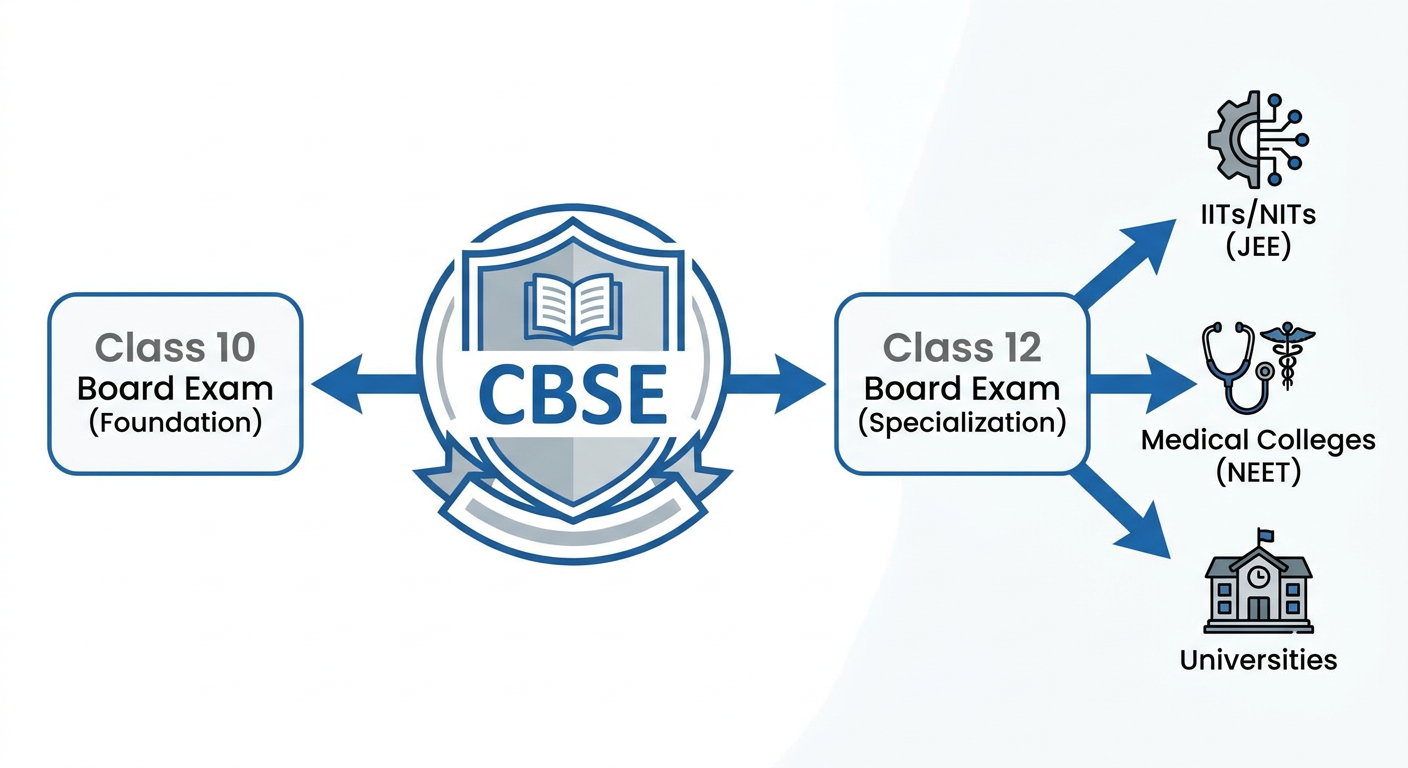
Before we dive into strategy, let's get the basics right. The CBSE board exam is a public examination conducted at the national level by the Central Board of Secondary Education. It’s the final exam for students of Class 10 and Class 12 in schools affiliated with CBSE.
Think of CBSE as the governing body that sets the curriculum, course materials, and examination style for thousands of schools in India and abroad. Its standardized approach ensures that students everywhere are learning and being tested on a common framework. This is why it's one of the most recognized school boards in the country.
The Class 10 exam marks the end of a student's general education. After this, you choose a specific stream like Science, Commerce, or Arts. The Class 12 board exam is the big one. It’s the final exam of your school life and the scores you get here can significantly impact your college admissions and even your eligibility for exams like JEE Advanced.
The Real Story: Why Board Marks Still Matter for JEE and NEET Aspirants
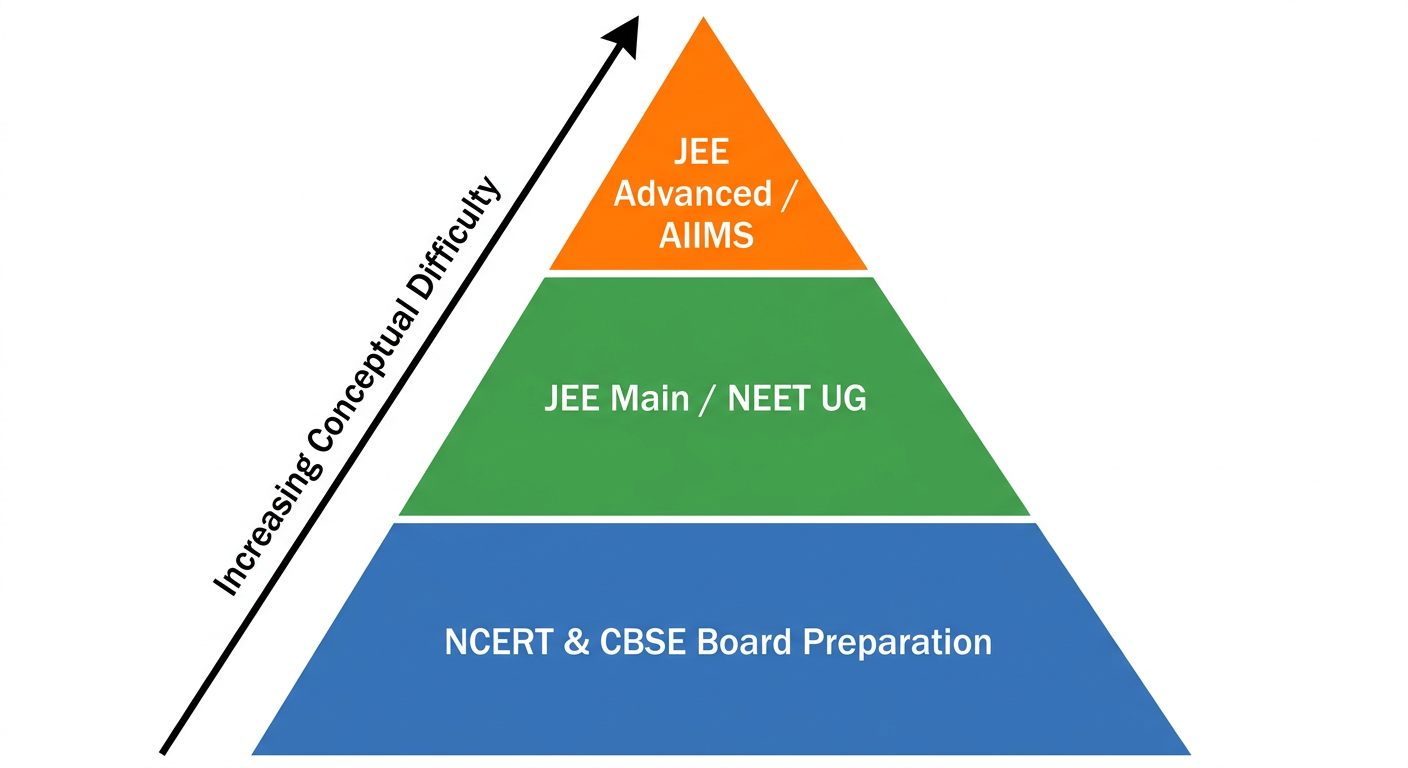
Let’s clear the air. There's a popular myth in coaching centers: “Board marks don’t matter, just focus on the entrance exam.” This is dangerously wrong advice, and here’s why.
First, the eligibility criteria for top engineering colleges are strict. To get into IITs, NITs, and other Centrally Funded Technical Institutions (CFTIs), you generally need to be in the top 20 percentile of your board or score at least 75% aggregate marks in your Class 12 board exam. This rule can change, so always check the latest information on the official JEE Advanced site, but the principle remains. Imagine cracking JEE Advanced but not being eligible to get a seat. It's a nightmare scenario.
Second, and more importantly, strong preparation for the CBSE board exam builds the foundation for your competitive exam success. The entire syllabus for JEE Main and NEET is almost entirely based on the Class 11 and 12 NCERT curriculum. When you study deeply for your boards, you are automatically covering the fundamental concepts needed for entrance exams. A strong foundation makes learning advanced topics much easier. You can't build a skyscraper on a weak base.
Decoding the CBSE Exam Pattern: Class 10 vs. Class 12
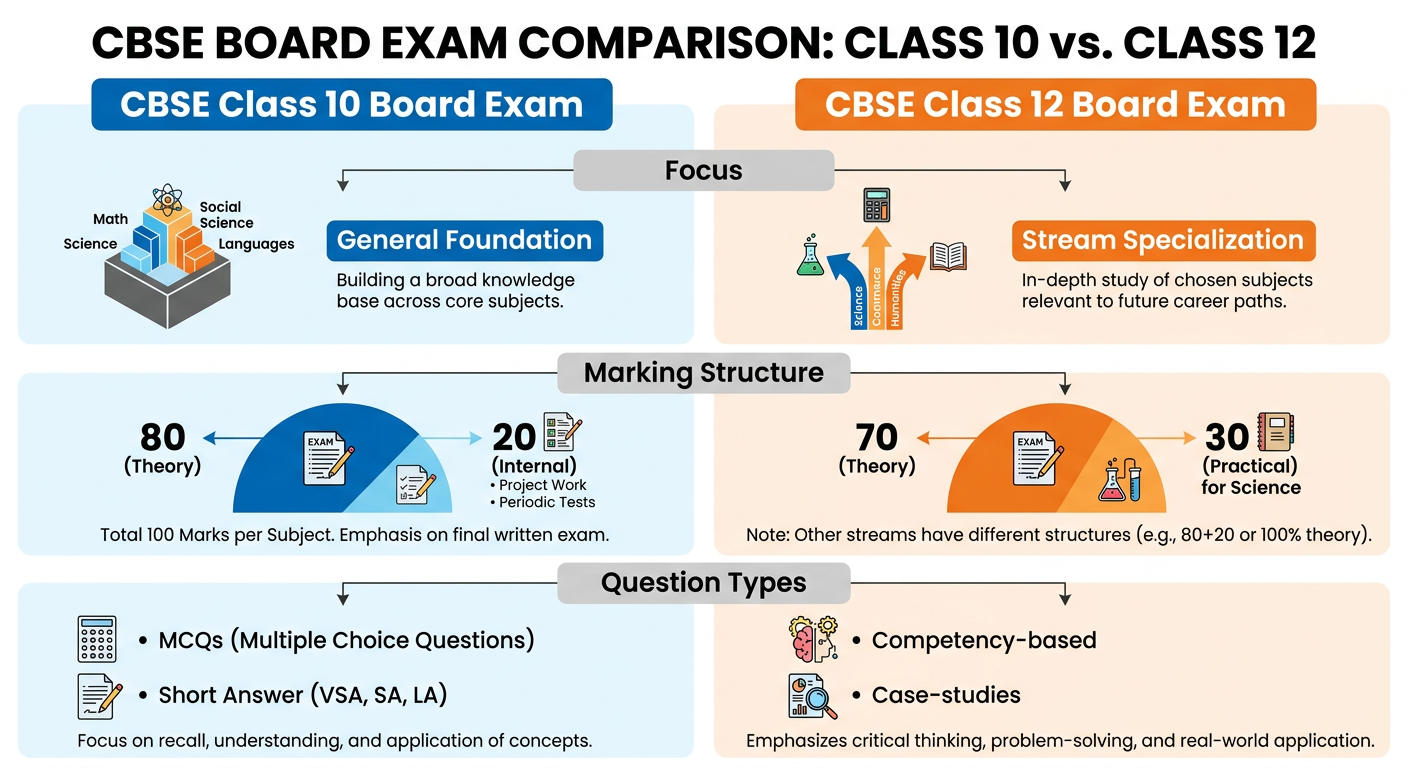
Understanding the structure of the exam is the first step in planning your preparation. The question paper isn't just a random list of questions; it's a carefully designed test. While the core philosophy is similar, the CBSE exam pattern differs between Class 10 and Class 12.
Knowing the blueprint, the types of questions, and the marks distribution helps you study smarter, not just harder. Let's break them down.
CBSE Class 10 Exam Pattern Explained
The Class 10 board exam is designed to test your overall understanding of core subjects. Typically, you have five compulsory subjects: two languages (like English and Hindi/regional language), Mathematics, Science, and Social Science. You might also have an additional skill-based subject.
For most subjects, the evaluation is split. The final theory paper, the main board exam, carries 80 marks. The remaining 20 marks come from internal assessment, which includes periodic tests, notebook submission, and other subject-related activities conducted throughout the year. This 80+20 split encourages consistent effort, not just last-minute cramming.
The question paper itself is a mix. You'll find Multiple Choice Questions (MCQs), very short answer questions, short answer questions, and long answer questions. This variety tests everything from your memory of facts to your ability to analyze and explain concepts in detail.
Understanding the CBSE Class 12 Board Exam Pattern
The CBSE Class 12 board exam is more specialized, focusing on your chosen stream. For science students aiming for JEE/NEET, the key subjects are Physics, Chemistry, Mathematics, and/or Biology, along with English which is compulsory.
The structure here also involves theory and practical components, but the split is different. For science subjects like Physics, Chemistry, and Biology, the theory paper is for 70 marks, and the practical exam is for 30 marks. For Mathematics, the theory paper is for 80 marks with 20 marks for internal assessment. This heavy weightage on practicals means you cannot afford to ignore your lab work.
The question papers in Class 12 are more application-based. They include competency-focused questions in the form of MCQs, case-based questions, and source-based integrated questions. The goal is to test your deep understanding and problem-solving skills, not just rote memorization. This is excellent training for the kind of thinking required in JEE and NEET.
Mastering the CBSE Syllabus and Marking Scheme
If the exam pattern is the 'how', then the syllabus is the 'what'. You cannot prepare effectively without knowing exactly what you need to study and which topics are more important than others.
Simply reading through the entire textbook isn't a strategy. A smart student knows how to prioritize based on the official syllabus and the marking scheme. This is where you can gain a significant edge.
Where to Find the Official CBSE Syllabus
The single source of truth for your syllabus is the official CBSE website. Do not rely on old books, information from seniors, or unverified websites. The syllabus can be revised, and topics can be added or removed. Always download the latest curriculum for your academic session directly from the CBSE Academic website.
Make a printout of the syllabus for each of your subjects. Use it as a checklist to track your progress. As you complete a topic, tick it off. This gives you a clear visual of what's done and what's left. You can find detailed breakdowns in our JEE/NEET syllabus section as well.
The Importance of Weightage and Blueprints
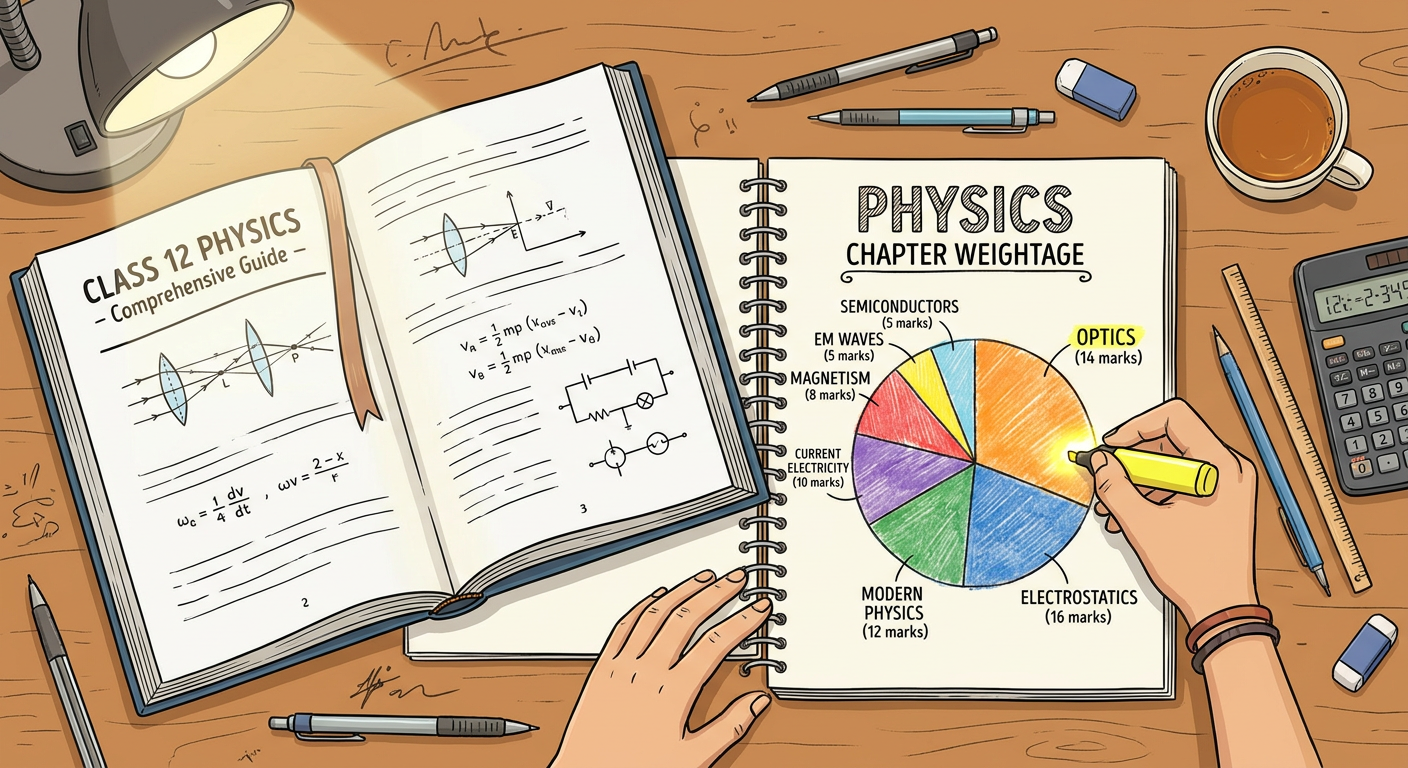
CBSE provides sample question papers and marking schemes which give you a blueprint of the exam. This blueprint reveals the chapter-wise weightage, meaning how many marks are allocated to each unit or chapter. This is gold dust for your preparation.
For example, you might discover that in Physics, Optics and Modern Physics have a very high weightage. This tells you to dedicate more time and effort to mastering these units. It helps you plan your revision schedule effectively. Focusing on high-weightage topics can significantly boost your final score. Sample papers are the best way to understand the paper's structure, question types, and how to manage your time during the exam.
The NCERT Bible: Your Foundation for Board and Competitive Exams

If there is one piece of advice every single topper, teacher, and expert will give you for the CBSE board exam, it is this: master your NCERT textbooks.
Calling them the 'Bible' for exam preparation is not an exaggeration. These books are your single most important resource. The CBSE question paper is designed almost entirely from the content within the NCERT books. Sometimes, questions are picked directly from the book's solved examples or exercises.
For JEE Main and especially for NEET, the importance of NCERT is paramount. A huge portion of the questions in these exams are directly derived from concepts, lines, and diagrams in the NCERT textbooks. If your NCERT concepts are not crystal clear, you will struggle with the competitive exams.
Studying NCERT effectively means reading each line carefully. Pay attention to diagrams, tables, and the summary at the end of each chapter. Solve every single in-text question, solved example, and end-of-chapter exercise. For subjects like Chemistry, reading NCERT is non-negotiable. Many students make the mistake of jumping to advanced reference books while their NCERT foundation is weak. Don't be that student.
Strategic Preparation: How to Score 95%+ in Your CBSE Board Exam
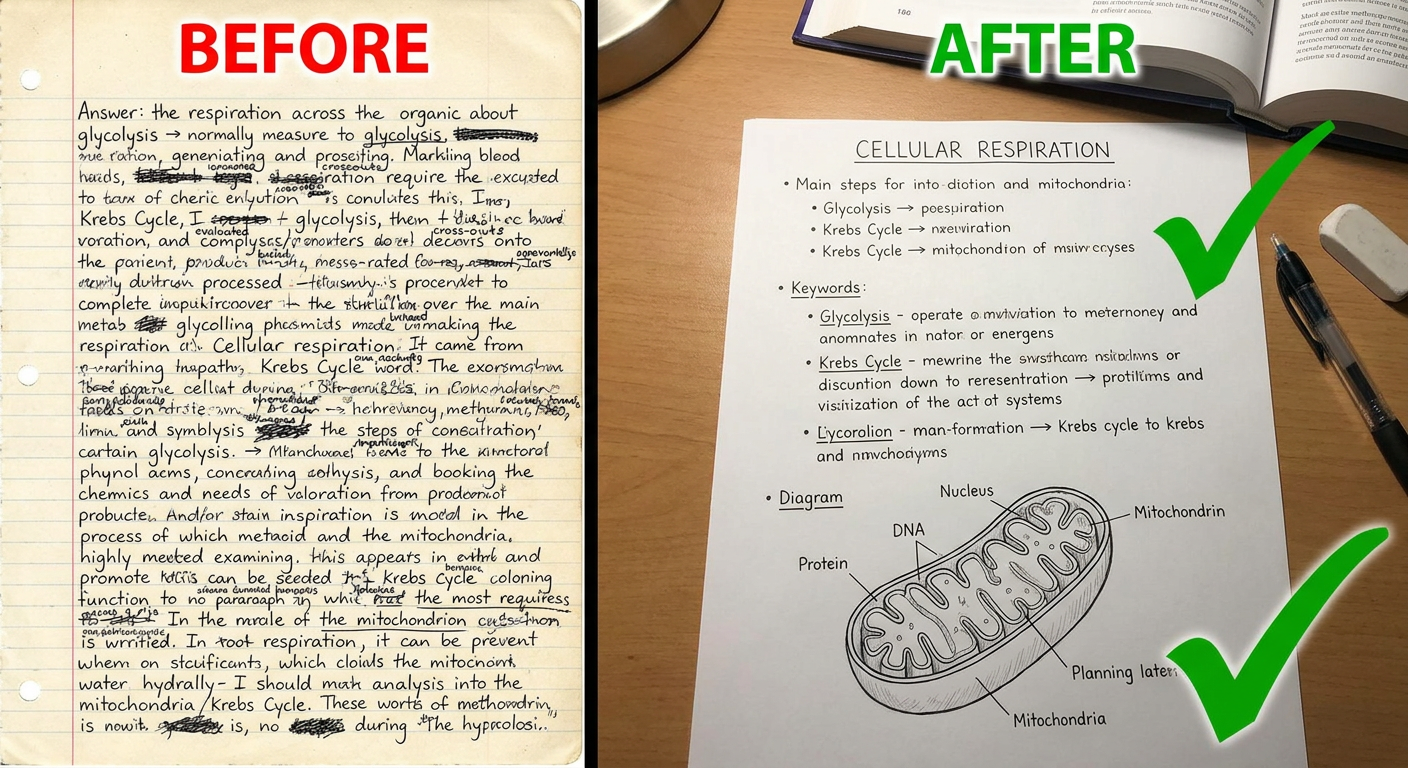
Scoring above 95% in the board exam is not about magic. It's about consistent effort and a smart strategy. Knowing the syllabus and books is one thing, but how you manage your time and present your answers is what separates the toppers from the rest.
It requires a disciplined approach, focusing on both knowledge acquisition and answer presentation. Let’s look at the key pillars of a high-scoring strategy.
Creating a Realistic Timetable that Works
A timetable is your roadmap. Without it, you're just wandering aimlessly. But a good timetable is one you can actually follow. Don't create an impossibly ambitious schedule that has you studying 16 hours a day. That leads to burnout.
Your timetable should be balanced. Allocate specific hours for board exam subjects, JEE/NEET preparation, and importantly, for breaks and rest. Use techniques like the Pomodoro method (studying in focused 25-minute blocks) to maintain concentration. Ensure you have dedicated slots for revision every day and every week. What you study is useless if you can't recall it during the exam.
The Power of Previous Year Questions (PYQs)
Solving past papers is one of the most effective preparation techniques. It's like having a sneak peek into the examiner's mind. When you solve previous year questions, you understand the exact language, style, and difficulty level of the questions that are asked.
You'll notice that certain types of questions and topics are repeated frequently. This helps you identify the most important areas to focus on. Solving PYQs under timed conditions also prepares you for managing the 3-hour exam duration effectively. Aim to solve at least the last 5-7 years of papers for each subject.
Answer Writing Skills: The Art of Presentation
In the CBSE board exam, how you write your answer is as important as the answer itself. The examiner has to check hundreds of papers. A neat, well-structured answer makes their job easier and creates a positive impression.
Always write in points where possible. Underline important keywords and phrases. For science subjects, draw neat, labeled diagrams with a pencil wherever relevant. For long answers, use a simple structure: introduction, main body with points, and a conclusion. Start a new section on a fresh page. These small things can make a huge difference to your final score. It shows the examiner that you have clarity of thought.
Juggling Act: Balancing Board Exams with JEE/NEET Preparation

This is the ultimate challenge for every science student in Class 11 and 12. How do you manage both without compromising on either? It’s a stressful balancing act, but it is entirely possible with the right plan.
The key is integration, not separation. For most of the year, focus on topics that overlap between boards and your competitive exam syllabus. When you study a chapter like Electrostatics in Physics, study it to a level that covers both your board exam requirements and the problem-solving needs of JEE.
In the final 3-4 months before the board exams, your focus should shift. Dedicate about 70-80% of your study time to board-specific preparation. This means practicing subjective answer writing, revising derivations, and solving sample papers. Use the remaining 20-30% of your time to stay in touch with your competitive exam preparation, perhaps by solving a few objective questions daily.
Remember, the period after your boards and before the entrance exams is crucial for intensive revision. You won't forget everything. Once your boards are over, you can use a JEE rank predictor tool to see where you stand and fine-tune your final push.
Common Mistakes to Avoid During Your Board Exam Prep
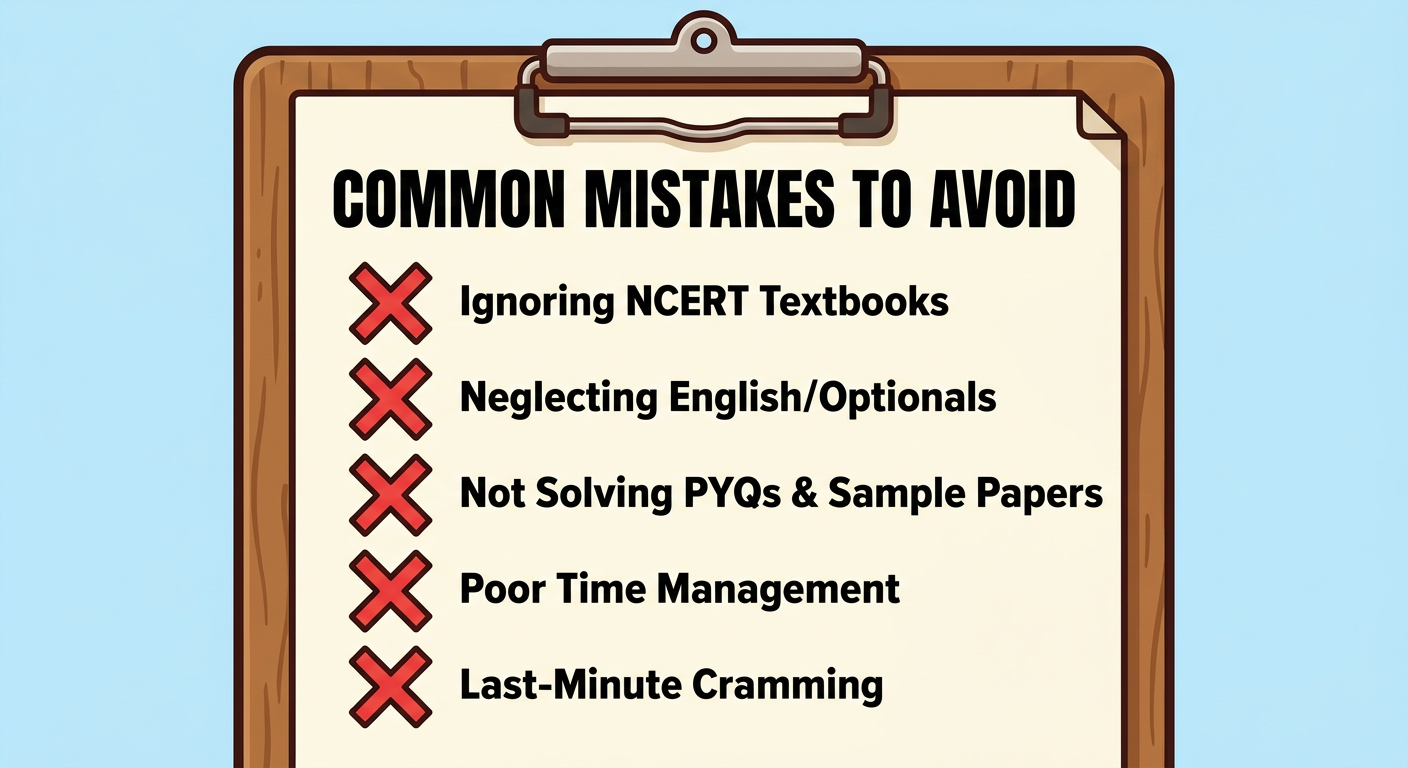
Sometimes, success is not just about what you do, but also about what you don't do. Many bright students lose marks because of a few common, avoidable mistakes. Being aware of these pitfalls can help you stay on the right track.
First, the biggest mistake is ignoring NCERT and jumping straight to heavy reference books. As we've discussed, this is a recipe for disaster. Build your base first.
Second, don't neglect languages and optional subjects. Subjects like English can be very scoring and can significantly boost your overall percentage. A 95 in Physics and a 75 in English will pull your average down. Give these subjects the respect they deserve.
Other common errors include poor time management during the exam, not solving enough sample papers, and letting pre-exam anxiety get the better of you. Practice mock tests in a simulated exam environment to build your confidence and time management skills. And remember to stay calm; a relaxed mind performs much better.
FAQs
Is the CBSE board exam very difficult?
The CBSE board exam is designed to be a comprehensive test of your understanding of the syllabus, not an impossibly difficult one. The questions are based on the NCERT curriculum. With consistent preparation and smart work, it is very achievable to score high marks.
How many hours should I study for board exams?
There is no magic number. It's about the quality of your study, not the quantity. A focused 6-8 hours of self-study each day is generally more effective than a distracted 12 hours. Consistency is key.
Can I prepare for JEE and boards simultaneously?
Yes, absolutely. Millions of students do it successfully every year. The strategy involves integrating your preparation for the common syllabus and then shifting focus specifically towards boards in the last few months before the exam.
What is the 75% criteria for IITs?
The 75% criteria (or being in the top 20 percentile of your board) is an eligibility requirement for admission into IITs, NITs, and other CFTIs, after you have qualified in the JEE. It applies to the aggregate marks in your Class 12 board exam. This rule can be revised, so always check the latest official brochure from the Joint Admission Board (JAB).
Where can I get the official date sheet for the CBSE board exam?
The official date sheet is released by CBSE on its official website, https://www.cbse.gov.in/. Do not trust dates circulated on social media or unofficial websites until you have verified them on the official CBSE portal.
Is it necessary to join coaching for board exams?
Coaching is not a necessity, but a personal choice. Many students score exceptionally well with just self-study and their school's guidance. If you are disciplined and can follow a routine, you can master the syllabus on your own using NCERT books and online free resources.