CBSE board exams 2027: Class 10, 12 private candidate forms out, details here - India Today
Everything you need to know about appearing for the Class 10 or 12 CBSE board exam as a private candidate, including eligibility, application, and prep.
8 min read
CBSE Board Exam for Private Candidates: Your Second Chance
Remember the ending of 3 Idiots? Rancho’s success had nothing to do with a traditional degree and everything to do with his knowledge. Real life isn't a movie, but the core lesson is true. Sometimes, the straight road isn't the only one that leads to your destination. Maybe your last board exam attempt didn't go as planned. Perhaps you took a gap year for JEE prep and now need to improve your Class 12 score. It’s okay. This is not a failure. It’s a detour.
Appearing for the CBSE board exam as a private candidate is a powerful option that gives you a second chance to achieve your academic goals. It allows you to retake the exam without being enrolled in a regular school. This path is your opportunity to fix past mistakes, boost your score, and get back on track for your dream college, whether it's an IIT, NIT, or a top medical school. Let's break down exactly how you can do it.
What is a CBSE Private Candidate in the Board Exam?
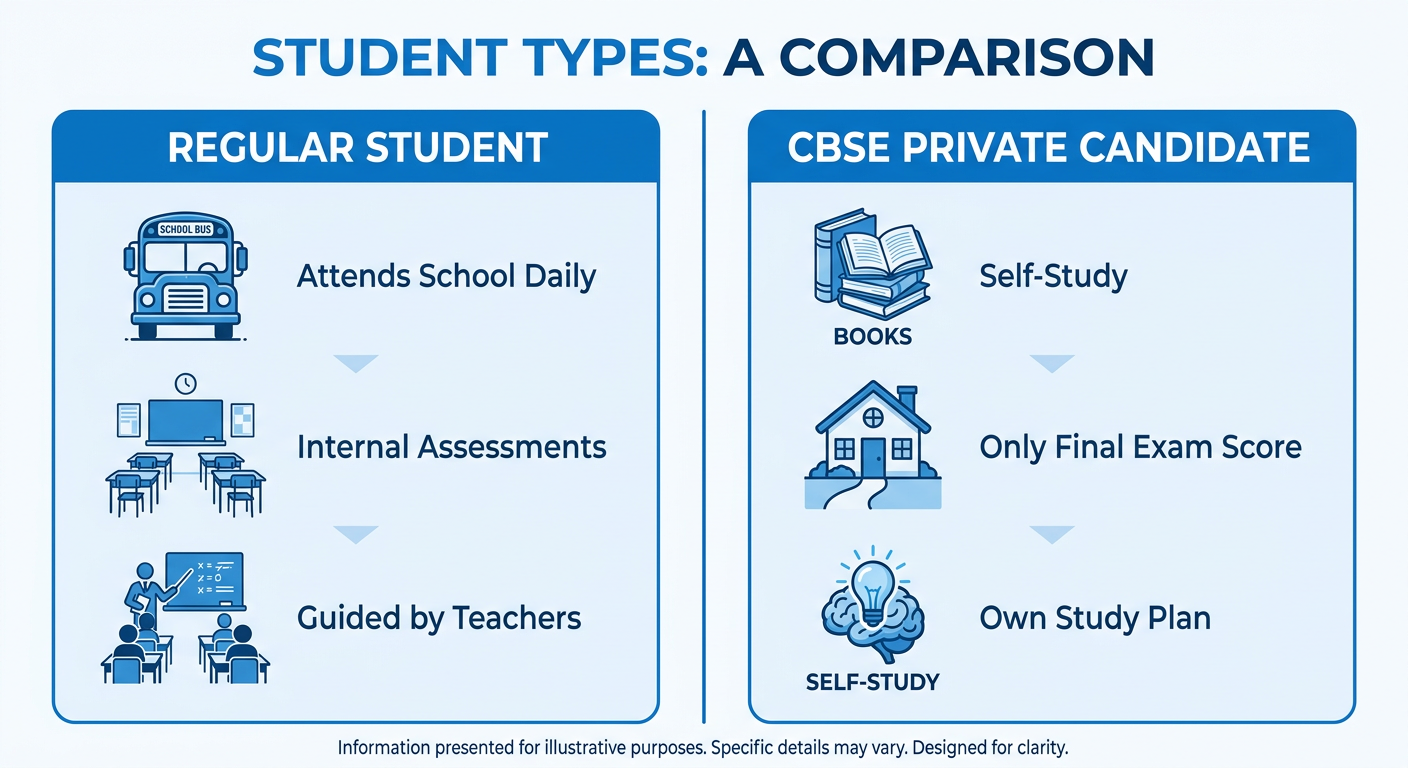
So, what does it actually mean to be a 'private candidate' in the context of the CBSE board exam? It’s simpler than it sounds. A private candidate is a student who is eligible to appear for the CBSE Class 10 or Class 12 board examinations without attending a regular, affiliated school. You study on your own, you register directly with the CBSE board, and you appear for the exam at an allotted centre.
Many students worry if this will look bad on their record. Let’s clear that up right now: It won't. The marksheet and passing certificate issued to a private candidate are exactly the same as those given to a regular student. They hold the same value and recognition for college admissions and future opportunities.
This route is designed for students in specific situations, offering flexibility and a way to continue their education without the structure of daily school attendance. It’s a legitimate and respected pathway.
Who is Eligible to be a CBSE Private Candidate?
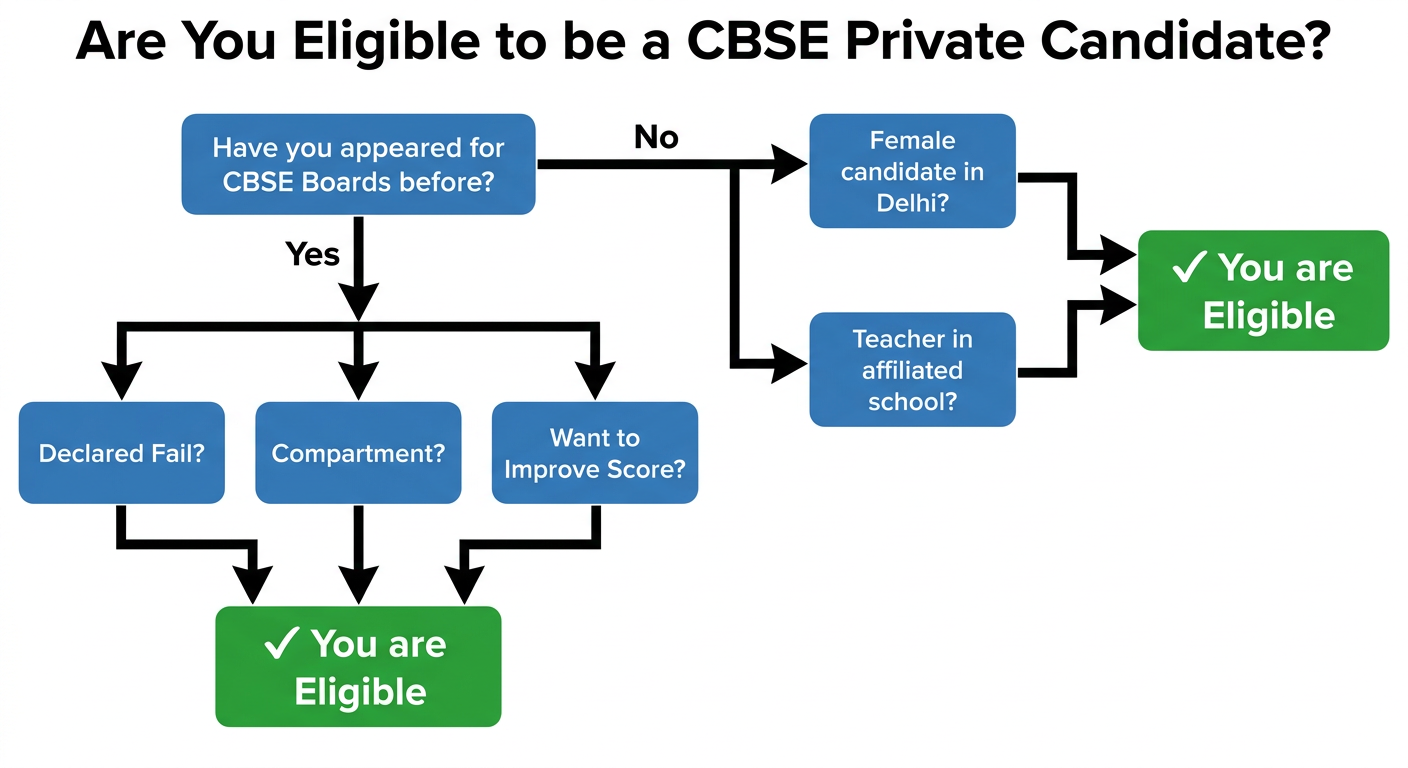
Not everyone can just decide to take the board exam privately. The Central Board of Secondary Education (CBSE) has laid out specific CBSE board exam eligibility rules. You must fall into one of the following categories to apply. Make sure you check which one applies to you.
For Class 12 Improvement/Compartment Exams
This is the most common category. You can apply as a private candidate if you are a student who has already appeared for a CBSE board exam. This includes:
- Fail Candidates: Students who were declared 'FAIL' in the main examination of the previous year.
- Compartment Candidates: Students who were placed in the CBSE compartment exam category in the main exam or the first chance compartment exam.
- Improvement Candidates: Students who passed the exam but wish to take the CBSE class 12 improvement exam to better their performance in one or more subjects. This is a very common reason for JEE and NEET aspirants aiming to clear the 75% eligibility criteria.
Other Specific Categories
CBSE also allows certain other students to apply. These rules can be very specific, so always check the latest circular on the official website. Broadly, this includes:
- Teachers working in educational institutions affiliated with the board.
- Female candidates who are bona-fide residents of the National Capital Territory of Delhi.
- Physically handicapped students who are bona-fide residents of the National Capital Territory of Delhi and have a disability certificate.
The 'Gap Year' Student
Many students who drop a year to focus solely on JEE or NEET preparation fall into this bucket. If you passed your boards but your score wasn't high enough for the IIT/NIT eligibility criteria (the 75% rule, for example), appearing as a private candidate to improve your score is the perfect solution. It allows you to dedicate your year to competitive exam prep while ensuring you meet the board percentage requirements.
The Application Process: Step-by-Step Guide
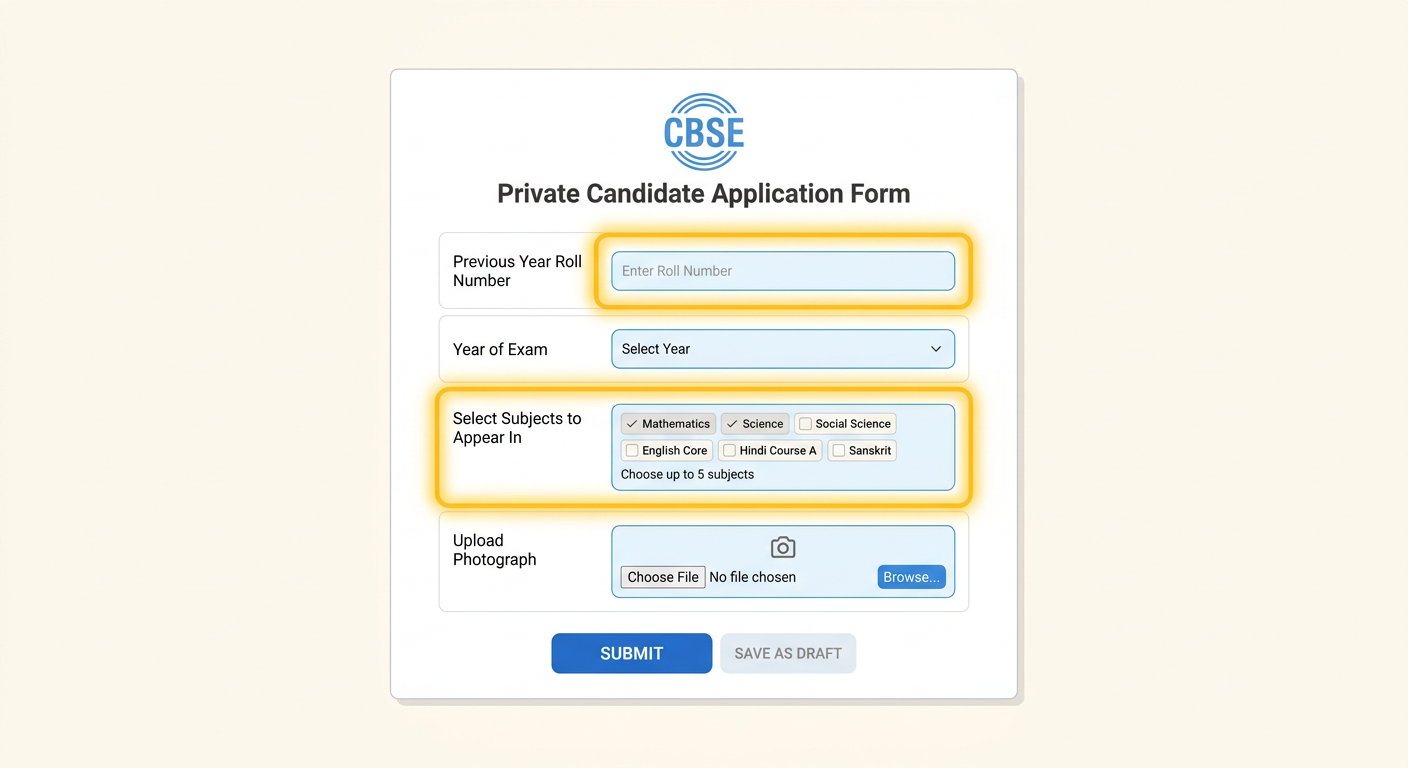
The process might seem intimidating, but it’s quite straightforward if you follow the steps. The key is to be attentive and meet all deadlines.
-
Watch for the Official Notification: CBSE usually releases the CBSE private candidate form and notification on its official academic website. You can find it at the official CBSE site. This typically happens around August to October for the exams scheduled in February/March of the next year. Mark your calendar and check the site regularly.
-
Fill the Online Application Form: The process is entirely online. You'll need your previous board exam roll number, school number, and exam year. The form will automatically fetch your details. You will then need to select the subjects you want to appear for and choose your exam city.
-
Upload Required Documents: You will need to upload scanned copies of your recent passport-sized photograph and signature. In some cases, you might need to upload your previous marksheet. Ensure the files are in the specified format and size.
-
Pay the Examination Fee: The fee must be paid online through the available payment gateways. Be very careful to pay before the last date. There is usually a late fee for a short period, but it's best to avoid that stress.
-
Save the Confirmation Page: After successful payment, a confirmation page will be generated. This is your proof of application. Save it, print it, and keep it safe until you receive your admit card.
Preparing for the CBSE Board Exam as a Private Candidate
Studying on your own requires discipline, but it also gives you immense flexibility to plan your schedule, especially if you're also preparing for JEE or NEET.
Master the Syllabus and Exam Pattern
The first step is to know your battlefield. The syllabus and exam pattern for private candidates are exactly the same as for regular school students. You must download the latest syllabus from the CBSE website. For a clearer understanding, check out our detailed JEE/NEET syllabus breakdown, which often overlaps significantly with the board exam syllabus.
The Power of NCERT and PYQs
Your most important weapons are the NCERT textbooks. Master them from cover to cover. For the CBSE board exam, questions are often asked directly from the book's content, examples, and exercises.
Once you have a good grip on the concepts, the next step is practice. Solving Previous Year Questions (PYQs) is non-negotiable. It helps you understand the question patterns, marking scheme, and important topics. You can find a huge collection of previous year questions on our platform to get started.
Balancing Boards with JEE/NEET
This is the ultimate challenge. The key is smart work, not just hard work. Focus on the subjects common to both boards and your competitive exam: Physics, Chemistry, and Maths/Biology. Your in-depth preparation for JEE/NEET will cover most of the concepts.
However, you must practice writing subjective answers, which is different from solving MCQs. Dedicate at least 1-2 hours daily specifically for board-style answer writing. For extra support and to connect with peers on the same journey, consider joining online student community groups.
FAQs
Who can appear as a private candidate in the CBSE board exam?
A student who has previously appeared in a CBSE Board Exam and was declared FAIL, placed in Compartment, or wishes to improve their performance can apply. Special provisions also exist for certain female and physically handicapped candidates residing in Delhi.
Is the marksheet for a private candidate different from a regular candidate?
No. The marksheet and passing certificate issued by CBSE are identical for both regular and private candidates. They hold the same value for college admissions and all future purposes. The document does not mention 'Private Candidate'.
Can I appear for JEE or NEET after passing Class 12 as a private candidate?
Absolutely. Your status as a private candidate has no bearing on your eligibility for competitive exams like JEE Main, JEE Advanced, or NEET. As long as you meet the specific exam's criteria (like subject combination and minimum percentage), you are eligible to appear.
How do practical exams work for private candidates?
For students reappearing for a subject with a practical component (like Physics, Chemistry), the marks from their previous practical exam are usually carried forward. You only appear for the theory examination. CBSE provides specific guidelines for this in their official circular.
Where can I find the official form for the CBSE private candidate exam?
The forms are released exclusively on the CBSE's official website. You should keep a close watch on https://www.cbse.gov.in/ typically between August and October for information regarding the exams to be held in the following year.