CBSE Private Candidate Eligibility 2027: Who can apply for Class 10, 12 board exams? Check rules and deadlines - EdexLive
Get all the latest updates for the CBSE Board Exam 2025. Find tentative dates, the new exam pattern, passing marks, and tips for Class 10 & 12 students.
15 min read
Remember that scene in '3 Idiots' where Virus explains the harsh reality of competition? Or the intense pressure cooker environment of 'Kota Factory'? For millions of students across India, the CBSE board exam feels exactly like that. It's not just another school test. It's the grand finale of your school life and a crucial stepping stone for your future, especially if you're aiming for top engineering and medical colleges through JEE or NEET.
But here's the thing: fear and stress come from the unknown. Once you understand the entire process, from dates and patterns to practicals and results, it becomes a lot less scary. This is your one-stop guide. We will break down everything you need to know about the upcoming CBSE Board Exam for 2025. Let’s get you prepared, confident, and ready to score.
Understanding the CBSE Board Exam 2025 Landscape
The Central Board of Secondary Education (CBSE) conducts this national-level examination for Class 10 and 12 students. For aspirants of JEE and NEET, the Class 12 CBSE board exam holds special significance. Not only does it test your fundamental knowledge of Physics, Chemistry, Maths, and Biology, but your score can also be a deciding factor in admissions and tie-breakers. It's the foundation upon which your competitive exam preparation is built.
For the 2025 cycle, CBSE is continuing its focus on analytical and critical thinking skills. This means you'll see more competency-based questions, moving away from pure rote memorization. Understanding the 'why' and 'how' behind concepts is more important than ever. This shift actually helps your JEE/NEET prep, as those exams are all about application and problem-solving.
Think of your board exam preparation not as a separate task, but as an integral part of your journey towards your dream college. Mastering your NCERT textbooks for boards is the first and most critical step to cracking competitive exams. This guide will walk you through every single aspect, ensuring you are fully prepared for what's to come.
CBSE Board Exam Date 2025: Key Timelines
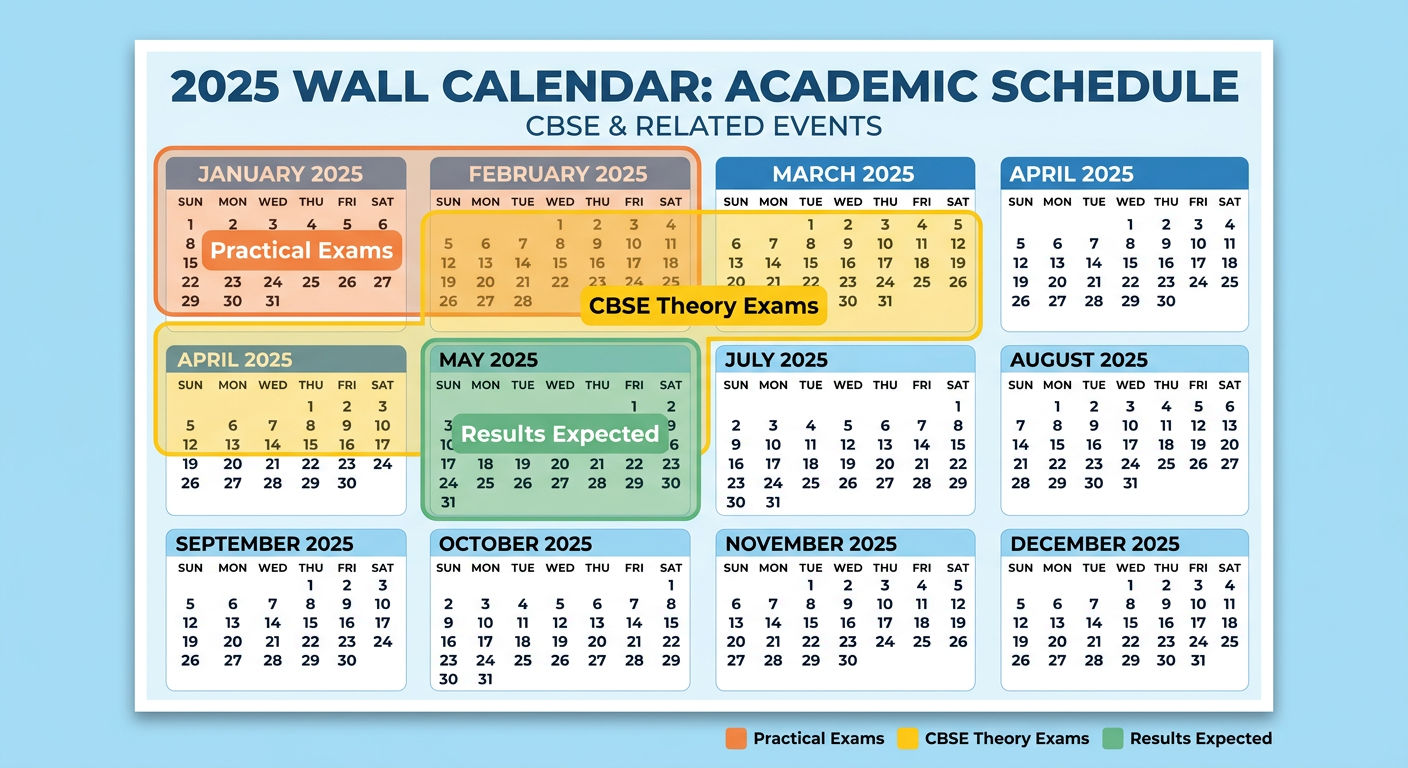
One of the first questions on every student's mind is, "When will the exams happen?" While the final, exact date sheet comes out later in the year, CBSE follows a very predictable schedule. Knowing this timeline helps you plan your study schedule, revisions, and even your breaks effectively.
Based on previous years, here is the tentative schedule you can expect for the 2025 board exams. Please remember these are not official dates. For the final schedule, you must always check the official CBSE website. The board typically announces the detailed date sheet in December.
Tentative Class 10 & 12 Exam Schedule
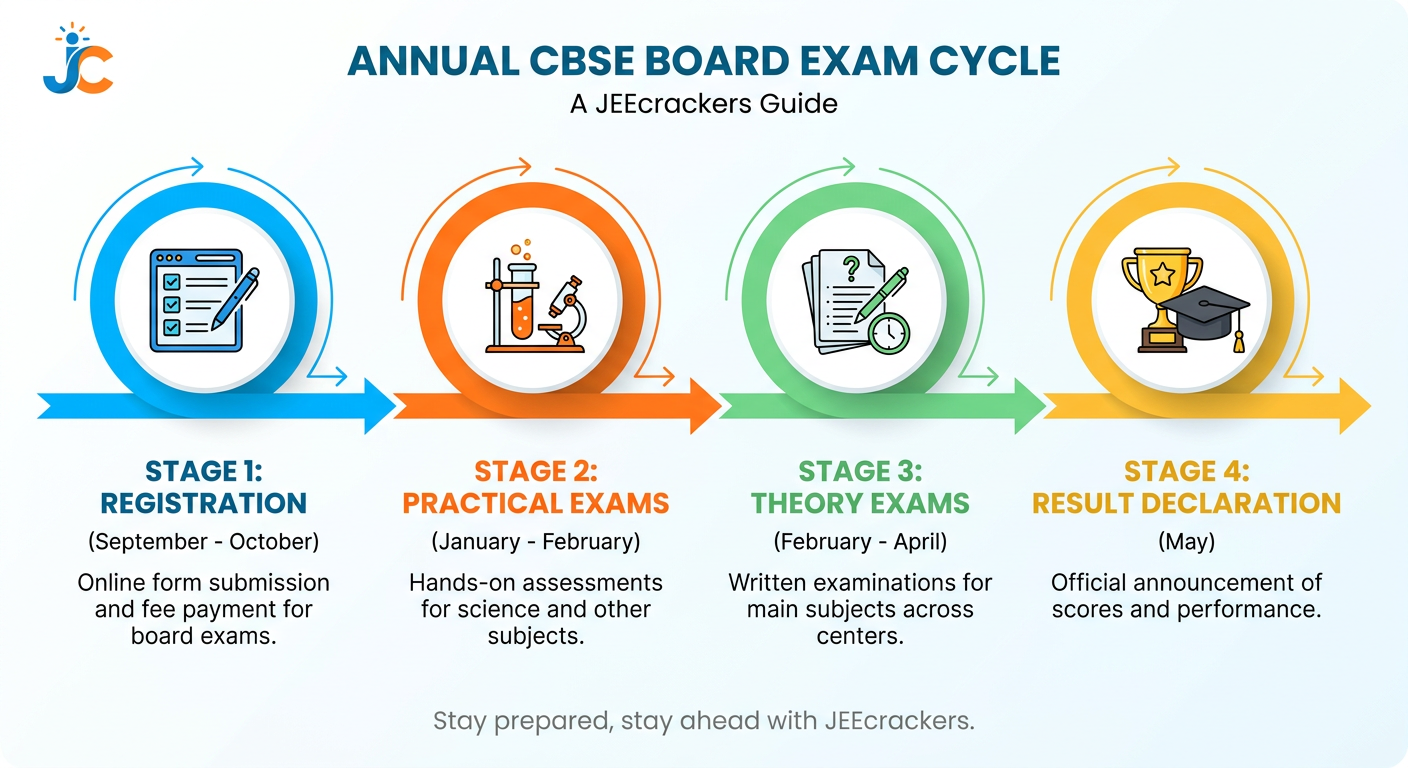
- List of Candidates (LOC) Submission: This process happens through schools, usually between September and October of the preceding year.
- Practical Exams: For most subjects, practicals are conducted in January and February 2025. For schools in winter-bound states, they might happen earlier, in November-December 2024.
- Theory Exams: The main theory papers for both Class 10 and 12 are expected to begin around mid-February 2025 and conclude by early April 2025.
- Result Declaration: CBSE usually declares the results for both classes in May 2025. Sometimes Class 12 results are announced a day or two before Class 10.
Keeping these general timelines in mind is crucial. You can structure your study plan to ensure your syllabus is completed well before the practicals begin, leaving you with ample time for revision and mock tests.
Decoding the CBSE Exam Pattern & Marking Scheme
Understanding the paper pattern is like knowing the rules of the game before you start playing. The CBSE exam pattern has evolved significantly. The board is actively trying to reduce the need for last-minute cramming and encourage a deeper understanding of subjects throughout the year. This is great news for students who study consistently.
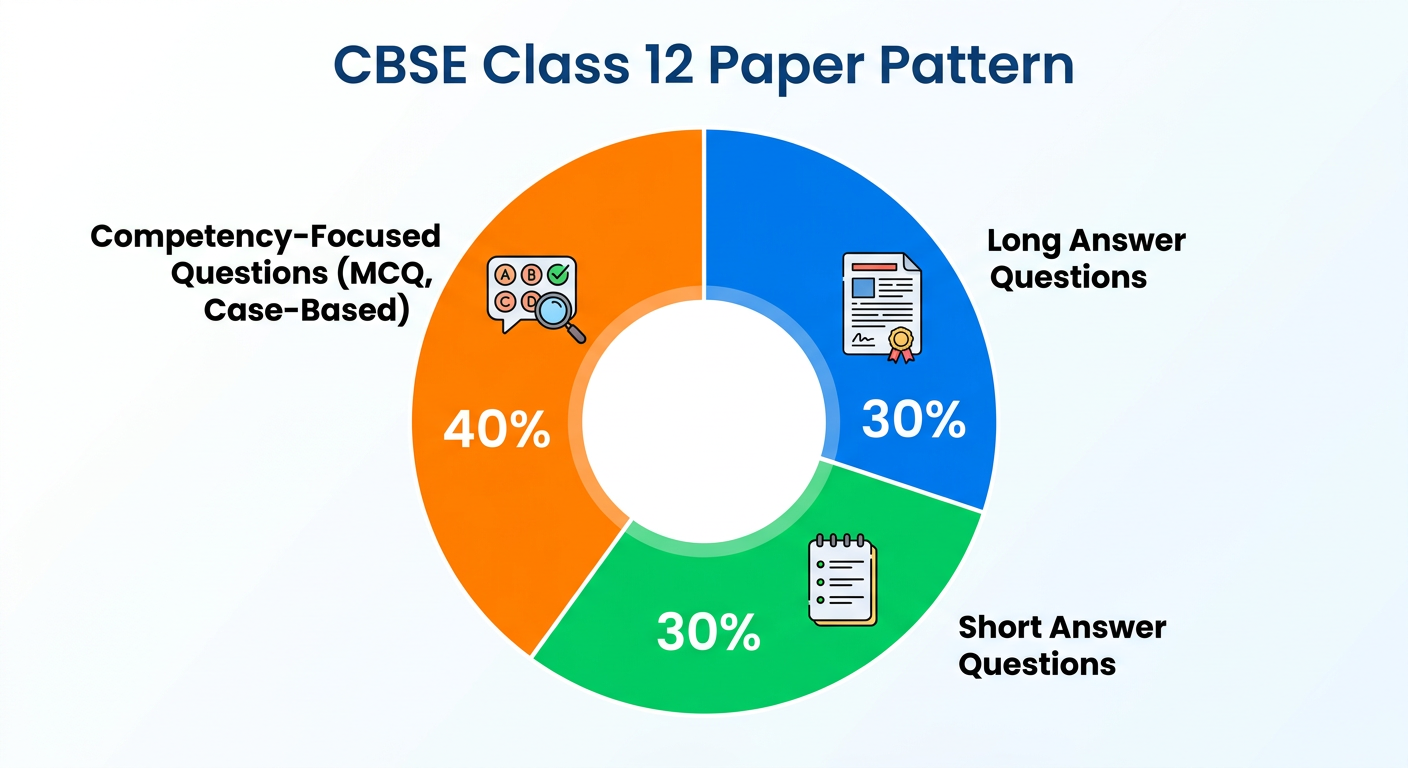
The biggest change is the increased weightage for Competency-Focused Questions. These can be in the form of Multiple-Choice Questions (MCQs), case-based questions, or source-based integrated questions. For Class 12 in 2025, you can expect these to make up about 40% of your paper. Let's break it down.
Subject-wise Paper Structure (Science Stream)
For a JEE/NEET aspirant, the focus is on Physics, Chemistry, Maths, and Biology. Here’s what the theory papers generally look like:
- Physics (70 Marks): The paper will have a mix of question types. Expect around 15-20 marks from MCQs and assertion-reasoning questions. The rest will be a mix of very short answer (2 marks), short answer (3 marks), and long answer/case-study (5 marks) questions.
- Chemistry (70 Marks): Similar to Physics, the structure will include a variety of questions. Organic chemistry conversions, numericals from Physical chemistry, and reasoning questions from Inorganic chemistry are always important.
- Mathematics (80 Marks): The Maths paper will test you across different domains like Calculus, Algebra, and Vectors/3D Geometry. Expect a significant portion to be MCQs and case-study questions that test your application of formulas.
- Biology (70 Marks): The Biology paper emphasizes diagrams and conceptual understanding. Expect MCQs, short answer, and long answer questions covering the entire syllabus. Diagram-based questions are a staple.
What are Competency-Based Questions?
Don't let the fancy name scare you. These are simply questions that test your ability to apply concepts to real-world or unfamiliar scenarios. Instead of asking "Define photosynthesis?", a competency-based question might give you a scenario about a plant in a sealed room and ask you to predict the changes in oxygen levels.
These questions are designed to see if you've truly understood the topic. The best way to prepare for them is to study with a curious mind. Ask 'why' and 'how' for every concept. Solving a wide variety of problems from different sources, including previous year questions, will train your brain to think analytically.
The Crucial Role of CBSE Practical Exams

Many students make the mistake of not taking the CBSE practical exam seriously. This is a huge error. Practical exams for subjects like Physics, Chemistry, and Biology carry 30 marks (out of 100). That's 30% of your total score, handed to you before you even sit for the theory paper! Scoring well here can significantly boost your overall percentage.
The practical exam is usually divided into a few components:
- Experiments: You'll be asked to perform one or two experiments from the prescribed list.
- Record File & Project: Your lab manual and a project report, which you prepare throughout the year, carry marks.
- Viva Voce: The external examiner will ask you questions based on the experiments, your project, and underlying concepts.
Tips for Your VIVA VOCE
The viva is often the most nerve-wracking part. But it doesn't have to be. The examiner is there to test your understanding, not to trick you.
- Know Your Project Inside Out: Be prepared to explain your project's objective, procedure, and conclusion clearly.
- Master the Principles of Experiments: Don't just learn the steps to perform an experiment. Understand the scientific principle behind it. Why do you use a specific indicator in a titration? What is the role of the prism in the spectrometer experiment?
- Be Confident and Honest: If you don't know an answer, it's better to politely say so than to guess wildly. Your honesty will be appreciated.
A good performance in the practicals sets a positive tone for the main exams and provides a comfortable cushion for your final score.
How to Register for the CBSE Board Exam
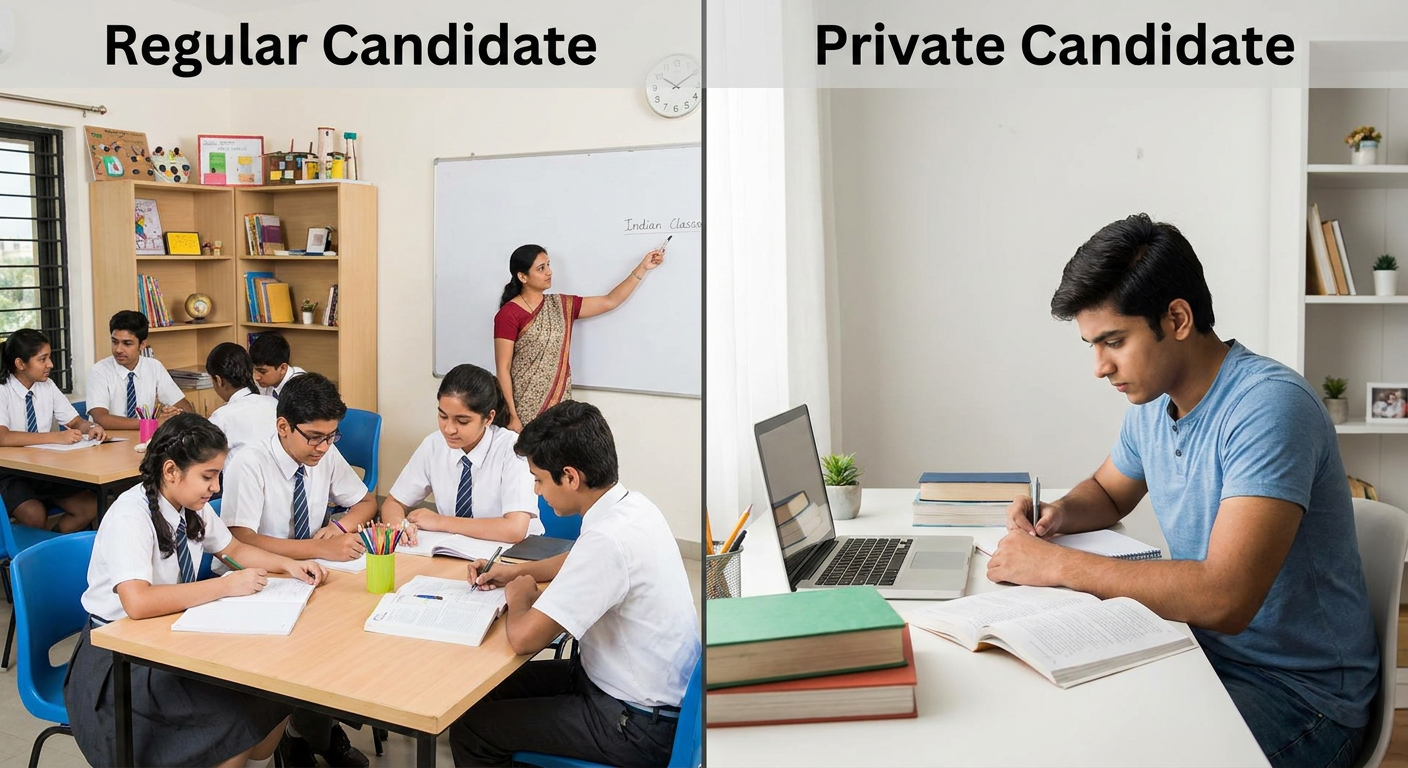
This is another area that causes a lot of confusion, especially for students who are not enrolled in a regular school. The registration process is straightforward but different for regular and private candidates.
For Regular School Students
If you are a student in a CBSE-affiliated school, the process is simple. Your school handles the entire registration. They will ask you to fill out forms, verify your details (like name, date of birth, subjects), and collect the examination fee. Your job is to double-check every single detail before signing. A mistake in your name or date of birth can cause huge problems later.
For Private Candidates: Eligibility & Process
A CBSE private candidate is someone who appears for the board exam without being enrolled in a regular school. Who is eligible?
- Students who failed: If you appeared for the board exam previously but failed to pass.
- Compartment Students: If you were placed in the compartment category in the main exam.
- Improvement Candidates: If you have already passed the exam but want to improve your score in one or more subjects. You can only do this in the year immediately following the one you passed.
- Students with a Gap Year: Students who have passed the exam but need to pass an additional subject.
Private candidates need to register themselves directly on the CBSE website. The online submission of the form usually opens around September. You will need your previous roll number and school details. Keep a close watch on the official CBSE portal, www.cbse.gov.in, for the private candidate registration link and deadlines. Missing the deadline means losing a year, so be very careful.
Mastering the CBSE Syllabus for 2025
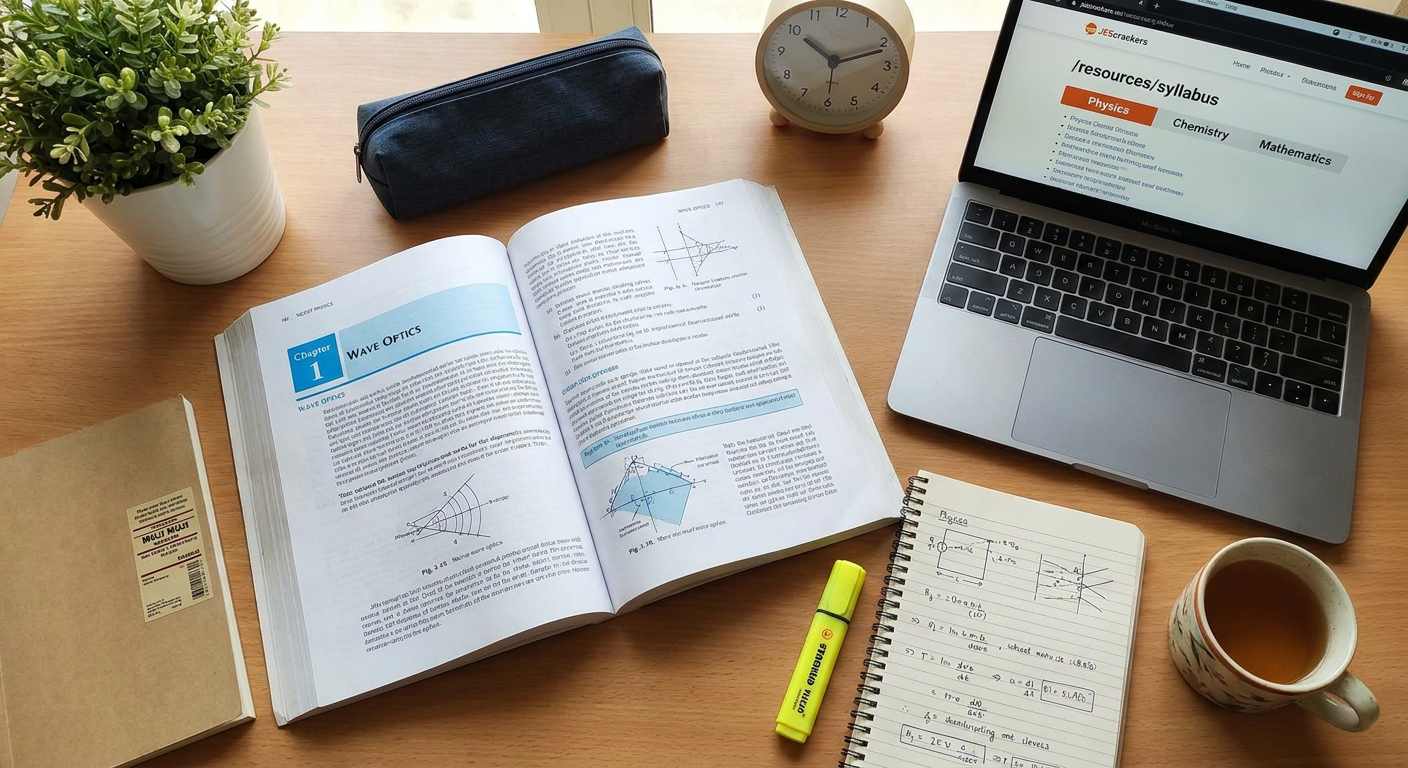
The syllabus is your roadmap. You cannot start a journey without knowing the destination. The first thing you must do is download the latest syllabus for your subjects. You can find a detailed breakdown of the JEE/NEET syllabus, which heavily overlaps with the CBSE curriculum, on our resources page.
CBSE sometimes rationalizes the syllabus by deleting certain topics. It is absolutely essential to work from the current year's syllabus to avoid wasting time on topics that won't be in the exam. Always rely on the official PDF released by the board.
Aligning Board Prep with JEE/NEET
This is the golden question for every science student. How do you manage both? The secret is to see them not as two different things, but as concentric circles. The CBSE syllabus forms the core, and the JEE/NEET syllabus is the larger circle around it.
- Start with NCERT: Your NCERT textbooks are the holy grail. Master them line by line. Most of the board paper and a significant chunk of JEE Main and NEET questions come directly from NCERT concepts.
- Practice Both Types of Questions: When you finish a chapter, solve the NCERT exercises for board prep. Then, solve MCQs on the same chapter from a good reference book or question bank for your competitive exam prep.
- Don't Ignore English/Optional Subject: While you focus on PCM/PCB, don't completely neglect your other subjects. A poor grade in English can pull down your overall percentage, which might affect eligibility criteria for some colleges.
By integrating your preparation, you save time and reinforce concepts more strongly. What you learn for the boards solidifies your foundation for JEE/NEET.
Exam Day Guidelines: Rules You Must Follow
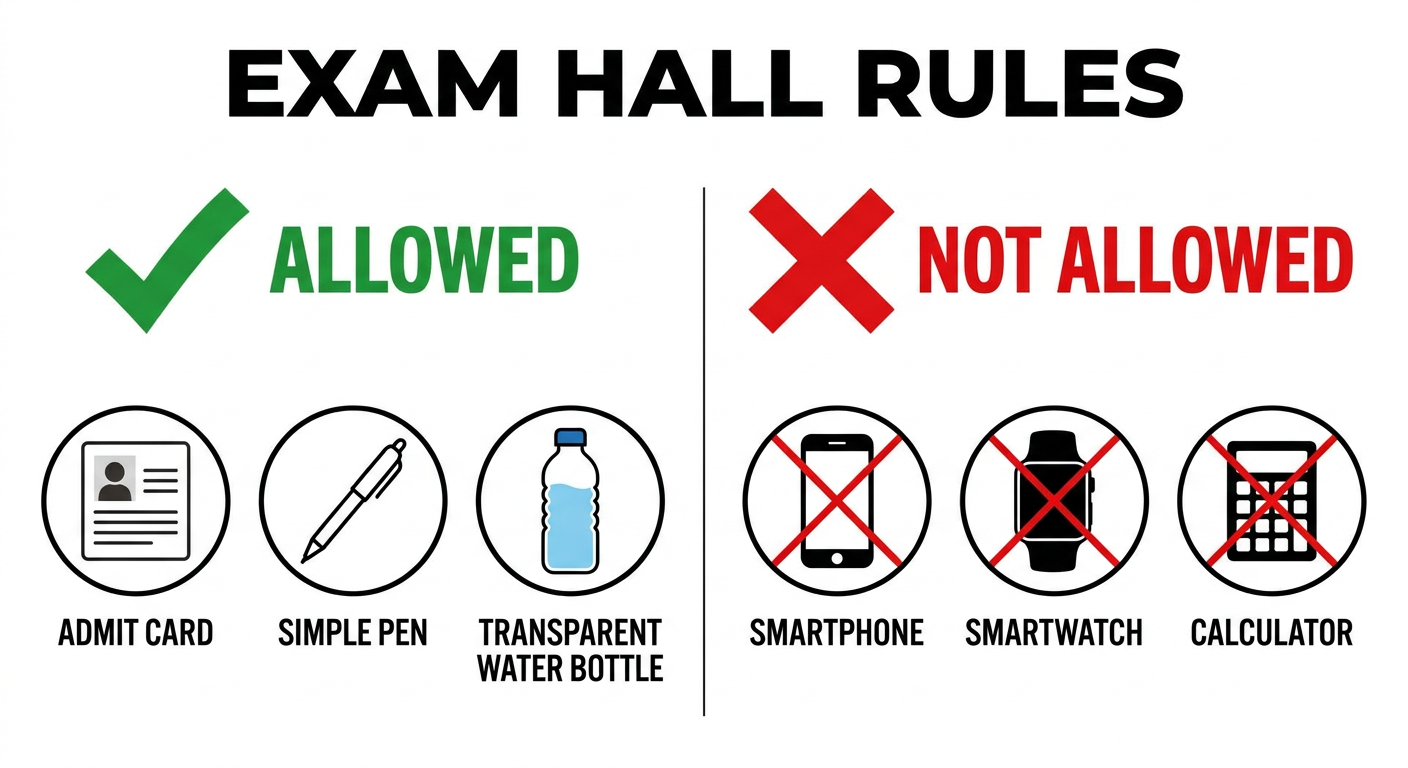
After a year of hard work, the last thing you want is a problem on exam day. Familiarizing yourself with the rules and regulations is non-negotiable. It prevents last-minute panic and ensures a smooth experience.
Here’s a checklist of things to remember:
- The Admit Card is Everything: Your CBSE admit card is your entry ticket. Without it, you will not be allowed inside the exam hall. Make several photocopies and keep the original in a safe place.
- Reach Before Time: Aim to reach your exam center at least 30-45 minutes before the reporting time mentioned on your admit card. This gives you time to find your room and settle down.
- What to Carry: Carry your admit card, school ID, and a transparent pouch with pens, pencils, and other necessary stationery. A transparent water bottle is usually allowed. Analog watches are permitted, but smartwatches are strictly banned.
- What NOT to Carry: Electronic devices of any kind are forbidden. This includes mobile phones, calculators (unless specified for a particular exam), smartwatches, and Bluetooth devices. Do not carry any notes or bits of paper.
- Utilize Reading Time: You get 15 minutes of reading time before the exam starts. Use this time wisely to read the entire question paper, identify the questions you are most confident about, and plan your answering strategy. This is a game-changer.
Following these simple rules ensures your focus remains entirely on the question paper, exactly where it needs to be.
After the Exam: Checking Your CBSE Result 2025
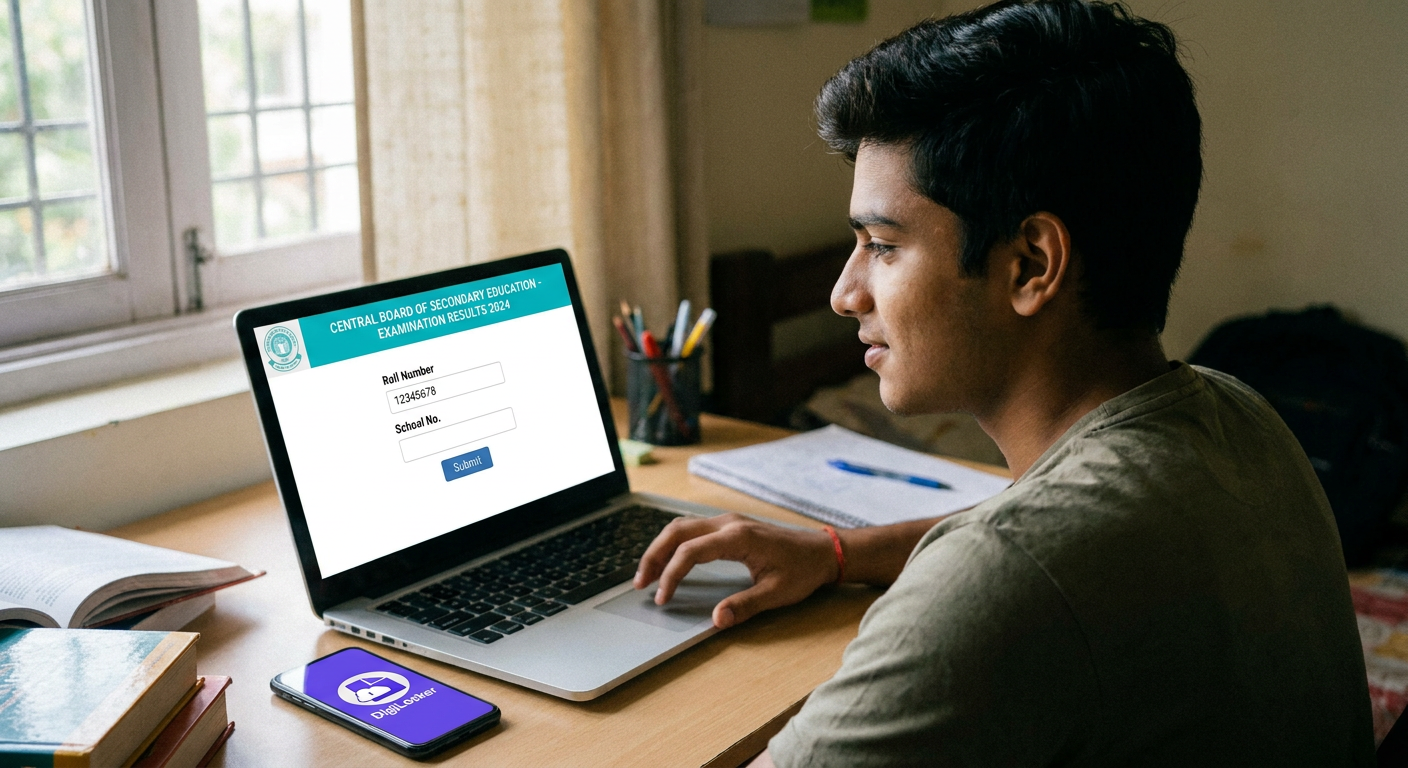
The day the CBSE result 2025 is announced is filled with a mix of excitement and anxiety. Knowing how to access your result quickly can save you a lot of stress. There are several ways to check your score:
- Official CBSE Websites: The primary sources are results.cbse.nic.in and cbseresults.nic.in. Keep your roll number, school number, and admit card ID handy.
- DigiLocker: Your official marksheet and passing certificate are also made available in your DigiLocker account. You can create an account using your Aadhaar number.
- UMANG App: The government's UMANG app also hosts CBSE results.
CBSE Passing Marks Criteria for Class 12
Understanding the passing criteria is important. To pass the CBSE board exam for Class 12, a student must secure a minimum of 33% marks in each subject. Crucially, this 33% must be secured separately in both theory and practical components.
For a subject with a 70-mark theory paper and 30-mark practical, you need to score at least 23 marks in theory and 10 marks in practicals to pass that subject. Simply getting a combined score of 33 (e.g., 30 in practicals and 3 in theory) is not enough.
What to Do After Your Results?
If your results are not what you expected, don't panic. CBSE provides options:
- Verification of Marks: You can apply for a re-totaling of your marks.
- Obtaining a Photocopy: You can request a photocopy of your evaluated answer sheet to see how it was checked.
- Re-evaluation: If you are not satisfied after getting the photocopy, you can apply for a re-evaluation of specific answers.
- Compartment/Improvement Exam: If you fail in one subject, you can appear for the compartment exam. If you've passed but want to improve your score, you can sit for the improvement exam the following year.
Remember, your board exam score is important, but it does not define your life or your potential. Whether you score 95% or 75%, what matters is the effort you put in and the path you choose next. Whether it's preparing for JEE Main again, using a rank predictor to see your college options, or exploring other career paths, your journey is just beginning.
FAQs
When will CBSE release the 2025 date sheet?
CBSE typically releases the detailed Class 10 and 12 date sheet in December of the preceding year. So, for the 2025 exams, expect it around December 2024 on the official CBSE website.
What are the passing marks for the CBSE board exam?
A student needs to score a minimum of 33% marks overall in each subject. For subjects with practicals, you must pass the theory and practical components separately, scoring at least 33% in each.
Can I appear for the board exam as a private candidate?
Yes. Students who have previously failed, been placed in compartment, or wish to improve their score from the previous year can apply as a private candidate directly through the CBSE website during the registration window.
Is NCERT enough for the CBSE board exam?
For the CBSE board exam, mastering the NCERT textbooks is absolutely key and often sufficient to score over 90%. The entire paper is based on the concepts within these books. For a perfect score, you might supplement it with sample papers and previous year questions.
How much percentage in boards is required for JEE/NEET?
For admission to IITs, NITs, and IIITs, a candidate generally needs to secure at least 75% aggregate marks in their Class 12 board exam (or be in the top 20 percentile). For SC/ST candidates, the requirement is 65%. While NEET does not have a percentage requirement for appearing in the exam, some medical colleges might have their own criteria, so it's always good to aim high.
How are competency-based questions different?
Competency-based questions test your application of knowledge rather than just your memory. They come in formats like MCQs, case studies, or source-based questions and require you to analyze a given situation and apply concepts to solve a problem, closely mirroring the style of questions in competitive exams like JEE and NEET.