NEET PG Counselling 2026 LIVE: MCC schedule out for 50% AIQ seats; state-wise merit list, closing ranks - Careers360
Your complete guide to the NEET exam. Get the latest details on the NEET syllabus, exam pattern, eligibility criteria, cut-offs, and the counselling process.
24 min read
Every year, lakhs of students in India dream of one thing: wearing a white coat and serving the nation as a doctor. It's a noble dream, filled with visions of stethoscopes, healing, and respect. But between that dream and reality stands one massive gateway, a single test of knowledge, endurance, and strategy. That gateway is the NEET exam.
If you are a medical aspirant, the term 'NEET' is probably the most important word in your vocabulary right now. But what does it really entail? Understanding this exam inside and out is the very first step towards cracking it. This guide will break down everything you need to know, from the basic eligibility to the final counselling process, in simple, easy-to-understand terms. Let's get started.
What is the NEET Exam? The Gateway to Your Medical Career
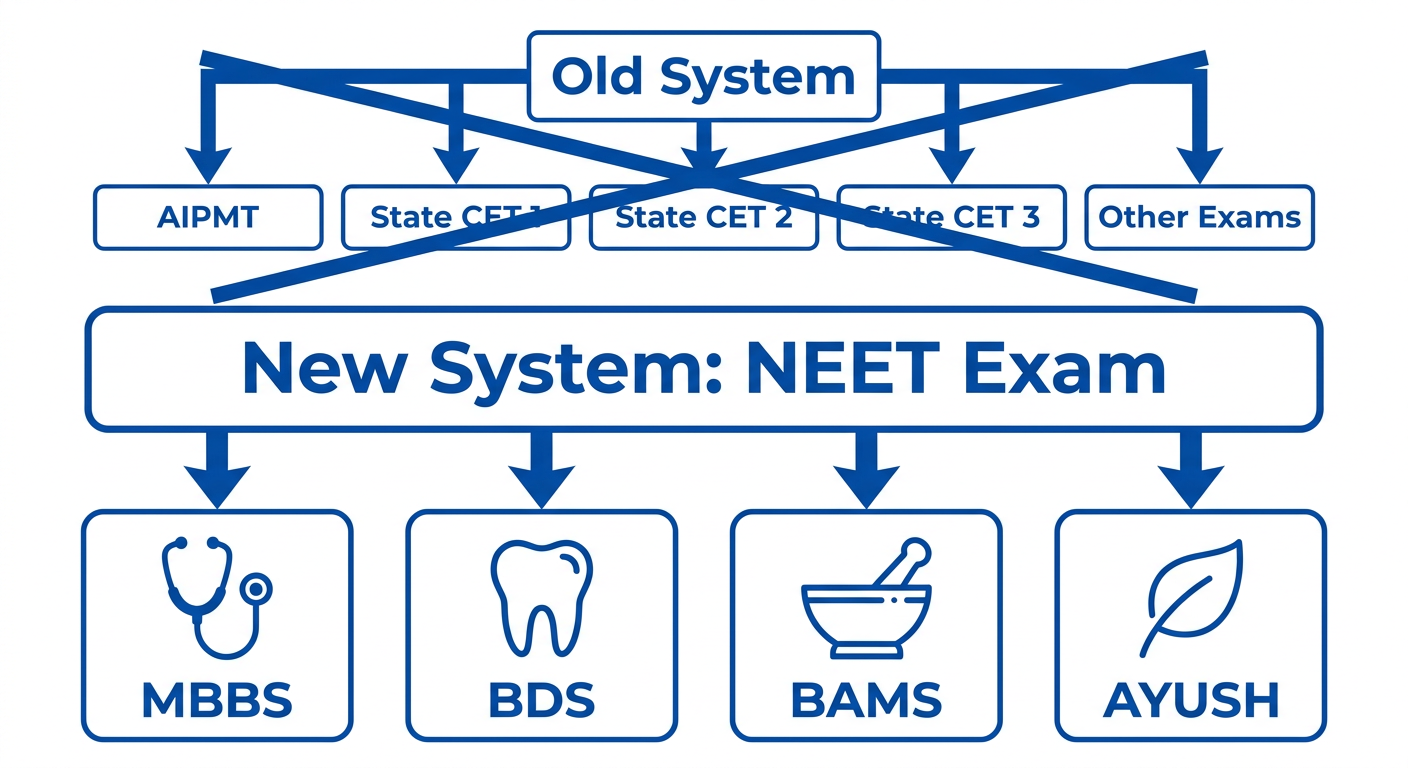
First things first, what exactly is the NEET exam? NEET stands for the National Eligibility cum Entrance Test. It's the single, uniform entrance examination conducted across India for admission into most undergraduate medical and dental courses. Think of it as the 'JEE Main' for medical students.
Before NEET was made mandatory, students had to appear for multiple entrance tests. There was the All India Pre-Medical Test (AIPMT) for 15% of seats in government colleges, and then separate state-level exams for the remaining seats. It was a chaotic and stressful process. The NEET exam was introduced to replace all these individual exams, creating a single, level playing field for every medical aspirant in the country.
Conducted by the National Testing Agency (NTA), the NEET (UG) score is your ticket to admission in:
- MBBS (Bachelor of Medicine, Bachelor of Surgery)
- BDS (Bachelor of Dental Surgery)
- AYUSH courses (BAMS, BHMS, BUMS, etc.)
- Selected B.Sc. Nursing and B.V.Sc courses.
In short, if you want to study medicine in India, acing the NEET exam is non-negotiable.
NEET 2025-2026 at a Glance: Key Highlights
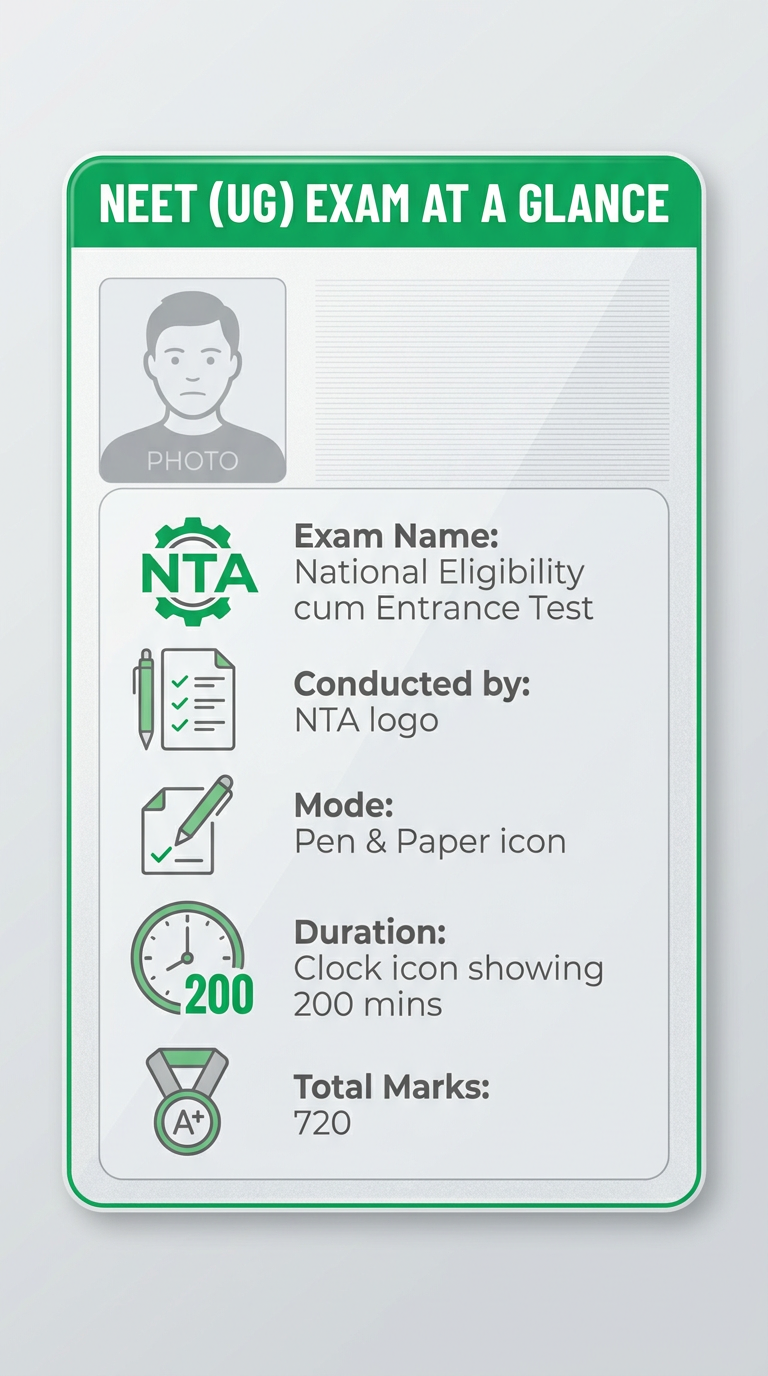
Let's get a quick overview of the exam's most important features. This table gives you all the crucial details in one place so you know exactly what you're signing up for.
| Feature | Detail |
|---|---|
| Exam Name | National Eligibility cum Entrance Test (UG) |
| Commonly Known As | NEET |
| Conducting Body | National Testing Agency (NTA) |
| Exam Level | National |
| Frequency | Once a year |
| Mode of Exam | Pen and Paper (Offline), OMR-based |
| Duration | 3 hours and 20 minutes (200 minutes) |
| Total Questions | 200 (180 to be attempted) |
| Total Marks | 720 |
| Sections | Physics, Chemistry, Biology (Botany & Zoology) |
| Marking Scheme | +4 for correct, -1 for incorrect, 0 for unattempted |
| Exam Mediums | 13 languages (English, Hindi, Assamese, Bengali, Gujarati, Kannada, Malayalam, Marathi, Odia, Punjabi, Tamil, Telugu, Urdu) |
| Official Website | https://neet.nta.nic.in/ |
This snapshot is your starting point. Now, let's dive deeper into each of these aspects.
Cracking the Code: NEET Eligibility Criteria
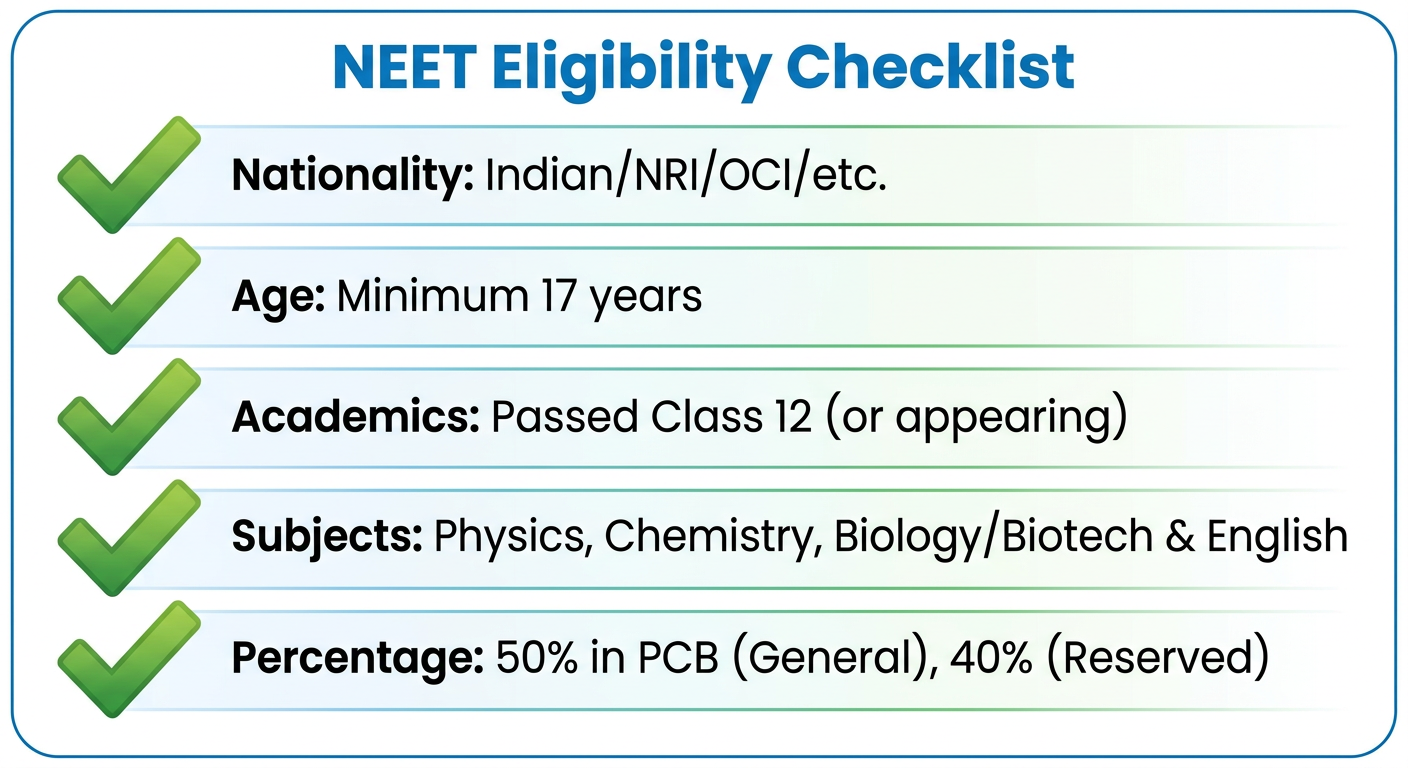
Before you even start preparing, you must confirm if you are eligible to appear for the NEET exam. The NTA sets clear guidelines, and it's crucial to meet every single one. Missing even one condition can lead to your application being rejected. Let's break down the NEET eligibility criteria.
Nationality and OCI/PIO/Foreign Nationals
To appear for NEET, you must be:
- An Indian Citizen
- A Non-Resident Indian (NRI)
- An Overseas Citizen of India (OCI)
- A Person of Indian Origin (PIO)
- A Foreign National
While OCI, PIO, and Foreign Nationals can write the exam, their admission to medical colleges is governed by the specific rules of the respective colleges and state/central governments.
Age Limit for NEET: Is There One?
This used to be a point of confusion, but the rules are now very simple. You must have completed 17 years of age at the time of admission or will complete that age on or before 31st December of the year of your admission.
What about the upper age limit? Good news! The National Medical Commission (NMC) has removed the upper age limit for appearing in the NEET (UG) exam. As long as you meet the other criteria, you can attempt the exam regardless of your age.
Educational Qualifications: The Class 12th Hurdle
This is the most important academic requirement. To be eligible for the NEET exam, a candidate must have passed the Class 12 or equivalent examination with the following subjects:
- Physics
- Chemistry
- Biology / Biotechnology
- English
Additionally, there's a minimum percentage requirement in the qualifying examination (Class 12). You must have scored a minimum aggregate percentage in Physics, Chemistry, and Biology/Biotechnology (PCB) combined.
- General/EWS Category: 50% marks in PCB
- OBC/SC/ST Category: 40% marks in PCB
- Persons with Disability (PwD) Category: 45% marks in PCB
Students who are appearing for their Class 12 or equivalent exam in the current academic year are also eligible to apply for NEET provisionally. However, they must show proof of passing before the counselling and admission process.
Number of Attempts: How Many Shots Do You Get?
Just like the upper age limit, the restriction on the number of attempts has also been removed. You can appear for the NEET exam as many times as you want, provided you continue to meet the age and educational eligibility criteria mentioned above.
The NEET Exam Pattern: Understanding the Blueprint
Knowing the NEET exam pattern is like having the map before you start a treasure hunt. It tells you the structure, the rules, and how you will be scored. NTA has maintained a consistent pattern over the last few years, which is a great advantage for aspirants.
Mode of Examination: Pen and Paper Still Rules
Unlike the JEE Main which is a Computer-Based Test (CBT), the NEET exam is conducted completely offline. You will be given a physical question paper and an OMR (Optical Mark Recognition) sheet. You have to mark your answers on the OMR sheet by darkening the correct bubbles with a ballpoint pen, which will be provided at the examination centre.
Exam Duration and Timing
You get a total of 3 hours and 20 minutes (200 minutes) to solve the paper. The exam is typically held in the afternoon, from 2:00 PM to 5:20 PM. There are no sectional time limits, so you are free to manage your 200 minutes across Physics, Chemistry, and Biology as you see fit.
Section-wise Breakdown: Physics, Chemistry, Biology
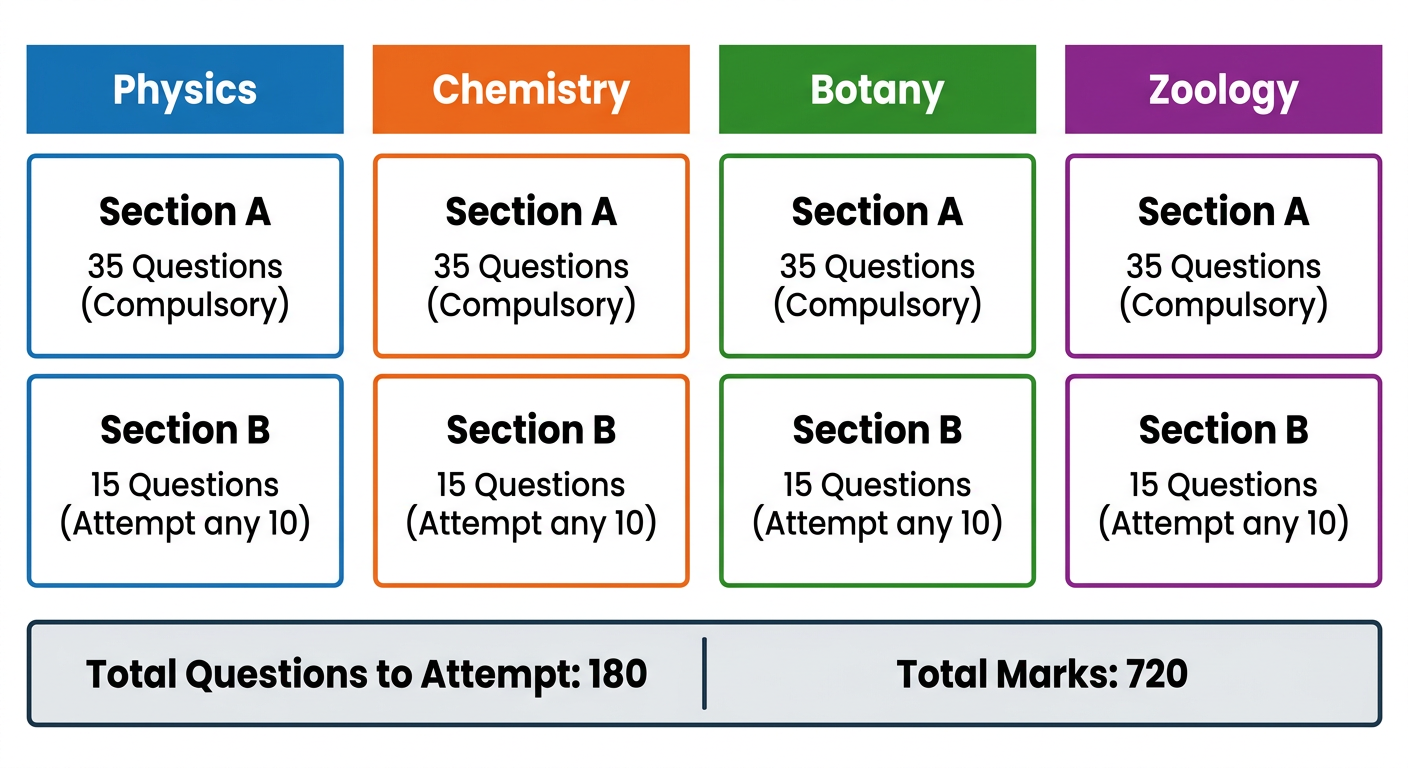
The NEET exam paper is divided into three subjects: Physics, Chemistry, and Biology. Biology is further split into Botany and Zoology. A few years ago, a new format was introduced with internal choices, which is still in place.
Each subject is divided into two sections:
- Section A: Contains 35 compulsory questions.
- Section B: Contains 15 questions, out of which you must attempt any 10.
Here’s how the distribution looks:
| Subject | Section A | Section B (Attempt 10 of 15) | Total Questions | Total Marks |
|---|---|---|---|---|
| Physics | 35 | 15 | 50 (Attempt 45) | 180 |
| Chemistry | 35 | 15 | 50 (Attempt 45) | 180 |
| Botany | 35 | 15 | 50 (Attempt 45) | 180 |
| Zoology | 35 | 15 | 50 (Attempt 45) | 180 |
| Total | 140 | 60 (Attempt 40) | 200 (Attempt 180) | 720 |
The choice in Section B is a huge advantage. It allows you to skip questions you are unsure about or topics you find difficult, maximizing your potential score.
The Marking Scheme: Every Mark Counts
The marking scheme in NEET is simple but unforgiving. It's crucial to understand it to avoid losing marks unnecessarily.
- For every correct answer: You get +4 marks.
- For every incorrect answer: There is a penalty of -1 mark (negative marking).
- For every unattempted question: You get 0 marks.
This negative marking system means that random guessing can be very costly. It’s better to leave a question unanswered if you have no idea about it, rather than taking a blind guess and losing a mark.
Language Options: Choose Your Medium
The NTA understands that language should not be a barrier to education. The NEET exam is conducted in 13 different languages. You can choose your preferred language while filling out the application form. The available languages are:
- English
- Hindi
- Assamese
- Bengali
- Gujarati
- Kannada
- Malayalam
- Marathi
- Odia
- Punjabi
- Tamil
- Telugu
- Urdu
Candidates opting for English get the question paper only in English. Candidates opting for Hindi get a bilingual paper (English and Hindi). Candidates opting for a regional language get a bilingual paper in that language and English.
The Complete NEET Syllabus: What to Study?

The official NEET syllabus is prescribed by the National Medical Commission (NMC). It is based on the topics, chapters, and concepts covered in the Class 11 and Class 12 curricula of the CBSE board. Essentially, your NCERT textbooks for these two years are the bible for the NEET exam. To get a detailed breakdown, you can check out our JEE/NEET syllabus page.
Let’s look at the subject-wise syllabus in detail. We won't just list the chapters; we'll also touch upon their significance.
NEET Physics Syllabus (Class 11 & 12)
Physics is often considered the toughest section by many NEET aspirants due to its numerical-heavy nature. A strong conceptual understanding and regular problem-solving practice are key.
Class 11 Physics Topics:
- Physical World and Measurement: The foundation, focusing on units, dimensions, and error analysis. Crucial for all other chapters.
- Kinematics: Motion in a straight line, motion in a plane. Forms the basis of Mechanics.
- Laws of Motion: Newton's laws, friction, and dynamics of circular motion. A high-yield area.
- Work, Energy, and Power: A very important and relatively scoring chapter.
- Motion of System of Particles and Rigid Body: Centre of mass, rotational motion. Conceptually challenging but important.
- Gravitation: Universal law of gravitation, Kepler's laws. Moderately easy and formula-based.
- Properties of Bulk Matter: Mechanical properties of solids and fluids, thermal properties of matter. A mix of theory and formulas.
- Thermodynamics: Zeroth, First, and Second laws. Very important for both Physics and Chemistry.
- Behaviour of Perfect Gas and Kinetic Theory: Simple concepts, often leading to direct questions.
- Oscillations and Waves: Simple Harmonic Motion (SHM), Doppler effect. Requires good visualization.
Class 12 Physics Topics:
- Electrostatics: Electric charges, fields, potential, and capacitance. A major, high-weightage unit.
- Current Electricity: Ohm's law, circuits, electrical instruments. Crucial and problem-intensive.
- Magnetic Effects of Current and Magnetism: A large unit with many interconnected concepts and formulas.
- Electromagnetic Induction and Alternating Currents: Faraday's law, LC oscillations, AC circuits. Conceptually rich.
- Electromagnetic Waves: A small, theoretical chapter but can fetch you easy marks.
- Optics: Ray optics and wave optics. One of the most important units in Class 12, with significant weightage.
- Dual Nature of Matter and Radiation: Photoelectric effect, de Broglie wavelength. Part of Modern Physics, which is very scoring.
- Atoms and Nuclei: Bohr's model, radioactivity. More easy marks from Modern Physics.
- Electronic Devices: Semiconductors, diodes, transistors, logic gates. A must-do chapter, as questions are often direct and easy.
NEET Chemistry Syllabus (Class 11 & 12)
Chemistry in NEET is a balanced mix of numerical problems (Physical), concept and logic (Organic), and memorization (Inorganic). A systematic approach works best here.
Class 11 Chemistry Topics:
- Some Basic Concepts of Chemistry: Mole concept, stoichiometry. The absolute backbone of Physical Chemistry.
- Structure of Atom: Bohr's model, quantum mechanical model. Foundational for understanding bonding.
- Classification of Elements and Periodicity in Properties: Periodic trends. Essential for Inorganic Chemistry.
- Chemical Bonding and Molecular Structure: VSEPR theory, Hybridization, MOT. One of the most important chapters in all of chemistry.
- States of Matter: Gases and Liquids: Gas laws, ideal gas equation. Primarily numerical-based.
- Thermodynamics: Enthalpy, entropy, Gibbs free energy. Important concepts with overlap from Physics.
- Equilibrium: Chemical and ionic equilibrium. A large, conceptually deep, and high-weightage chapter.
- Redox Reactions: A short but important chapter for balancing equations and electrochemistry.
- Hydrogen: A small chapter, largely based on NCERT facts.
- s-Block Elements (Alkali and Alkaline Earth Metals): Properties and trends. Requires memorization from NCERT.
- Some p-Block Elements: Covers Group 13 and 14. Similar to s-block, focus on NCERT.
- Organic Chemistry: Some Basic Principles and Techniques: Nomenclature, isomerism, electronic effects. The foundation for all of Organic Chemistry.
- Hydrocarbons: Alkanes, alkenes, alkynes, and aromatic hydrocarbons. A very important chapter with many reactions.
- Environmental Chemistry: A theoretical chapter, often ignored but can give you a free +4 marks.
Class 12 Chemistry Topics:
- Solid State: Classification of solids, unit cells, defects. Formula-based and scoring.
- Solutions: Colligative properties. A major chapter for numericals.
- Electrochemistry: Nernst equation, conductance, batteries. Important and numerical-heavy.
- Chemical Kinetics: Rate of reaction, order, activation energy. Another core chapter of Physical Chemistry.
- Surface Chemistry: Adsorption, colloids, emulsions. Mostly theoretical.
- General Principles and Processes of Isolation of Elements: Metallurgy. NCERT is more than enough.
- p-Block Elements: Covers Groups 15 to 18. A huge chapter requiring thorough reading of NCERT.
- d and f Block Elements: Transition metals, lanthanoids. Focus on trends and properties.
- Coordination Compounds: Werner's theory, VBT, CFT. Very important and conceptual.
- Haloalkanes and Haloarenes: A core chapter of Organic Chemistry.
- Alcohols, Phenols, and Ethers: High weightage, with many name reactions.
- Aldehydes, Ketones, and Carboxylic Acids: The most important chapter in Organic Chemistry in terms of weightage.
- Organic Compounds Containing Nitrogen: Amines, diazonium salts. Important reactions.
- Biomolecules: Carbohydrates, proteins, vitamins, nucleic acids. Memory-based but high scoring.
- Polymers: A small, easy-to-remember chapter.
- Chemistry in Everyday Life: Another memory-based chapter that can fetch easy marks.
NEET Biology Syllabus (Class 11 & 12) - Botany & Zoology
Biology carries the highest weightage in the NEET exam (360 marks). It is the most scoring section, and a strong performance here is essential for a high rank. The syllabus is vast, but questions are predominantly from the NCERT textbooks.
Class 11 Biology Topics (Botany & Zoology):
- The Living World: Basic concepts of taxonomy and classification.
- Biological Classification: Five-kingdom classification. Important for fundamentals.
- Plant Kingdom: Algae, Bryophytes, Pteridophytes, Gymnosperms, Angiosperms. A large, memory-intensive chapter.
- Animal Kingdom: Classification of animals from Porifera to Chordata. Very high weightage.
- Morphology of Flowering Plants: Root, stem, leaf, flower, fruit. Requires memorization of examples.
- Anatomy of Flowering Plants: Tissues and tissue systems. Conceptual and important.
- Structural Organisation in Animals: Animal tissues, and organ systems (cockroach, frog).
- Cell: The Unit of Life: The basics of cell theory and organelles. Very important.
- Biomolecules: Same as the chemistry chapter, but with a biological perspective.
- Cell Cycle and Cell Division: Mitosis and Meiosis. Absolutely crucial, with guaranteed questions.
- Transport in Plants: Water transport, translocation of food. Conceptual.
- Mineral Nutrition: Macronutrients and micronutrients. Factual chapter.
- Photosynthesis in Higher Plants: Light and dark reactions. A core chapter in Plant Physiology.
- Respiration in Plants: Glycolysis, Krebs cycle, ETC. Another core chapter.
- Plant Growth and Development: Plant hormones. Important concepts and applications.
- Digestion and Absorption: Human digestive system and processes.
- Breathing and Exchange of Gases: Human respiratory system.
- Body Fluids and Circulation: Blood, heart, circulatory system. All chapters of Human Physiology are extremely important.
- Excretory Products and their Elimination: Human excretory system.
- Locomotion and Movement: Muscles and skeletal system.
- Neural Control and Coordination: Nervous system, sense organs.
- Chemical Coordination and Integration: Endocrine glands and hormones.
Class 12 Biology Topics (Botany & Zoology):
- Reproduction in Organisms: Asexual and sexual reproduction.
- Sexual Reproduction in Flowering Plants: A very important chapter in Botany.
- Human Reproduction: Male and female reproductive systems, fertilization, and embryonic development. High weightage.
- Reproductive Health: Methods of contraception, STDs, infertility.
- Principles of Inheritance and Variation: Mendel's laws, genetic disorders. Core of Genetics.
- Molecular Basis of Inheritance: DNA, RNA, replication, transcription, translation, gene regulation. The other pillar of Genetics, extremely important.
- Evolution: Origin of life, theories of evolution, human evolution. Conceptually rich.
- Human Health and Disease: Common diseases, immunology, AIDS, cancer, drugs. Very high weightage.
- Strategies for Enhancement in Food Production: Plant breeding, animal husbandry.
- Microbes in Human Welfare: Role of microbes in household products, industrial production, and as biocontrol agents.
- Biotechnology: Principles and Processes: Genetic engineering tools and processes. Both Biotechnology chapters are very important.
- Biotechnology and its Applications: Applications in agriculture, medicine (e.g., insulin production).
- Organisms and Populations: Population interactions, adaptations.
- Ecosystem: Structure, productivity, decomposition, energy flow.
- Biodiversity and Conservation: Patterns of biodiversity, its loss, and conservation methods. The Ecology unit as a whole is factual but high-scoring.
- Environmental Issues: Pollution, global warming, ozone depletion.
The NEET Registration and Application Process: A Step-by-Step Guide
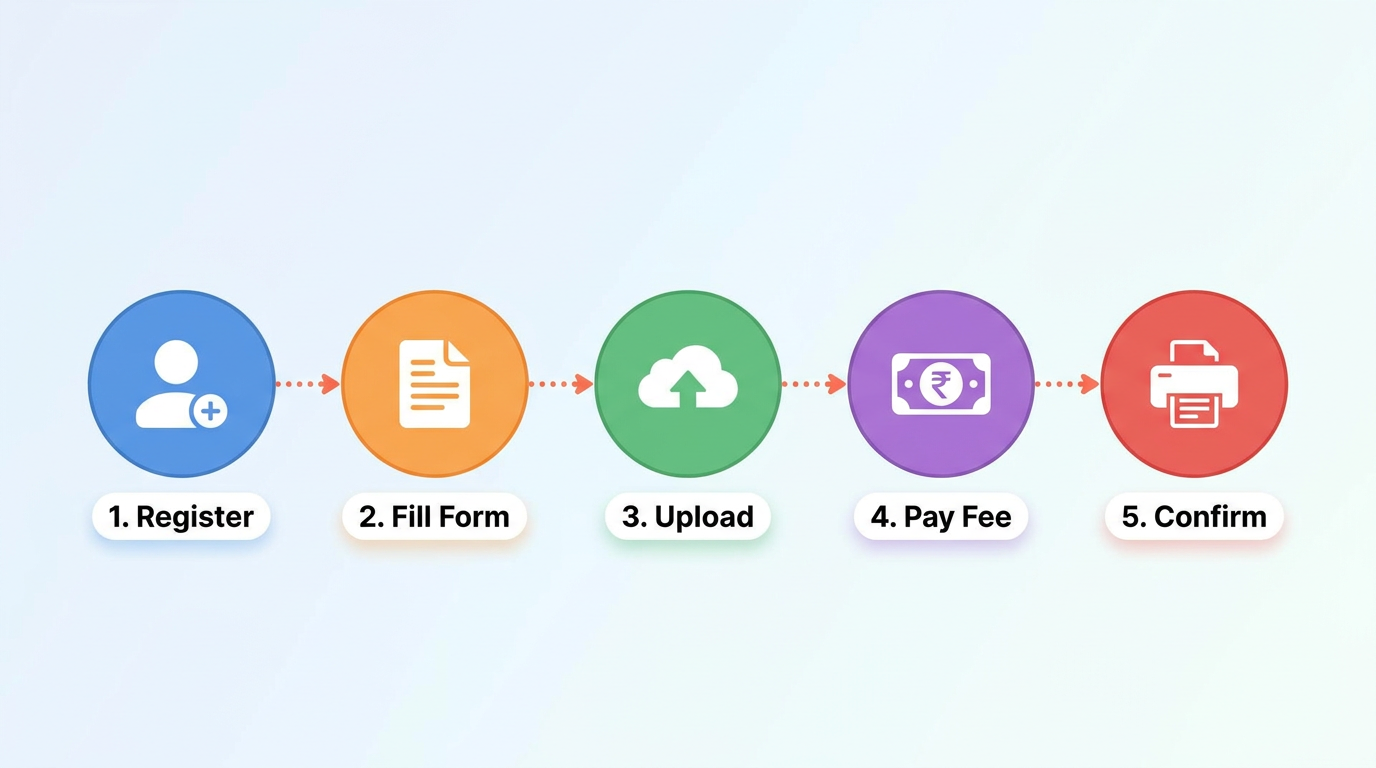
The NEET registration is a completely online process conducted through the official NTA NEET website. It usually opens for about a month, typically between February and March. It's a multi-step process, and you need to be very careful while filling out the details.
Step 1: Online Registration
This is the first step where you create your account. You will need to provide your basic details like your name, parents' names, date of birth, mobile number, and email address. Once you submit these, a provisional application number will be generated. You must note this down and create a password for your account.
Step 2: Filling the Application Form
After logging in with your application number and password, you need to fill out the detailed application form. This includes:
- Personal details (nationality, category, PwD status, etc.)
- Academic details (Class 10, 11, and 12 marks/grades)
- Choice of exam cities (you can usually choose up to four cities in order of preference)
- Parents' occupation and income details
Double-check every single detail before saving and moving to the next step. Mistakes here can be difficult to rectify later.
Step 3: Uploading Documents
Next, you will need to upload scanned copies of your photograph, signature, and other required documents. The NTA provides very specific instructions for the size, format (usually JPG/JPEG), and dimensions of these images. Generally, the required documents include:
- Passport-sized photograph
- Postcard-sized photograph
- Signature
- Left and right hand thumb and finger impressions
- Category certificate (if applicable, e.g., SC/ST/OBC/EWS)
- PwD certificate (if applicable)
- Class 10 pass certificate
Ensure your scans are clear and meet all the specifications to avoid rejection.
Step 4: Paying the Application Fee
After uploading the documents, you will be directed to the payment gateway. The application fee can be paid online using a Debit Card, Credit Card, Net Banking, or UPI. The fee varies by category.
(Note: The following are based on previous years' fees and are subject to change.)
- General: ₹1700
- General-EWS/OBC-NCL: ₹1600
- SC/ST/PwD/Third Gender: ₹1000
- Outside India: ₹9500
Your application is not complete until the fee is paid successfully.
Step 5: Printing the Confirmation Page
Once the payment is successful, a Confirmation Page will be generated. You must download, save, and print multiple copies of this page. This is the proof that your application has been submitted successfully, and you will need it during the counselling and admission process.
Decoding NEET Cut Offs: What Score Do You Need?
 The term NEET cut off can be confusing because it refers to two different things: the qualifying cut-off and the admission cut-off. Understanding the difference is important.
Qualifying Cut Off Percentile vs. Marks
The NTA releases a qualifying cut-off along with the results. This is the minimum score you need to be considered eligible for the counselling process. It is defined in terms of a percentile. A percentile indicates the percentage of candidates that have scored equal to or below that particular score.
- General/EWS Category: 50th percentile
- OBC/SC/ST Category: 40th percentile
- General-PwD Category: 45th percentile
Every year, these percentiles translate into a different range of marks depending on the overall difficulty of the paper and students' performance. Getting marks above the qualifying cut-off doesn't guarantee a seat; it just makes you eligible to apply for one.
Previous Years' NEET Cut Off Trends (2024, 2023, 2022)
Looking at past trends helps you set a target score. Here are the qualifying cut-off marks for the last few years.
| Category | Cut-off Marks 2024 | Cut-off Marks 2023 | Cut-off Marks 2022 |
|---|---|---|---|
| General/EWS | 720-164 | 720-137 | 715-117 |
| OBC/SC/ST | 163-129 | 136-107 | 116-93 |
| General/EWS-PwD | 163-146 | 136-121 | 116-105 |
The admission cut-off, on the other hand, is the last rank (or score) at which a student was admitted to a particular college for a specific course. This varies widely between colleges, courses (MBBS vs. BDS), and quotas (AIQ vs. State). For a top government MBBS seat through AIQ, you generally need to score 650+ marks, and the competition is only getting tougher. To see where you might stand, you can use a JEE rank predictor style tool designed for NEET after your exam.
Factors Influencing the Cut Off
Several factors determine the cut-off each year:
- Difficulty level of the NEET exam: A tougher paper usually means a lower cut-off, and an easier paper leads to a higher one.
- Number of candidates appearing: More candidates increase the competition and can push the cut-off higher.
- Total number of seats available: If the number of MBBS/BDS seats increases, the cut-off might see a slight dip.
The Final Step: NEET Counselling Process
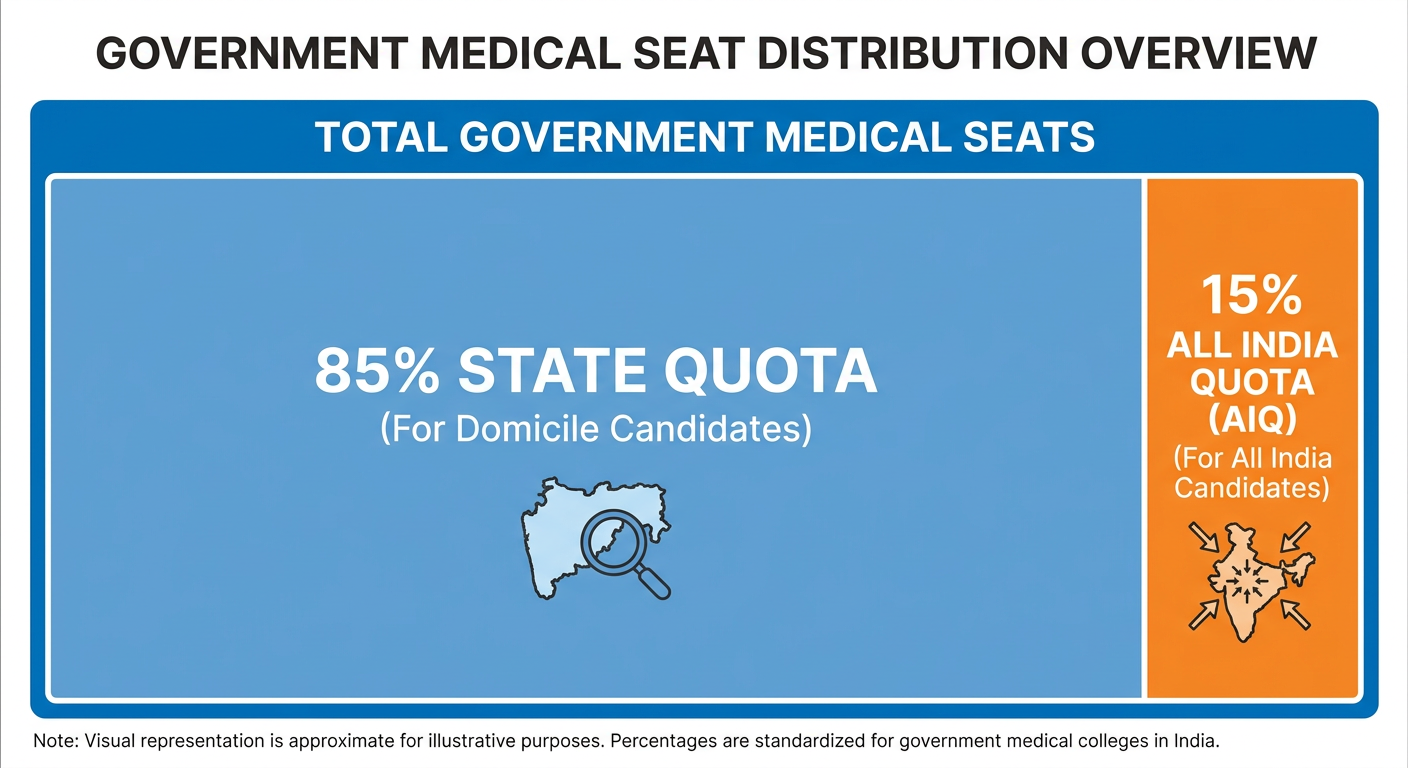
Clearing the NEET exam with a good rank is only half the battle won. The next and final stage is the NEET counselling. This is the process where you are allocated a seat in a medical college based on your rank, choices, and reservation category.
Types of Counselling: AIQ and State Quota
NEET counselling happens at two main levels:
- All India Quota (AIQ) Counselling: The Medical Counselling Committee (MCC) conducts this for 15% of MBBS/BDS seats in all government medical colleges, 100% seats in Deemed/Central Universities, ESIC, AFMC, AIIMS, and JIPMER. Anyone who qualifies NEET can participate in this.
- State Quota Counselling: The respective state medical authorities conduct this for the remaining 85% of seats in government colleges within their state. To be eligible for this, you must fulfill the domicile criteria of that particular state.
You can participate in both AIQ and State Quota counselling simultaneously.
The MCC Counselling Rounds (AIQ)
The MCC counselling process is conducted online in several rounds. The typical sequence is:
- Registration and Fee Payment: You register on the MCC website and pay a registration fee and a refundable security deposit.
- Choice Filling and Locking: You fill in your preferred colleges and courses in order of priority. This is a very critical step.
- Seat Allotment Result: The MCC processes the choices and ranks and releases the seat allotment result.
- Reporting to College: If you are allotted a seat and you accept it, you must report to the college with your documents for verification and admission.
There are generally four main rounds: Round 1, Round 2, a Mop-up Round, and a final Stray Vacancy Round to fill any remaining seats.
Documents Required for Counselling
Keep a file ready with all your original documents and multiple photocopies. You will need them during the reporting process. The essential list includes:
- NEET Admit Card
- NEET Scorecard or Rank Letter
- Class 10 Certificate and Marksheet (for date of birth)
- Class 12 Certificate and Marksheet
- ID Proof (Aadhaar/PAN/Passport)
- 8-10 passport-sized photographs (same as on the application form)
- Provisional Allotment Letter (downloaded from MCC website)
- Category Certificate (if applicable)
- PwD Certificate (if applicable)
Reservation Policy in NEET Admissions
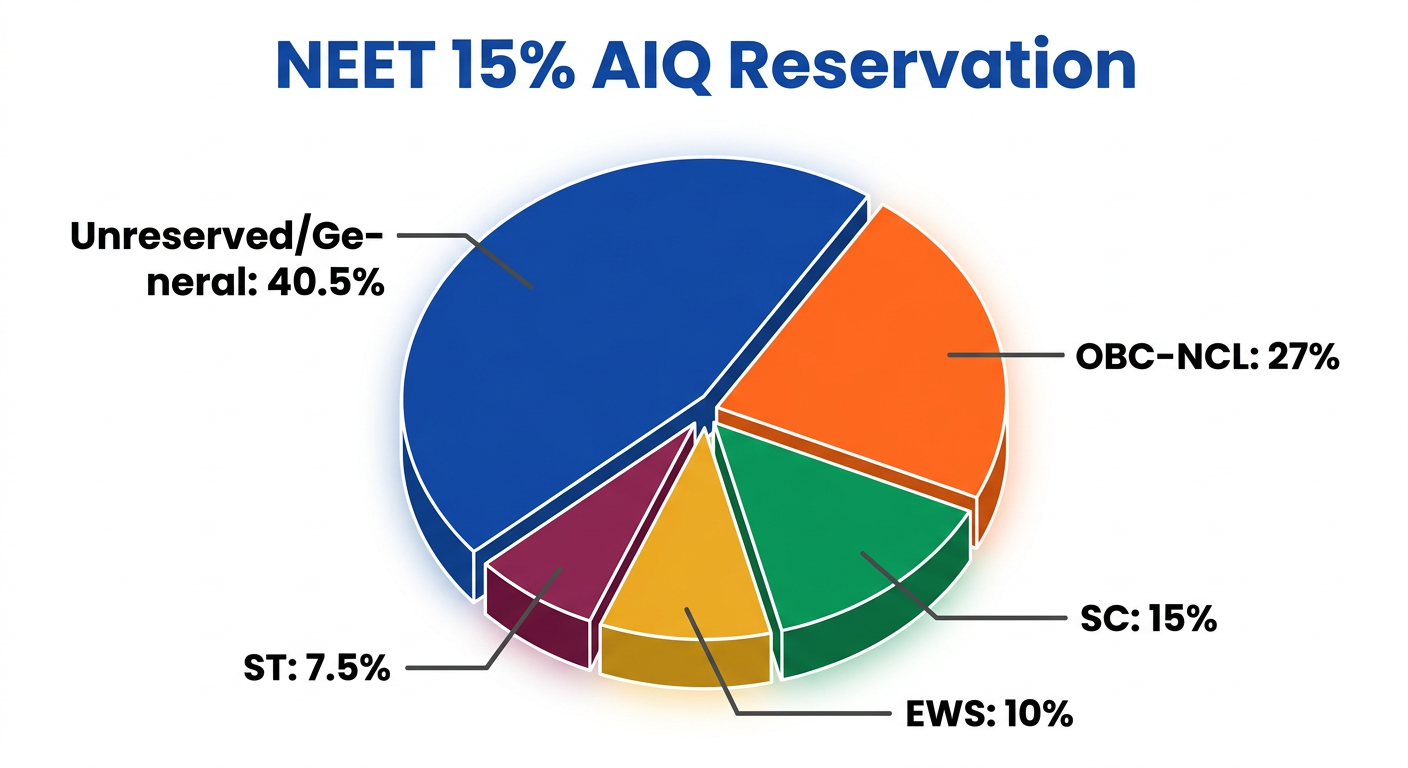
As per the government norms, reservation is applicable for admissions through the 15% All India Quota. It's important to know your category and the benefits you are eligible for. The current reservation policy for AIQ seats is as follows:
- Scheduled Caste (SC): 15% of seats
- Scheduled Tribe (ST): 7.5% of seats
- Other Backward Classes (OBC-NCL): 27% of seats (Non-Creamy Layer only)
- Economically Weaker Section (EWS): 10% of seats
- Persons with Disability (PwD): 5% horizontal reservation across all categories
To claim reservation, you must have a valid and up-to-date certificate issued by a competent authority. For OBC-NCL and EWS, the certificates must be issued recently, as specified in the NTA information bulletin.
Preparing for the NEET exam is a marathon, not a sprint. It requires dedication, smart work, and a clear understanding of every aspect of the exam. Use this guide as your reference, stay updated with information from the official CBSE website for syllabus basics, and focus on consistent effort. You can also explore our hub of free resources and analyse previous year questions to boost your preparation.
FAQs
What is the full form of NEET?
NEET stands for the National Eligibility cum Entrance Test. It is the single national-level entrance exam for admission to undergraduate medical courses like MBBS, BDS, and AYUSH in India.
Is NEET conducted twice a year?
No, as of now, the NEET (UG) exam is conducted only once a year by the National Testing Agency (NTA). There has been discussion about conducting it twice, but no official decision has been made.
Can I crack the NEET exam in 6 months?
Cracking NEET in 6 months is challenging but possible with an extremely focused and disciplined strategy. It requires covering the vast syllabus efficiently, focusing on high-weightage topics, solving numerous mock tests, and revising thoroughly. It's easier if you already have a decent foundation in Class 11 and 12 concepts.
What is a good score in NEET for MBBS in a government college?
The definition of a 'good score' changes every year with the cut-offs. However, to be safe, a score of 650+ out of 720 is generally considered good for securing an MBBS seat in a decent government medical college through the 15% All India Quota for a general category student. For reserved categories, the score can be lower.
Are NCERT books enough for the NEET exam?
NCERT textbooks are the absolute foundation for the NEET exam, especially for Biology and Inorganic Chemistry. A significant majority of questions are asked directly from NCERT lines. However, for Physics and Physical Chemistry, while NCERT is essential for concepts, you will need to supplement it with a good question bank or reference book for extensive problem-solving practice.
Is there negative marking in NEET?
Yes, there is negative marking in the NEET exam. You are awarded 4 marks for a correct answer, but 1 mark is deducted for every incorrect answer. No marks are given or deducted for questions that are not attempted.